Ce dimanche 21 décembre, à l’occasion de la fête de Yule organisée par la Taverne du Kos et la Maison Artisantale de Ventron (88), j’ai proposé une conférence sur le symbolisme des arbres dans la mythologie germano-scandinave.
Devant une trentaine de personnes, j’ai donc évoqué différents épisodes mythologiques reliant les arbres à la vie, qu’ils créent, entretiennent et protègent de façon symbolique. Depuis l’arbre-monde Yggdrasil jusqu’au gui tuant Baldr, depuis les pommes de jeunesse de la déesse Idunn jusqu’à la fuite de Bergelmir sur un tronc flottant, nous avons ainsi pu nous rendre compte du rôle central des arbres dans l’imaginaire de l’époque.
Merci à tous les participants pour leur venue et leur attention, leur enthousiame et leurs questions. Merci également aux organisateurs pour l’invitation !
Le dimanche 21 décembre, je participerai en tant qu’auteur au marché de Yule organisé par La Taverne du Kos et la Maison Artisanale de Ventron (88). 🌬️❄️
A cette occasion, je donnerai surtout une conférence sur le rôle symbolique des plantes dans la mythologie nordique ; un rôle absolument majeur et fascinant. Rendez-vous à 16 h !
Les bryophytes, sans doute en raison de leurs petites tailles et de leurs caractères peu distinctifs, ont rarement stimulé l’imagination des hommes ; en tout cas bien moins que les plantes vasculaires. Il est toutefois quelques exceptions à ce constat général, et il se trouve que l’or des gobelins en est une parfaite illustration. Schistostega pennata, de son nom scientifique, est en effet une espèce tout à fait singulière, qui se développe sur les parois des grottes, dans les failles rocheuses, voire à l’entrée des terriers. Calcifuge, elle apprécie particulièrement les substrats gréseux ou granitiques, où on pourra la chercher à la faveur d’abris sous roche, de falaises accidentées, de murets ou encore le long des talus où elle profite des refuges que forment les racines.
L’or des gobelins (Schistostega pennata). Photographies personnelles.
Mais le caractère fascinant de Schistostega n’est pas seulement lié à son écologie, ni à son goût pour les endroits sombres que désertent les autres espèces de mousses. Non, ce qui la rend véritablement fantastique, et magique au plein sens du terme, c’est la manière qu’elle a de briller dans le noir, au fond des cavités que l’on éclaire d’une lampe de poche ou de la flamme d’une bougie. En effet, son protonéma – c’est-à-dire le tapis de cellules chlorophylliennes qui constitue son premier stade de développement – est constitué de petites sphères qui réfléchissent la lumière incidente comme des lentilles, et apparaissant dès lors « luminescentes », ce qui est une propriété extrêmement rare dans le règne végétal.
Cela étant, ce qui va nous intéresser dans cet article n’est pas tant le phénomène en lui-même que ce qu’il a engendré dans l’imagination des hommes. À travers son étymologie, mais aussi via les témoignages de ses découvertes et sa place culturelle, nous allons nous interroger sur la fascination mondiale et ancienne que suscite cette espèce. Mais ne perdons pas plus de temps : munissons-nous d’une lampe de poche, de bonnes chaussures et d’une loupe, et partons en quête de l’or des gobelins !
Quelques habitats de la mousse lumineuse (Schistostega pennata). Photographies personnelles.
Étymologie : le langage comme témoin de la magie
Notre petite mousse luminescente a été décrite pour la première fois en 1785 par Dickson, qui l’a découverte dans le Dévon, c’est-à-dire au sud de l’Angleterre. L’espèce fut alors nommée Mnium osmundaceum, ce qui faisait référence à un genre déjà connu (Mnium), mais aussi et surtout à l’osmonde royale (Osmunda regalis), cette belle et grande fougère dont les extrémités des pennes présentaient – trouvait-on – une certaine ressemblance avec la mousse. Quelques années plus tard, en 1801, l’espèce fut rebaptisée Gymnostomum pennatum par Hedwig, l’appellation renvoyant cette fois encore aux feuilles « pennées » des fougères. Au cœur d’un imbroglio de descriptions et de nouveaux noms, c’est finalement en 1803 qu’apparaît celui de Schistostega pennata. Le genre signifie littéralement « dont l’opercule se fend », et il est malheureusement peu à propos puisqu’il ne correspond pas à ce qui est observé chez cette espèce[i].
Cela étant, nous avons vu en introduction que ce qui fait la singularité de notre sujet n’est pas tant la forme de ses feuilles ni l’ouverture de ses capsules, mais bien plutôt son protonéma qui scintille au cœur de la pénombre. Il se trouve que pendant quelque temps, toutefois, celui-ci fut considéré comme une espèce distincte, et non comme un stade de développement de Schistostega pennata. Ainsi, en 1826, un certain Bridel la décrit comme une algue qu’il nomme Catoptridium smaragdinum. Nous y trouvons la racine grecque de catoptris qui signifie « miroir » ou « image » et smaragdinos qui évoque un « vert émeraude ». En latin, catopritis désignait surtout « une sorte de pierre précieuse », appellation qui prend tout son sens quand on sait que l’espèce brille comme des pépites au cœur des cavernes[ii]… Ce n’est toutefois qu’en 1834 que la vérité est rétablie par Unger : cette algue n’en est pas une, mais il s’agit plutôt du protonéma de l’or des gobelins[iii].
Schistostega pennata. Feuilles, protonéma, et capsules. Photographies personnelles.
La manière avec laquelle nous qualifions les éléments qui nous entourent témoigne de notre intérêt – ou à l’inverse de notre désintérêt – à leur égard. Or, il est plutôt rare que les bryophytes aient l’honneur de bénéficier d’un nom commun attesté et répandu. Le lecteur ou la lectrice l’aura deviné : Schistostega pennata fait partie des espèces qui bénéficient de ce traitement de faveur. Mieux encore, notre mousse des recoins obscurs dispose de nombreux noms communs, et même d’appellations régionales qui témoignent d’un attachement populaire certain.
Bien souvent, ses qualificatifs font référence à son caractère lumineux, directement ou indirectement. Pour ce qui est du premier cas, l’espèce est tout simplement appelée mousse lumineuse, mousse luminescente ou encore mousse brillante, avec toutes les déclinaisons possibles en fonction des langues : par exemple luminous moss[iv] ou luminescent moss[v] en Anglais ; lysmose en Norvégien[vi] ; leuchtmoos en Allemand[vii] ; musco luminoso en Espagnol[viii]… Cette dimension lumineuse offre parfois des noms plus originaux, et même amusants comme celui de bougie de lapin (rabbit’s candle)[ix], qui serait employé en Écosse, dans la région d’Édimbourg[x].
Mais l’étymologie de Schistostega pennata se déploie aussi dans le registre de l’or et des trésors… généralement en l’associant à des créatures folkloriques peuplant les grottes et les cavernes. Bien sûr, son nom le plus répandu est celui d’or des gobelins, qui en France est parfois décliné en or des lutins. Nous le retrouvons en anglais, avec l’appellation goblin’s gold[xi]. Cela étant, notre mousse luminescente est également placée sous la protection du dragon, créature des grottes elle aussi, mais autrement plus effrayante. Parmi ses noms anglais se trouve ainsi celui de dragon’s gold[xii], que l’on retrouve par exemple en Suède où on l’appelle drakguldmossa, soit « mousse de l’or de dragon »[xiii]. Quoi qu’il en soit, notre Schistostega est donc fréquemment comparée à un trésor… Cela s’explique bien sûr par son caractère brillant et son habitat cavernicole, mais aussi sans doute par sa rareté générale. L’espèce est en effet disséminée, cantonnée aux secteurs plutôt acides, et montre une écologie particulière qui la fait souvent passer inaperçue. Si elle peut être assez fréquente dans certaines régions propices, elle n’en demeure pas moins un taxon que les bryologues trouvent toujours avec une pointe d’émotion… ce dont je peux moi-même témoigner.
L’émotion des découvertes
Je me souviens comme si c’était hier de ma première rencontre avec Schistostega pennata. J’étais alors un jeune bryologue, encore fort inexpérimenté, qui voyait se déployer devant lui un monde merveilleux insoupçonné : celui des mousses et des hépatiques que je n’ai jamais cessé d’explorer depuis. Mais si les bryophytes sont un univers fantastique en eux-mêmes, que dire alors de cette mousse lumineuse, scintillant d’un vert émeraude au cœur de rochers perdus ; trésor naturel, ne se dévoilant qu’aux passionnés assez fous pour passer la tête dans ces trous apparemment inutiles ? Ce jour-là, le 29 juin 2013, j’étais parti arpenter les forêts et ruisseaux du pays de Bitche, en Moselle, dans la partie la plus septentrionale du massif des Vosges (plus exactement sur la commune de Sturzelbronn). Explorant la bryoflore d’un affleurement rocheux, je suis tombé sur une petite grotte qui s’enfonçait dans l’obscurité… C’est alors que sous ma loupe, qui passait en revue les espèces poussant sur les parois de l’entrée, j’ai reconnu les feuilles pennées de la Schistostega. Un sourire a fleuri sur mes lèvres, car c’était alors une découverte pour moi, et celui-ci s’est encore étiré quand, employant la lampe torche de mon téléphone, j’ai vu briller le protonéma émeraude dans la pénombre, un peu plus loin dans la cavité… Il n’y en avait pas beaucoup, seulement quelques petites taches çà et là, mais cela a suffi à me rendre heureux. J’ai eu bien du mal à repartir de cet endroit, car j’éprouvais alors le sentiment prégnant d’avoir exhumé un trésor ; non pas un trésor matériel, mais quelque chose de bien plus précieux, qui avait quelque chose à voir avec le cœur et l’âme.
Au cours des années qui ont suivi, j’ai recroisé à plusieurs reprises le chemin de l’or des gobelins, à l’occasion de diverses sorties dans le massif vosgien, seul ou en compagnie de bryologues allemands et alsaciens. Toujours, pourtant, la vision de cette espèce scintillante m’a procuré un sentiment d’euphorie, si bien qu’en m’installant dans les Vosges saônoises, j’ai décidé de me relancer à sa recherche, afin de mieux connaître sa répartition aux alentours de chez moi. Considérée comme très rare en Franche-Comté, la mousse lumineuse est peu citée dans la littérature ancienne, et n’était alors recensée que dans deux stations récentes. Armé de ma lampe de poche, j’ai donc arpenté les paysages, jusqu’à finalement la découvrir au sein de plusieurs communes du secteur. Tantôt je la voyais luire dans une grotte, tantôt sous les racines affleurantes d’un arbre à la faveur d’un talus… La même émotion me gagnait à chaque trouvaille, et en me penchant ensuite sur les récits de découverte de l’espèce, je me suis rendu compte que cet engouement pour Schistostega pennata était en fait largement partagé.
L’or des gobelins (Schistostega pennata), ici sous les racines d’un arbre en bord de talus.
Plongeons-nous donc dans quelques-uns de ces comptes-rendus en commençant par celui de Anton Kerner von Marilaun. En 1863, dans son ouvrage intitulé Das Pflanzenleben der Donauländer (« La flore du pays du Danube »), le botaniste autrichien relate la découverte de l’espèce, et justifie par ses propriétés extraordinaires les légendes et croyances qui lui sont attachées. Car, lorsque l’on a prélevé un fragment de cet « or » qui scintillait dans la grotte, il ne demeure plus rien à la lumière du jour pour nous convaincre de son existence… Entre nos mains, il ne demeure plus rien que de la terre. A-t-on rêvé ? Bien sûr que non, mais le trésor est doté de propriétés magiques ; nous y reviendrons. Voilà en tout cas ce qu’en dit Kerner von Marilaun : « Ce phénomène, qu’un objet ne brille que dans les crevasses rocheuses obscures et perde aussitôt son éclat à la lumière du jour, est si surprenant que l’on comprend aisément comment sont nées les légendes de gnomes fantastiques et de gobelins troglodytes »[xiv]. Nous ne le contredirons pas.
En 1921, G.B. Kaiser, un bryologue américain, s’est lancé à la recherche de l’espèce dans les Appalaches… Le récit de sa découverte, qu’il livre lui-même dans le volume 24 de la revue The Bryologist, se passe de commentaire : « Un cri s’échappa de nos lèvres ! Ici, enfin, se trouvait l’objet de notre recherche, la mousse lumineuse : alors que nos yeux exploraient la pénombre, un faible scintillement semblait croître et grandir jusqu’à devenir la lueur de « l’or des gobelins » – une faible lumière vert-jaune qui brillait, tantôt stable, tantôt vacillante, toujours exquise, sous nos regards fascinés et ravis. (…) Plus tard dans la journée, alors que nous tentions de franchir la lisière du bois pour atteindre le sommet accidenté, le temps changea, de grandes étendues de nuages nous menaçaient et le vent souffla de façon lugubre : mais peu nous importait la tempête à venir ! Nous portions dans nos cœurs et nos esprits un souvenir qui resterait inscrit : nous avions réussi dans notre quête, nous avions trouvé la mousse lumineuse et, même si depuis ce jour, il ne nous a pas été donné de découvrir de nouveau cet objet de tant d’errance et d’émerveillement, cette découverte nous a conduits à considérer le mot Schistostega comme un mot magique, un talisman, un porte-bonheur ! »[xv]. Ainsi, je suis bien loin d’être le seul à qui cette minuscule mousse donne du baume au cœur ! Quiconque a la chance de l’observer un jour garde en lui un petit trésor ; un souvenir que l’on chérit et qui nous accompagne dans les épreuves comme une bénédiction.
Nous pourrions multiplier encore les témoignages émerveillés relatifs à la découverte de notre mousse lumineuse, par exemple en citant celui d’un certain Stephen Ward, qui narre son exploration d’un secteur de l’Écosse émaillé de terriers de lapins. Alors que la lumière décline, il aperçoit dans certains des trous quelque chose qui brille : « de magnifiques émeraudes qui scintillaient, comme un aperçu d’une véritable caverne d’Ali Baba souterraine »[xvi], explique-t-il alors. Ainsi, Schistostega pennata est fréquemment comparée à un trésor. Dès lors, on ne s’étonnera pas qu’elle soit l’objet d’une fascination singulière – si ce n’est d’une vénération –, qui s’exprime notamment dans la culture contemporaine.
Une plante magique et vénérée
Schistostega pennata est donc un petit talisman végétal, une merveille visuelle que l’on trouve avec une joie certaine. Même les amateurs du jeu vidéo Animal crossing connaissent peut-être cette espèce sans en avoir connaissance… Elle y est nommée mousse lumineuse (glowing moss dans la version anglaise), et peut être récoltée dans New Horizons, sur certaines îles mystérieuses accessibles uniquement par bateau. Une fois dans l’inventaire du joueur, notre bryophyte peut lui servir à décorer sa maison ou son jardin, mais aussi à fabriquer des éléments qui seront dès lors dotés d’une aura luminescente[xvii]…
La mousse lumineuse dans le jeu vidéo Animal Crossing
La présence de Schistostega pennata dans un jeu vidéo d’origine japonaise n’est pas si surprenante que cela, car l’espèce bénéficie au Pays du Soleil levant d’une véritable adoration. En outre, elle joue un rôle central dans un livre auquel elle donne d’ailleurs le titre : Hikarigoke (Mousse Lumineuse) de Taijun Takeda, publié en 1953[xviii]. Il y est question de marins bloqués par une tempête de neige sur l’île d’Hokkaido. Trouvant refuge dans une grotte, ils sont finalement contraints de recourir au cannibalisme pour survivre… Le capitaine, seul survivant, expliquera devant une cour de justice que ceux qui avaient consommé de la chair humaine disposaient d’une aura verte phosphorescente autour d’eux, que seules les personnes demeurées saines étaient capables de voir. On comprend que la grotte était peuplée de Schistostega. Le roman a été repris en opéra[xix], mais aussi en film sous le nom de Luminous moss[xx]. Dans la version cinématographique, le protagoniste est un écrivain qui découvre un jour une grotte entièrement recouverte de ladite mousse, scintillant devant ses yeux troublés. Ayant eu vent d’une histoire de cannibalisme supposé concernant un équipage de marins échoué sur une île, il imagine un scénario dans lequel les mangeurs de chair humaine seraient trahis par des auréoles émeraude autour de leurs têtes, souvenir de cette mousse qu’il avait observée…
Quelques images du film Hikarigoke de 1992, par Kei Kumai, inspiré du roman de Taijun Takeda.
La fluorescence de l’or des gobelins joue donc ici un rôle sinistre. Mais au Japon, elle fait aussi l’objet d’une vénération plus traditionnelle, au point qu’un monument mémoriel lui est dédié au sein d’une petite grotte qui se trouve justement sur l’île d’Hokkaido. La mousse lumineuse recouvre une bonne partie du sol et des parois de cette cavité, où on peut se recueillir et méditer en se perdant dans sa singulière phosphorescence.
La cave Makkausu, sur l’île d’Hokkaido, honorant Schistostega pennata.
Il nous reste maintenant à aborder un mystère archéologique, qui nous ramène en Europe, et plus précisément en Angleterre. Dans son ouvrage Bryophytes of the Pleistocene: The British Record and its Chorological and Ecological Implications, le scientifique J.H. Dickson évoque une découverte pour le moins énigmatique… et extraordinaire. En effet, il nous explique qu’un fragment de Schistostega pennata a été identifié dans « la douille d’une hache enfouie au sein d’un dépôt datant de l’âge du bronze », à Aylsham, dans le comté du Norfolk[xxi]. S’il est déjà fabuleux que la plante soit demeurée identifiable après tout ce temps, c’est surtout l’endroit où elle fut découverte qui ouvre des perspectives fascinantes. Car comment un fragment de mousse lumineusea-t-il pu se retrouver à l’intérieur d’une arme ? Est-ce le fruit du hasard ou d’une action volontaire ?
Il va de soi que pour l’étude de matériaux relatifs à des périodes aussi lointaines, toute volonté d’apporter des réponses définitives est illusoire. Dickson opte pour une introduction accidentelle au sein du manche, sans doute au moment de la fabrication de la hache, et il est vrai que cette hypothèse est vraisemblable quand on sait que les tribus de l’âge du bronze se rassemblaient fréquemment dans des cavités qui constituent justement l’habitat de notre or des gobelins. Il faut toutefois noter que l’espèce est absente d’Aylsham, et plus généralement de l’est du Norfolk[xxii], et qu’étant donné la spécificité de ses habitats, il est probable que sa répartition n’ait pas beaucoup changé avec le temps[xxiii]. Cela signifierait donc que l’arme a été transportée sur une relativement longue distance, et qu’elle n’a pas été fabriquée là où elle a été enterrée. Cela étant entendu, si la possibilité d’une introduction accidentelle au sein de la douille de hache est bien réelle, on ne peut pour autant exclure l’hypothèse d’une introduction volontaire au sein de l’instrument. L’espèce aurait-elle fait l’objet d’une vénération particulière ? Est-il possible qu’on lui ait attribué des vertus magiques, qui expliqueraient sa présence en cet endroit si singulier ?
Rappelons-nous de quelle espèce nous parlons : la mousse lumineuse, l’or des gobelins. Les seules évocations de son nom nous inspirent des récits fantastiques, alors comment imaginer qu’elle n’ait pas aussi fasciné les hommes de jadis, qui la voyaient scintiller dans les grottes à la lueur de leurs torches ? Dickson lui-même n’élude pas totalement cette théorie : « Il demeure la possibilité que Schistostega ait eu une signification magique »[xxiv]. En outre, il est intéressant de relever que les divinités celtes liées au feu sont, de fait, aussi liées à la forge. Ainsi en est-il sans doute de Belenos[xxv] et de Bel, peut-être même de Lug. Or, ceux-ci sont aussi des dieux solaires, et donc des dieux lumineux comme le sont nos protonémas d’or des gobelins. Représentons-nous maintenant notre artisan antique, travaillant sur la fabrication des armes au sein de quelque cavité gréseuse, forgeant cette hache au-dessus d’un feu qui fait briller autour de lui les parois comme de l’or… Comment pourrait-il ne pas être troublé par un tel phénomène ? Ainsi, peut-être Schistostega pennata était-elle associée aux divinités solaires, et donc aux entités qui régissaient les flammes de la forge. Évidemment, nous n’en saurons jamais rien, mais ce fragment dans la hache n’en est pas moins un élément fort intriguant, qui nous ouvre de riches perspectives. Malheureusement, jusqu’à ce jour, aucune découverte analogue n’a été recensée.
L’or éphémère des gobelins
Ainsi, il est possible que Schistostega pennata ait stimulé l’imagination des hommes dès la préhistoire. Mais nos interrogations à son sujet peuvent largement se prolonger à l’époque moderne. Nous avons signalé que les bryophytes n’étaient que rarement évoquées dans les œuvres imaginaires – sans doute en raison de leur discrétion et de leurs ressemblances les unes aux autres –, mais cela ne signifie pas pour autant qu’elles n’aient pas pu inspirer certains motifs de nos légendes. En l’occurrence, Schistostega pennata, par son étymologie même, est ouvertement associée aux trésors souterrains, et aux gobelins qui en sont souvent les gardiens. Les grottes et cavernes ont toujours intrigué, d’autant plus qu’on pouvait parfois y trouver des filons d’or… Dès lors, de nombreuses histoires et croyances ont vu le jour au sujet de richesses cachées dans la pénombre, dont l’une des plus vivaces les voit fabriquées, ou rassemblées, par ces créatures humanoïdes et quelque peu inquiétantes que sont les gobelins. Cela étant dit, il n’est rien d’étonnant à ce qu’une mousse phosphorescente se développant sur les parois des cavités ait été reliée à ces personnages mythologiques… Nous ne reviendrons pas ici sur l’origine des gobelins – ce qui pourrait donner lieu à un livre entier – mais il n’est pas inutile de rappeler quelques-unes de ses occurrences les plus célèbres. Dans les pays germaniques, il prend parfois les atours du Kobold, qui peut être bienveillant envers les mineurs, mais aussi possessif et vengeur quand il s’agit de son métal précieux[xxvi]. Il est aussi mis en scène dans la culture contemporaine, par exemple dans l’univers de Harry Potter, où une fois encore ils apparaissent avares et fascinés par les richesses[xxvii]. Gardiens de la banque de Gringotts, leurs coffres sont répartis dans des méandres souterrains… Bien sûr, on les rencontre aussi dans la Terre du Milieu de J.R.R. Tolkien, où ils habitent au cœur des montagnes. Dans Le Hobbit, Bilbo et ses compagnons se frottent ainsi à eux au sein des Monts Brumeux, là où se trouve le trésor que garde le dragon Smaug[xxviii] ; autre créature associée à notre Schistostega, comme nous l’avons noté.
Un gobelin au trésor dans le jeu vidéo Diablo / Le gobelin amenant Hagrid et Harry au coffre de ce dernier, dans les souterrains de Gringotts (Harry Potter à l’école des sorciers, film de 2001) / Illustration du conte « The Princess and the Goblin » de George MacDonald, par Jessie Willcox Smith en 1920.
Jusque-là, nous pouvons légitimement supposer que c’est l’or véritable qui a inspiré le folklore, davantage que notre mousse lumineuse. Certes, mais dans certaines histoires, cet or tant convoité est lié à des propriétés magiques qui le font ni plus ni moins disparaître, ou encore tomber en poussière quand on s’en empare… Ce motif est très intéressant pour notre sujet, car c’est précisément ce qui survient quand on cherche à s’emparer du protonéma phosphorescent de la mousse lumineuse : à la lumière de la torche ou de la lampe, elle est semblable à de l’or, éclatante… mais quiconque gratte la paroi et prend la sortie ne trouve plus que de la poussière ou de la terre sous ses doigts, auxquelles se mêle un petit tapis vert tout à fait anodin. Dès lors, nous pouvons nous interroger à ce sujet… Schistostega pennata aurait-elle pu inspirer certaines de ces croyances et légendes relatives à un or éphémère, ou se métamorphosant sous les doigts de son découvreur ?
Le premier cas, celui de l’or qui disparaît, se rencontre dans de nombreux contes, au point d’avoir été identifié comme un « motif classique » de la littérature populaire par S. Thompson, sous le code N562 : « Le trésor disparaît de lui-même de temps à autre / Une illusion magique empêche les hommes de s’emparer des trésors »[xxix]. Bien souvent, ledit trésor n’apparaît que sur un laps de temps très court, à un moment symbolique du calendrier, et parfois même de la journée. Par exemple, de nombreuses richesses souterraines ne se révèlent que durant la nuit de Noël, parfois pendant la messe ou à minuit précis. Ainsi, dans le Maine, une grotte peuplée de fées n’est accessible que quand la cloche de l’église de Lavaré sonne ses coups… À l’intérieur, « un amas d’or et d’argent », ainsi que des « pierres précieuses qui étincellent au point de changer la nuit en jour » attendent l’aventurier qui ose y pénétrer[xxx]. Il peut prendre ce qu’il veut, mais le rocher se referme au dernier tintement de cloche. Le phénomène est analogue en ce qui concerne le trésor des Fols de l’Allier, uniquement accessible durant la Messe de Noël ou le jour des Rameaux, quand le prêtre tape trois coups sur la porte de l’église… mais encore faut-il avoir vendu son âme au Diable pour pouvoir s’en emparer[xxxi]. Parmi les autres butins qui se révèlent à Noël, nous pouvons citer celui de la Cave aux bœufs (dans la Sarthe), ou encore celui des rochers de Pyrome (dans les Deux-Sèvres)[xxxii]. Dans certains cas, cependant, la visibilité et l’accessibilité du trésor sont plus éphémères encore. Sur le sentier entre Salvan et Fenestral, la légende veut qu’un trésor dissimulé sous une pierre ne soit visible qu’une fois tous les cent ans[xxxiii]…
Ce qui est intéressant avec toutes ces histoires, c’est que le caractère éphémère de ces trésors peut faire écho au cycle de reproduction de notre mousse lumineuse. Le protonéma phosphorescent de Schistostega pennata, en effet, est théoriquement observable tout au long de l’année[xxxiv], mais cela ne signifie pas pour autant qu’il est perpétuellement visible au sein d’une même station. Ainsi, nous pourrions tout à fait imaginer l’émerveillement d’un voyageur campant dans une grotte qui en abrite, puis sa déception quand il y retourne quelques mois ou années plus tard et n’y trouve alors plus rien d’éclatant. Mais outre le cycle biologique de notre bryophyte, il faut aussi se souvenir que la phosphorescence du protonéma n’est perceptible qu’avec une certaine orientation et une certaine intensité de lumière… Autrement dit, le caractère scintillant visible à la lueur d’une torche disparaît quand on l’en éloigne, ou quand on y retourne au milieu de la journée. Par ailleurs, certaines stations de Schistostega peuvent naturellement briller dans les rayons du soleil à certaines heures particulières, quand ceux-ci pénètrent dans la grotte avec l’angle adéquat. L’observateur qui a la chance de s’y trouver voit alors apparaître l’or des gobelins… mais un or éphémère, qui disparaît en quelques minutes seulement, inspirant peut-être ces histoires de richesses disparues.
Au sein de ces légendes, un dernier point, et non des moindres, mérite notre attention : le moment privilégié durant lequel se révèlent ces trésors furtifs. En effet, celui-ci correspond généralement à Noël, qui est bien sûr une date hautement symbolique. Que l’enfant-lumière qu’est Jésus, en naissant, fasse jaillir la lumière à l’intérieur des grottes est somme toute assez logique, et il est compréhensible que les légendes aient privilégié cette nuit particulière pour ce phénomène. En outre, cette date correspond aussi, à peu de chose près, au solstice d’hiver, qui voit les jours rallonger. Symboliquement, c’est donc l’avènement de la lumière qui est célébré à cette date… et sa victoire sur l’obscurité hivernale. Or, n’est-ce pas précisément ce qu’incarne Schistostega pennata, quand elle scintille au cœur de la pénombre ? Elle représente la lueur persistant au cœur de la nuit, comme l’espoir qui demeure même dans les recoins les plus sombres de l’existence. Par son caractère lumineux, il n’aurait donc pas été étonnant que ce forgeron de l’âge de bronze l’ait employée comme emblème de sa divinité solaire, quelle qu’elle soit.
« La Nativité » attribué à Antonio Balestra (1666-1740) / « L’Adoration des bergers » de Gerard van Honthorst (vers 1622)
Le trésor qui tombe en poussière
Cela étant, retournons à nos légendes modernes, dans lesquelles un autre motif mérite notre attention. Car si l’or se contente parfois de disparaître, il lui arrive aussi fréquemment de tomber en poussière sous les doigts de son découvreur, ou de se transformer en simples débris, terreux ou végétaux. Ce phénomène se rencontre dans de nombreuses croyances, et pas seulement en France. Ainsi, Mare Kalda, docteur en philosophie, évoque des légendes relatives à la découverte d’une « lueur de trésor », dont on retrouve notamment des occurrences en Estonie. Dans ces récits, il peut arriver que des personnes autour d’un feu reçoivent de la terre ou des charbons pour allumer leurs pipes… qui se révèlent finalement de l’or après quelque temps. Mais le phénomène inverse est au moins aussi répandu : le trésor transmis se métamorphose en une matière qui n’a finalement aucune valeur : de la terre, des feuilles, des cendres[xxxv]… Est-ce parce que le feu autour duquel se tenait l’assemblée s’est éteint ? La mousse lumineuse était de l’or des gobelins tant que les flammes faisaient scintiller son protonéma, mais est devenue minuscule mousse enchâssée dans de la terre une fois la nuit revenue.
Ce même motif s’observe dans le conte The Crumbling Silver, en provenance d’Amérique du Nord. Il y est question de nodules brillants sur la roche, qui attisent la convoitise d’un certain Gardiner. Désireux de ne rien partager avec quiconque, il finit par tuer l’Indien Montauks qui lui avait montré l’endroit… mais déclenche ainsi une malédiction. En rentrant chez lui, à la lueur de la bougie, il s’aperçoit que ce qu’il a prélevé ne brille plus comme il devrait. Le lendemain matin, dans sa cave, il ne trouve plus qu’un tas de poussière grise parsemé de quelques reflets cuivrés[xxxvi]… Le trésor s’est transformé en un élément sans valeur. Il ne brille plus, tel le protonéma de Schistostega amené à la lumière du jour, ou à la faveur d’une lampe mal orientée. Ainsi, l’élément précieux qui se détériore et cesse de briller est un motif interculturel, que l’on retrouve de l’Estonie aux États-Unis. Bien sûr, on le rencontre aussi en Europe occidentale, par exemple en lien avec les fameux leprechauns. Leur trésor est réputé insaisissable, protégé par des enchantements et des secrets bien gardés. Si par hasard quelqu’un parvient malgré tout à s’en saisir, celui-ci peut se transformer en feuilles, en terre, ou simplement se désagréger à la vitesse de l’éclair, notamment si certaines règles ne sont pas respectées (ne pas élever la voix, ne pas regarder en arrière, ne pas révéler l’endroit…). Il en est parfois de même avec les butins des fées, ou encore avec les richesses que les sorcières croient obtenir du diable. Dans beaucoup de procès de sorcellerie, en effet, la personne séduite par le Malin reçoit en échange de son âme une sorte de salaire, sous forme d’or ou de monnaie. Mais généralement, celui-ci finit par disparaître, ou plus exactement par se transformer en quelque chose qui ne présente aucune valeur ; de la terre parfois, mais plus souvent des feuilles de chêne[xxxvii].
Ce motif de l’or qui se métamorphose une fois prélevé s’observe dans un conte des frères Grimm : Les Présents du peuple menu. Un tailleur et un orfèvre, voyageant au cœur de la nuit, découvrent un attroupement de joyeux lutins auquel ils s’intègrent, et auprès duquel ils obtiennent du charbon dont ils se remplissent les poches. Le lendemain matin, se réveillant dans une auberge, les deux compères ont le plaisir de constater que celui-ci s’est transformé en or… Mais l’histoire ne s’arrête pas là, car l’orfèvre décide alors de retrouver le petit peuple pour obtenir toujours plus de leur or. Comme le lecteur l’aura deviné, sa cupidité est punie, et le charbon demeure charbon cette fois-là. Pire encore, l’or qu’il avait obtenu initialement est lui aussi redevenu simple débris[xxxviii]. La littérature contemporaine s’est également emparée de ce concept. Par exemple, dans sa nouvelle The Devil and Tom Walker, Washington Irving met en scène un individu à qui un mystérieux personnage révèle l’emplacement du trésor du Capitaine Kidd. Celui-ci étant maudit et protégé par le diable en personne, l’homme devient riche aux dépens de son âme, mais finit au bout du compte ruiné par un procédé surnaturel qui voit notamment l’or et l’argent qu’il avait exhumés se transformer en copeaux de bois[xxxix]…
Illustration du conte « Les Présents du Peuple Menu » des frères Grimm, par Anne Anderson en 1922 / Illustration de la nouvelle « The Devil and Tom Walker » de Washington Irving, par Charles Deas en 1843.
Un phénomène assez similaire se rencontre dans le conte anglais The Hedley Kow, mais avec un dénouement cette fois plus propice au protagoniste. Une vieille dame y trouve un pot rempli d’or, mais sur le chemin qui la ramène chez elle, jetant un coup d’œil à l’intérieur, elle se rend compte que l’or s’est transformé en argent. Un peu plus tard, elle s’aperçoit que le pot contient du fer, puis de la roche. Pourtant, la femme prend à chaque fois ces métamorphoses avec optimisme, même quand le contenu du pot devient finalement le Hedley Kow, une étrange petite créature espiègle qui s’enfuit en riant. Elle se considère chanceuse d’avoir pu observer un tel être surnaturel et rentre chez elle contente de sa bonne fortune[xl]… comme le sont les bryologues découvrant la Schistostega à la lueur de leur lampe de poche. Les véritables trésors, finalement, ne sont jamais matériels.
Reste que le motif de l’or éphémère, ou de l’or qui se révèle n’être qu’un amas de débris sans valeur, est en réalité extrêmement fréquent dans l’imaginaire. Bien souvent, la richesse n’est qu’illusion, elle est temporaire, à l’instar du protonéma de Schistostega pennata qui apparaît comme de l’or au sein des cavités que l’on éclaire, mais devient désespérément banal une fois amené à la lueur du jour… du moins pour ceux que la bryologie ne passionne pas. En Gascogne, on disait que l’or était susceptible de pourrir et de devenir rouge dans les souterrains, si bien que les gobelins devaient étaler leur trésor à l’entrée des grottes pendant une heure durant la nuit de la Saint-Sylvestre, afin que celui-ci conserve tout son éclat[xli]. La mention de la couleur rouge est intéressante quand on sait qu’elle caractérise souvent les roches gréseuses, qu’affectionne la mousse lumineuse. L’espèce est d’ailleurs présente en Gascogne, ce qui nous conduit à souligner un autre aspect intéressant de toutes ces croyances et légendes : leur localisation.
En effet, en se penchant sur ces récits d’or éphémère ou de trésor qui se transforme une fois prélevé, on constate que beaucoup d’entre eux proviennent de régions où l’or de gobelins est effectivement connu. C’est le cas dans les Pyrénées-Atlantiques, certes, mais aussi en Bretagne et au Pays de Galles, territoires réputés pour leurs légendes relatives au Petit Peuple. On notera toutefois que l’espèce est absente d’Irlande, c’est-à-dire de la terre originelle des leprechauns, même si la créature s’est intégrée à l’imaginaire d’autres pays par la suite. En outre, l’espèce est présente en Estonie, en Écosse, mais aussi dans la majorité des États du quart nord-est des États-Unis[xlii]. Elle est aussi présente dans le Northumberland, en Angleterre, d’où est originaire la légende The Hedley Cow[xliii].
Elle l’est aussi dans les régions du sud de l’Allemagne, et notamment dans le Fichtelgebirge (un massif montagneux au nord-est de la Bavière) où le folklore mentionne d’étranges personnages elfiques entièrement couverts de mousse, dont une fameuse « dame-mousse » qui peut apparaître aux promeneurs. Dans l’une des légendes qui lui sont associées, la créature demande les fraises qu’a cueillies une petite fille pour sa mère malade, ce que cette dernière accepte. En rentrant chez elle, cependant, la fillette s’aperçoit que son panier est désormais rempli de fraises en or… Mais ce n’est pas tant l’histoire en tant que telle qui nous intéresse que la description qui est parfois faite de cette « dame-mousse », si on en croit Richard Folkard : « La robe de mousse de la petite femme est décrite comme étant de couleur dorée, qui brillait, vue de loin, comme de l’or pur, mais qui, de près, perdait tout son éclat »[xliv]. Autrement dit, le vêtement de cette fée scintille quand on l’observe sous un certain angle… mais devient terne dès lors qu’on l’inspecte de plus près. Nous pouvons même imaginer que la dame-mousse est luminescente tant qu’elle demeure dans la pénombre des sapins ou celle des rochers, mais qu’elle perd son éclat en se révélant à la lumière du jour, par exemple en s’avançant dans la clairière pour venir à la rencontre du promeneur… Quoi qu’il en soit, nous pouvons légitimement nous demander si son habit ne serait pas constitué – au moins en partie – de Schistostega pennata… même si d’autres espèces végétales ont pu être avancées comme les lycopodes. Folkard, d’ailleurs, écrit à leur sujet quelque chose qui pourrait aussi tout à fait s’appliquer (et peut-être même davantage) à la mousse lumineuse : « On pense que nombre des histoires de trésors cachés qui circulent sur le Fichtelgebirge sont dues à la présence de cette curieuse espèce végétale dans le massif »[xlv].
Cela étant, l’objet de cet article n’est aucunement d’affirmer que toutes ces légendes et croyances découlent directement du caractère lumineux de Schistostega pennata. Elles peuvent avoir été inspirées par bien d’autres phénomènes naturels, évidemment, ainsi que par des considérations psychologiques, philosophiques ou même morales. Ces contes témoignent de l’obsession séculaire des hommes pour les richesses cachées, et par leur crainte de voir la fortune acquise disparaître. Ils montrent aussi les dangers de la convoitise irréfléchie, en punissant les avares. Enfin, ces histoires mettent souvent en exergue le caractère illusoire des richesses terrestres, que les valeurs spirituelles viennent supplanter. Néanmoins, il est troublant de constater à quel point le phénomène phosphorescent du protonéma de notre mousse, qui disparaît à la lumière du jour, s’adapte parfaitement à ces motifs. Dès lors, il n’est pas exclu que certaines histoires, localement, aient pu être inspirées par ces observations troublantes ; par cette mousse lumineuse au sein de grottes reculées, qui ne devenait plus que terre une fois prélevée. En tout état de cause, il est hautement improbable qu’un phénomène à ce point extraordinaire n’ait pas stimulé l’esprit des hommes… Comment imaginer des enfants rester stoïques en explorant une grotte à la lueur d’une torche, tandis que brillent autour d’eux des tâches d’un vert émeraude phosphorescent ? De fil en aiguille, de bouche à oreille, ces observations pourraient devenir rumeurs, puis sous la plume d’un conteur se transformer en histoire, finalement amendée et déformée au fil des siècles jusqu’à nous parvenir…
CONCLUSION
Schistostega pennata est donc une bryophyte pour le moins extraordinaire. La propriété luminescente de son protonéma l’a dotée d’une place singulière dans l’imaginaire de l’homme, qui s’exprime de différentes façons. Son étymologie, tout d’abord, témoigne de la dimension fantastique qu’elle inspire : bougie de lapin, or des gobelins, or des dragons… Il faut dire que l’espèce, en brillant à l’entrée des cavités comme un trésor occulte, crée toutes les conditions d’une aventure épique pour les bryologues qui la découvrent, ce dont nous pouvons nous rendre compte par les récits empreints d’enthousiasme qu’ils nous ont livrés. Cela étant, la mousse lumineuse ne se contente pas d’émouvoir les naturalistes : elle inspire aussi au commun des mortels une vénération qui s’exprime par des films, des jeux vidéo, mais aussi des monuments en son honneur. Enfin, nous pouvons même nous demander si elle n’a pas pu inspirer certaines légendes et croyances populaires, en particulier celles relatives à des trésors éphémères ou tombant en poussières… Quoi qu’il en soit, Schistostega pennata est un trésor en soi, et l’un des plus beaux qui puissent être. Elle est une merveille de la nature, une part de magie en ce monde. Quiconque a la chance de l’observer obtient un talisman porte-bonheur, qui l’accompagnera où qu’il aille, niché au fond de son cœur, et qui en cela est infiniment plus précieux que tous les coffres remplis de diamants.
Quelques photographies de Schistostega pennata : Stefan Gey, 2017 / Alpsdake, 2018 / Hermann Schachner, 2012.
Pablo Behague. « Sous le feuillage des âges ». Novembre 2025.
[i] Isabelle Charissou, 2015, La mousse lumineuse Schistostega pennata (Hedw.) F. Weber & D. Mohr en France et en Europe, vol. 45, Bulletin de la Société botanique du Centre-Ouest.
[iii] Leonard Thomas Ellis et Michelle Judith Price, 2012, Typification of Schistostega pennata (Hedw.) F.Weber & D.Mohr (Schistostegaceae), vol. 34, Journal of Bryology.
[iv] Sean R. Edwards, 2012, English Names for British Bryophytes, British Bryological Society, British Bryological Society Special Volume.
[v] USDA Forest Service, s. d., Gotchen Risk Reduction and Restoration Project.
[vi] Arne A. Frisvoll et al., 1995, Sjekkliste over norske mosar, Norsk institutt for naturforsking.
[vii] Martin Nebel et Georg Philippi, s. d., Die Moose – Baden-Württembergs, Ulmer, vol. 2.
[viii] C. Casas et al., 2000, Flore Briofitica Iberica. Referencas Bibliograficas., Institut Botanic de Barcelona, vol. 17.
[ix] Edwards, 2012, English Names for British Bryophytes, op. cit.
[xi] Edwards, 2012, English Names for British Bryophytes, op. cit.
[xii] J.M. Glime et Magdalena Turzanska, 2017, Bryophyte Ecology – Light : Reflection and Fluorescence, Michigan Technological University and the International Association of Bryologists.
[xiv] Anton Kerner von Marilaun, 1863, Das Pflanzenleben der Donauländer.
[xv] George B. Kaiser, 1921, Little journeys into mossland, IV : Luminous moss., vol. 24, Bryologist; Charissou, 2015, La mousse lumineuse Schistostega pennata (Hedw.) F. Weber & D. Mohr en France et en Europe, op. cit.
[xix] Ikuma Dan et Taijun Takeda, 1972, Hikarigoke (Mousse lumineuse) – Opéra.
[xx] Kei Kumai et Taijun Takeda, 1992, Hikarigoke (Mousse lumineuse) – Film.
[xxi] James Holms Dickson, 1973, Bryophytes of the Pleistocene: the British record and its chorological and ecological implications, Cambridge University Press.
[xxii] Ian D.M. Atherton, Sam D.S. Bosanquet, et Mark Lawley, 2010, Mosses and liverworts of Britain and Ireland – a field guide, British Bryological Society.
[xxiii] Dickson, 1973, Bryophytes of the Pleistocene: the British record and its chorological and ecological implications, op. cit.
[xxvi] Rossana Berretta, Ilaria Spada, et Amedeo De Santis, 2007, Les créatures fantastiques, Piccolia.
[xxvii] J.K. Rowling, 1997, Harry Potter and the Philosopher’s Stone, Bloomsbury.
[xxviii] J.R.R. Tolkien, 1937, The Hobbit, or There and Back Again, George Allen&Unwin.
[xxix] S. Thompson, 1955, Motif-index of folk-literature : a classification of narrative elements in folktales, ballads, myths, fables, medieval romances, exempla, fabliaux, jest-books, and local legends., Bloomington : Indiana University Press.
[xxx] Paul Sébillot, 1904_1907, Croyances, mythes et légendes des pays de France – Le folk-lore de France, E. Guilmoto, Omnibus.
[xxxiv] Charissou, 2015, La mousse lumineuse Schistostega pennata (Hedw.) F. Weber & D. Mohr en France et en Europe, op. cit.
[xxxv] Kalda, Mare, 2014, Hidden Treasure Lore in Estonian Folk Tradition, EKM Teaduskirjastus; Mare Kalda, 2023, Reality as Presented in Estonian Legends of Hidden Treasure, Yearbook of Balkan and Baltic studies.
[xxxvi] Auteur inconnu, 2021, The Crumbling Silver (North American Folk Tale), en. derevo-kazok.org, Fairy Tales Tree.
[xxxvii] Philippe Jéhin, 2002, Les aveux d’une sorcière en 1619, Dialogues transvosgiens; Maurice Foucault, 1907, Les procès de sorcellerie dans l’ancienne France devant les juridictions séculières, Bonvalot-Jouve; Alexandre Tuetey, 1886, La sorcellerie dans le Pays de Montbéliard, A. Vernier-Arcelin; Frédéric Delacroix, 1894, Les procès de sorcellerie au XVIIe siècle; Charles-Emmanuel Dumont, 1848, Justice criminelle des duchés de Lorraine et de Bar, du Bassigny et des trois évêchés.
[xxxviii] Jacob Grimm et Wilhelm Grimm, 1850, Les Présents du peuple menu, Kinder- und Hausmärchen – Contes de l’enfance et du foyer.
[xxxix] Washington Irving, 1824, The Devil and Tom Walker, John Murray.
[xl] Joseph Jacobs, 1894, The Hedley Kow, More English Fairy Tales.
[xli] Sébillot, 1904_1907, Croyances, mythes et légendes des pays de France – Le folk-lore de France, op. cit.
[xlii] Charissou, 2015, La mousse lumineuse Schistostega pennata (Hedw.) F. Weber & D. Mohr en France et en Europe, op. cit.; Departement of Natural Resources, Rare Species Guide – Schistostega pennata (Hedw.) Web. & Mohr (www.dnr.state.mn.us, 2025).
[xliii] Atherton, Bosanquet, et Lawley, 2010, Mosses and liverworts of Britain and Ireland – a field guide, op. cit.
[xliv] Richard Folkard, 1884, Plant Lore, Legends and Lyrics.
Snowdrop. Nellie Benson, 1901.Snowdrop fairy. Cicely Mary Barker, 1923.
While winter is not quite over and snow still covers the landscapes, small white bells are emerging from the dust along the paths, putting an end to the impatient botanist’s wait, who watched for the first blooms during his walks. Of course, what is depicted here is the season of the snowdrops, a term that has long been ambiguous since it could refer to both Leucojum and Galanthus. Nevertheless, these species share a certain affinity, which appears extremely clear on a symbolic level.
In the popular imagination, indeed, snowdrops embody the end of winter and the beginning of spring, or more precisely, the duality that exists between the two seasons. They are the flowers of transition and renewal, of the cold period diluting into the mild air of March, of the passage from death to life… But the symbolism of these plants is far from being so monolithic, since they have also been made emblems of virginity or even funerary omens. It has even been suggested that they could correspond to a mysterious plant from ancient mythology endowed with fabulous powers, and which Odysseus consumes before entering Circe’s house…
Flowers of winter and spring
The primordial symbolism of snowdrops, in the broadest sense, intimately associates them with winter and, a fortiori, with the snow that characterizes it. In this regard, examining their etymology is rich in lessons, and offers us many illustrations of this relationship. The common term « snowdrop » speaks for itself, but we know of other less widespread and equally evocative slang names for them. Thus, Galanthus nivalis is sometimes called « Winter Galantine, » « Winter Bell, » or even « Snow Galanthus. » In some cases, regional languages take up this concept of a flower making its way through the white layer, as in Normandy where we speak of « Broque neige » or in Brittany where we evoke the « Treuz-erc’h. » As for European countries, many also use a term that is a translation of our « snowdrop » as in Yorkshire, England, where the plant is called « snowpiercer » (1). Among the other English names that we know of it, we can cite for example « winter gallant », « snowdrop » or even « little snow bell » which therefore relates to snow (2). As for Leucojum, their most commonly accepted name is that of « snowflake ».
Leucojum vernum. Vosges Mountains. Pablo Behague, March 2024.
The scientific names for snowdrops are just as relevant to all these winter notions. Galanthus can be translated as « milk flower. » As for the adjective nivalis, it obviously means « of the snows. » Thus, snowdrops are literally « milk flowers of the snows, » an expression that refers not only to their immaculate whiteness, but also to their flowering season. Leucojum is constructed from the word leuko, meaning « white, » and the word ion, which corresponded to violets. In other words, snowdrops are « white violets. »
One of the oldest references to the term « snowdrop » dates back to a manuscript dated 1641, Guirlande de Julie, which once again emphasizes the plant’s winter dimension. The poem dedicated to her includes these lines: Under a silver veil the buried Earth / Produces me despite its freshness / The Snow preserves my life / And giving me its name gives me its whiteness (3). Subsequently, the term was used in relation to figures linked either to the notion of winter or to the notion of whiteness. Thus, the character of Snow White, from the famous tale by the Brothers Grimm, has sometimes been translated as « Snowdrop » (4). We will have the opportunity to return to this. This name is also that of Dinah’s kitten, Alice’s cat in the work of Lewis Carroll. Unsurprisingly, the passages that mention it evoke its white coat, the little girl even allowing herself to call it « White Majesty » (5). From then on, we see a clear affiliation, both ecological and symbolic, between snowdrops and winter.
Alice, Dinah and Snowdrop. Sir John Tenniel, 1865.Snowdrop and the seven dwarfs. Anne Anderson, 1928.
However, while Galanthus and Leucojum are indeed linked to winter, they primarily embody the end of winter. Indeed, when snowdrops break through the snow, it signifies the arrival of spring. They are, in a way, the scouts of the warm season, poking the tips of their bells through the icy layer before signaling the arrival of other vernal flowers such as primroses and violets. Therefore, it is not surprising that the etymology of these plants is also linked to spring and the return of fine weather. Thus, one of the snowdrops found in our region is the Spring Snowflake, which its scientific name indicates with the use of the word vernum. One of his English names is « spring whiteness » (6).
In fact, when these white flowers are mentioned, it is very often to emphasize the spring-like nature of the atmosphere. Snowdrops and snowflakes are, for the reader, an indicator of spring, a temporal marker situated precisely at the end of winter. In The Butterfly, Hans Christian Andersen’s tale, the insect is looking for a flower to marry. The author then explains to us that « it was the first days of spring », which naturally implies that « crocuses and snowdrops were blooming nearby » (7). It is also interesting to note that these two flowers are often associated in an initial procession, as in Goethe who in the poem Next Year’s Spring writes: « The beautiful snowdrops / Unfold in the plain / The crocus opens » (8). Théophile Gautier, in a poem entitled Premier sourire du printemps (First Smile of Spring), tells us about Mars preparing for the arrival of fine days: “While composing solfeggios / Whistling to the blackbirds in a low voice / He sows snowdrops in the meadows / And violets in the woods” (9). It is again with the violet that our flower is associated in The Prince of Thieves, attributed to Alexandre Dumas. We find a monk reading a note from a young girl to her lover: “When the less harsh winter allows the violets to open / When the flowers are in bloom and the snowdrops announce spring / When your heart calls for sweet glances and sweet words / When you smile with joy, do you think of me, my love?” (10). In Little Ida’s Flowers, Andersen – him again – this time associates our plant with the hyacinth, another spring species: « The blue hyacinths and the little snowdrops rang as if they carried real bells » (11). Let us conclude this spring review of the snowdrop by quoting two extracts from the Chronicles of Narnia, a famous fantasy saga. In the first volume, the children see winter suddenly disappear, by magic. And what better way to characterize such an extraordinary phenomenon than by mentioning snowdrops? The author is not mistaken, since he tells us that after crossing a stream, they come face to face with snowdrops growing (12)…
The Coming of Spring. Edward Atkinson Hornel, 1899.Gathering Snowdrops. Edward Atkinson Hornel, 1906.
The connection between these plants and the return of the warmer weather is therefore clear, and it is not surprising that they are used in the Martisor festival in Romania, celebrated in March. This connection is also expressed through several fascinating legends featuring the character of the « Spring Fairy. » In one of them, we see her confront the « Winter Fairy, » ultimately winning in single combat. From a drop of blood from the defeated fairy, the snowdrop is born, symbolizing the victory of the warmer weather over that of death (13). In another story, the Spring Fairy comes to the aid of a small snowdrop frozen by the icy winter wind. She clears the snow covering it and restores its life with a drop of blood (14).
More generally, snowdrops are linked to the idea of beginning and renewal, obviously springtime values. We thus find the snowdrop in a primitive legend featuring Eve, just banished from paradise and wandering on the desolate earth. The snow was falling, laying a shroud over the world condemned by the fall of Man. An angel therefore descended to console the first woman. He took a snowflake and blew on it, ordering it to bud and blossom, which of course immediately gave birth to a snowdrop. Eve then smiled, understanding the symbol of hope that the flower represents (15). It embodies renewal in the heart of darkness, the light at the end of the tunnel. It is also a symbol of consolation, which contemporary authors also note.
A symbol of remembrance, the snowdrop is also dedicated to Saint Agnes, herself associated with the phoenix. Both the mythological bird and the flower are capable of being reborn from the darkness, of springing forth from the ashes of death and winter. They embody the hope of life even in the heart of darkness.
A symbol of virginity and purity
Closely linked to whiteness and the concept of beginning, as we have just seen, it is quite natural that the snowdrop is also associated with the notion of virginity and purity. Once again, etymology is rich in lessons on this subject, and already allows us to get a clear idea of this facet of the plant. In England, Galanthus nivalis is sometimes called Mary’s tapers (16). This of course refers to the well-known Virgin, mother of Jesus, which the use of another name, that of Virgin flower, seems to support (17). In fact, snowdrops are even explicitly dedicated to the Virgin Mary, and a Christian legend has it that their flowering takes place precisely on February 2, the day of Candlemas during which the mother of Jesus took him to the Temple to make an offering. This anecdote also justifies another popular name for the plant, Fair Maid of February (18). Richard Folkard also points out that « the snowdrop was once considered sacred to virgins, » which, according to him, « may explain why it is so commonly found in orchards attached to convents and ancient monastic buildings » (19). Thus, nuns would have sown snowdrops abundantly around their retreats, as symbols of their chastity. Thomas Tickell, an 18th-century English poet, supports this view, speaking of a « flower that smiles first in this sweet garden, sacred to virgins, and called the Snowdrop » (20).
This connection to the virginity is not unique to Christianity, which makes it all the more interesting. Indeed, the snowdrop is closely linked to young girls in many traditions and tales. During the spring celebrations held at the beginning of March, Matronalia among the Romans or Martisor among the Romanians, the flower is often offered to young ladies. Furthermore, the snowdrop is linked to several female figures of virginity, one of the most famous of which is none other than Persephone. Let us recall that in the most famous myth concerning her, the young girl is abducted by Hades while picking flowers in a meadow, and taken to the underworld. While the snowdrop is never mentioned in ancient sources, Ovid himself mentions « the violet or the lily » (21). However, we have seen to what extent our snowdrop was often linked to the violet. In any case, later traditions have clearly associated Persephone with the snowdrop. Is this really surprising, given that this flower is a symbol of spring and renewal? Demeter’s daughter, in fact, embodies precisely this idea of an annual vegetative cycle. An agreement is concluded, under the aegis of Zeus, which allows her to spend half the year in the open air, but obliges her to remain the rest of the time with her husband, in the underworld. From then on, Persephone emerges from the earth like the flowers of spring, emerging at the beginning of March like snowdrops. This link between the goddess and the plant is also found in a contemporary song, composed by the rapper Dooz-Kawa and entitled Perce neige: “Yeah, this rain that cries in the autumn that loses its fauns / It’s Demeter who is dying of Persephone’s exile / In short, we are snowdrop flowers, the ultimate weapon of distress / Drops that flow like the tears of the goddess” (22).
Hades abducting Persephone. Wall painting. Aigai. 4th century BC.
The myth of Persephone shares some similarities with the tale of Snow White, whose name, as we have seen, has sometimes been translated as « Snowdrop » (23). Like the Greek goddess, Snow White is a young girl subjected to the assaults of infernal forces, in this case a witch-stepmother. Like her, she symbolically undergoes a winter « eclipse, » falling into a long sleep that is only broken by the prince’s kiss, an allegory of spring that revives vegetation… and first and foremost the snowdrop. Thus, Persephone and Snow White can be seen as personifications of the beautiful season, but also of the plant that interests us, forging a path from the depths to bring blossom to the world.
The snowdrop heralds the time of rural frolics, the joyous period of youthful love in which young people indulge. A song from 1860 attests to this, with poetry typical of the century: “Watch over your little roses / The snowdrop will shine! (…) / You whose white muslin / Betrayed the pretty contours / In winter, under the Levantine / You close the door to love / Of happiness, sweet messengers / Let modesty slumber / Take up your light dresses / The snowdrop will shine” (24). We therefore see our plant clearly subservient to young ladies, and this symbolic association perhaps explains the medical properties attributed to it in old manuscripts. Indeed, Dioscorides, the famous physician of Antiquity, believes that the dried flowers of the snowdrop “are good for bathing the inflammation around the uterus and expelling the menstrual flow”. The plant thus presents a very clear feminine character and is linked to figures of purity, of which the Virgin Mary is the most emblematic example.
Cover of « Snowdrop story book ». Hilda Boswell, 1952.
From Funeral Oblivion to Homer’s Moly
Yet, contrary to our current understanding of the plant, snowdrops have also been interpreted as funerary symbols. Is this because of their white color and their connection to snow, evoking the shroud of mortuary chambers? The fact remains that several beliefs and traditions lead us to this register of mourning and death.
In certain regions of England, for example, it is believed that the first snowdrop of the year should not be brought inside homes. It is said to bring bad luck and could attract the grim reaper into the home. This belief stems from the flower’s resemblance to a corpse in its shroud, but the symbolism of winter undoubtedly plays a role as well (25). The same idea implies that one should never give someone snowdrops, because that would mean that one wants them dead. An English legend also tells of a woman who discovers her lover seriously injured and decides to place snowflakes on his wounds. These then turn into snowdrops at the same time as the man dies (26).
The Temple of Flora. Robert John Thornton, 1807.
But our plant’s relationship with death is also illuminated by its properties. Snowdrops are, in fact, toxic plants, and even fatal in relatively small doses. In the 19th century, François-Joseph Cazin explained that this toxicity was discovered accidentally when a woman sold snowdrop « onions » instead of chive ones (27). This reportedly caused violent vomiting in consumers, a classic symptom of poisoning from the plant’s bulb.
However, as is often the case, a poisonous herb can also, when carefully dosed, become a valuable medicine. This is the case with snowdrops. Galanthus nivalis contain galantamine, which is used to combat cognitive decline in Alzheimer’s disease or any other memory-related disorder (28). It is therefore no coincidence that the snowdrop was chosen as the emblem and name of a charity helping people affected by mental illness, founded by Lino Ventura and his wife Odette in 1966. Furthermore, galantamine is said to be an antidote capable of counteracting the effects of certain drugs, particularly atropine, contained in many nightshades used in witchcraft. This last point leads us to a fascinating historical mystery: that of a plant cited by Homer in the Odyssey, which he calls moly.
While Homer is the first to mention this plant, other ancient authors who came after him also did so, attempting to identify species familiar to them, such as Theophrastus (29), Dioscorides (30), Pliny the Elder (31), and Pseudo-Apuleius (32). However, several arguments support our snowdrop, in the broadest sense of the term. Indeed, the moly is mentioned when Odysseus and his companions, during their journey to Ithaca, visit Circe’s island. The episode is well known: the crew sent to reconnoiter the sorceress’s lair is transformed into a herd of pigs, with the exception of Eurylochus, who brings the news to Odysseus. Odysseus then sets out to free them and as he advances, he meets the god Hermes, who offers him his advice. It is at this moment that the moly is mentioned: « Here, take, before going to Circe’s house, this good herb, which will drive away the fatal day from your head. I will tell you all Circe’s evil tricks. She will prepare a mixture for you; she will throw a drug into your cup; but, even so, she will not be able to bewitch you. » for the good herb, which I am going to give you, will prevent its effect » (33). By following the advice of the messenger god, Ulysses actually manages to outwit the poison and save his companions.
The significance of this episode is much more complex than it appears, and upon reading it, it is easy to understand why researchers have suggested that moly could correspond to our snowdrop (34). First of all, Circe is a sorceress, a witch, and there is no doubt that the mixture she prepares includes toxic ingredients, capable of making sailors lose their minds. The famous transformation into a pig, in fact, presents all the characteristics of a psychotic delirium. Individuals begin to hallucinate and act like animals, abandoning their humanity under the influence of the drug. From then on, we are entitled to suggest that the potion concocted by Circe included some well-known nightshades, such as deadly nightshade, nightshade, mandrake, or even the fearsome datura. Now, have we not observed that the galantamine of the snowdrop is capable of combating the symptoms of atropine? The herb picked by Hermes and offered to Odysseus could then be our plant, capable of countering Circe’s magic.
But the arguments in favor of a snowdrop moly don’t stop there, since Odysseus’s companions, upon entering the cursed dwelling and transforming into pigs, experience an episode of obvious mental disorder. Allegorically, this metamorphosis corresponds to amnesia, a forgetting of one’s own person and humanity… All signs of madness that the snowdrop is able to counteract through its effect on memory and the brain. Odysseus keeps his head on his shoulders when his men lose it, but it is with the moly that he cures the madness and forgetfulness of his comrades. It is also interesting to note that the species is mentioned in video games related to the Harry Potter universe (35). However, according to the Pottermore website, moly is mentioned in the book A Thousand Magical Herbs and Mushrooms by the witch Phyllida Augirolle, where it is stated that it combats enchantments.
Moly in Herbology class at Hogwarts. « Harry Potter: Hogwarts Mystery, » 2018.
Let us note in conclusion that ancient descriptions of the plant, although absent from Homer, support the hypothesis of the snowdrop or snowflake. Ovid, in his Metamorphoses, speaks of a « white flower, which has a black root » that Odysseus uses as a talisman upon entering Circe’s home (36). It must be said that symbolically, by appearing first after the winter darkness, the snowdrop is a marker of memory; it reminds us of the existence of spring and fine weather, just as the moly reminds the members of the transformed crew who they really are.
****
Thus, snowflakes and snowdrops conceal many mysteries. They symbolize the whiteness of winter, and are therefore linked to notions of virginity and purity. From Mary to the spring fairies, from Persephone to Snow White, these early-blooming plants are also associated with the return of light to the heart of darkness; with renewed hope after long winter nights. In a way, the snowdrop « drives away the cold winter, » as the well-known folk song invokes. « Drive the Cold Winter Away » dates back to at least the 17th century (37), a time when winter was experienced in the flesh and was a difficult ordeal to grasp in the light of our modern comforts. Seeing the snowdrop’s bell must have warmed the heart of the peasant, whose reserves were perhaps running low.
But the snowdrop also symbolizes remembrance. It reminds us of the existence of sunny days and festive springs at a time when the tunnel of winter seems endless. Furthermore, it is perhaps the famous moly mentioned by ancient sources, including Homer, who counteracts the magic of forgetting perpetrated by Circe. As I finish this article, the snowdrops have emerged on the roadsides and in the gardens still covered in the morning frost. Scouts of the spring procession, they will soon be followed by violets, primroses and other hyacinths… then fall back into their annual sleep, without being forgotten.
Pablo Behague, « Sous le feuillage des âges ». Février 2025.
_________
(1) Richard Mabey, 1996, Flora Britannica. (2) Charles M. Skinner, 1911, Myths and Legends of Flowers, Trees, Fruits and Plants : In All Ages and in All Climes. (3) Auteurs incertains, 1641, Guirlande de Julie. (4) Jacob Grimm, Wilhelm Grimm, et Arthur Rackham, 1909, The Fairy Tales of the Brothers Grimm. (5) Lewis Carroll, 1865, Alice’s Adventures in Wonderland. (6) Skinner, 1911, Myths and Legends of Flowers, Trees, Fruits and Plants : In All Ages and in All Climes., op. cit. (7) Hans Christian Andersen, 1861, Le Papillon. (8) Johann Wolfgang von Goethe, 1816, Next Year’s Spring. (9) Théophile Gautier, 1884, Premier sourire du printemps. (10) Alexandre Dumas, 1872, Le Prince des voleurs. (11) Hans Christian Andersen, 1835, Les fleurs de la petite Ida. (12) Clive Staples Lewis, 1950, The Chronicles of Narnia – The Lion, the Witch and the Wardrobe. (13) 2020, Le perce-neige : mythe, légende et remède, murmuresdeplantes.fr. (14) 2010, Légendes du perce-neige, beatricea.unblog.fr. (15) Richard Folkard, 1884, Plant Lore, Legends and Lyrics.; Skinner, 1911, Myths and Legends of Flowers, Trees, Fruits and Plants : In All Ages and in All Climes., op. cit. (16) Mabey, 1996, Flora Britannica, op. cit. (17) Skinner, 1911, Myths and Legends of Flowers, Trees, Fruits and Plants : In All Ages and in All Climes., op. cit. (18) Folkard, 1884, Plant Lore, Legends and Lyrics., op. cit. (19) Folkard, 1884, op. cit. (20) Thomas Tickell, 1722, Kensington Garden. (21) Ovide, Ier s., Métamorphoses. (22) Dooz Kawa, 2014, Perce Neige. (23) Grimm, Grimm, et Rackham, 1909, The Fairy Tales of the Brothers Grimm, op. cit. (24) Jean-François Dumas, 2014, Le perce-neige (Galanthus nivalis) et espèces proches. (25) Folkard, 1884, Plant Lore, Legends and Lyrics., op. cit. (26) Skinner, 1911, Myths and Legends of Flowers, Trees, Fruits and Plants : In All Ages and in All Climes., op. cit. (27) François-Joseph Cazin et Henri Cazin, 1868, Traité pratique et raisonné des plantes médicinales indigènes. (28) Jacqueline S. Birks, 2006, Cholinesterase inhibitors for Alzheimer’s disease. (29) Théophraste, IVe-IIIe s. av. J.-C., Historia plantarum – Recherche sur les plantes. (30) Pedanius Dioscoride, Ier s., De Materia Medica. (31) Pline l’Ancien, vers 77, Histoire naturelle – Livre XXI. (32) Pseudo-Apulée, IVe s., Herbarius. (33) Homère, VIIIe s. av. J.-C., L’Odyssée. (34) Andreas Plaitakis et Roger C. Duvoisin, 1983, Homer’s moly identified as Galanthus nivalis L.: physiologic antidote to stramonium poisoning. (35) Jam City, 2018, Harry Potter : Secret à Poudlard – jeu. (36) Ovide, Ier s., Métamorphoses, op. cit. (37) Auteur inconnu, 1625, Drive the Cold Winter Away – chanson.
Dictionary of Swiss plants. Arnaud Gaillard. 1853.Belladonna. Donon Massif. Photograph by Lucine Ricq.
There are plants surrounded by a particularly powerful aura of mystery, the sight of which inevitably provokes a feeling of vertigo. Observing them, we seem to be invaded by notions that are beyond us, to be confronted with a web of legends and magic that will always remain enigmatic; like a grimoire whose writing on the pages has tarnished to the point of being barely legible. Deadly nightshade (Atropa belladonna) is one of these. This species has a long, complex history, which makes it both a sinister and infernal plant, linked to death and witches… and an avatar of the fatal beauty that can result from it. Although often cited as common, deadly nightshade is nonetheless a demanding species, which is rarely found in abundance. It is confined to the edges and gaps that dot forests with rather rich soil, preferably limestone. We can see its black berries shining in the overgrown clearings, where one could easily imagine a sabbath being held… Moreover, it gives its name to a phytosociological alliance of meso-eutrophic vegetation: Atropion belladonnae. This brief introduction being made, let’s get to the heart of the matter, and kneel for a moment before these bells of a dirty and faded mauve, which can only inspire images of boiling pots or wandering shadows. From then on, the reader will easily understand my choice to publish this article on Halloween – or Samhain – that is to say during the night which sees the world of the dead mix with that of the living.
Moonlit clearing, possible habitat of deadly nightshade. Théodore Rousseau. 19th century.
A Deadly Plant
Deadly nightshade, although rare in Greece, was known in classical antiquity. It was probably the one Theophrastus referred to in his Historia Plantarum when he spoke of a « black-fruited mandrake » (1). However, its mentions are more numerous in medieval and early modern texts, where its connection with death becomes abundantly clear. However, it was not until the 17th century, and its description by Carl von Linné, that we encounter the Latin etymology we still use today: Atropa belladonna (2). We will return later to the term « Beautiful Lady » associated with it, but for now, let’s focus on the genus name given to it by the Swedish naturalist. Atropa, of course, refers to Atropos, one of the three Moirai; those deities of Fate on whom the lives of each and every person depended. Hesiod, in his Theogony, writes that they « dispense good and evil to nascent mortals, pursue the crimes of men and gods and only lay down their terrible anger after having exercised cruel vengeance on the guilty » (3). Furthermore, tradition declines the role of each of them, and that of Atropos will not surprise us taking into account her relationship to belladonna… While Clothro is the Moirai who weaves the thread of life and Lachesis who unwinds it, the one who interests us has the mission of cutting it; that is to say, of giving death. It will also be noted that the term Atropos means « the inflexible », an adjective which is indeed appropriate for the mythological figure in question… as for the plant with which she shares her name.
Atropos cutting the thread of life. Bas-relief. Funerary stele from the Greek island of Paros.The Three Moirai. Painting by Francisco de Goya. 1823.
From then on, the very etymology of belladonna indicates its intimate relationship with death. It is the flower of the Moirai Atropos, whose scissors float above our heads and threaten our existence at every moment. But the fatal character of belladonna also takes on a more prosaic turn: that of a formidable poisoner. Indeed, this plant is a deadly poison, whose murderous use dates back at least to Antiquity. Thus, it has been suggested that Livia – the wife of the Emperor Augustus – and Agrippina the Younger – wife of the Emperor Claudius – would have used belladonna to poison their contemporaries (4). The latter would have been helped in this activity by a certain Locusta, Nero’s favorite and an expert in poison, who would have notably participated in the assassination of the Emperor Claudius and his son Britannicus (5).
Locust tries poison on a slave. Joseph-Noël Sylvestre. 1850.
Belladonna may also have been used in military conflicts. Furthermore, it was sometimes spread on arrowheads, at least since the time of the Celts (6). It is also known that it was used by the Scots to poison the troops of Harold Harefoot, an 11th-century English invader. While the Scots were in a difficult position, they managed to negotiate a brief truce, the agreement stipulating that they would, during this time, supply the English army with various provisions. However, a lieutenant named Banquo had the idea of also sending liqueurs to the soldiers… taking care to first infuse them with belladonna. Those who did not die directly from the substance, weakened and drugged, ended up massacred by the Scottish army, or fled in the utter chaos (7).
Let’s take a brief leap back in time to examine one last famous poisoning case in which belladonna is strongly suspected: that of Solomon Northup, which occurred in 1841. He was the son of a freeborn Black American slave who became a violinist and farmer and was kidnapped by traders. Enticing him with a job as a musician, they took him to Washington, D.C., then drugged him and sold him into slavery to a Louisiana plantation owner. However, medical historians, taking into account the symptoms described by Solomon Northup in his memoirs and various other data, believe that the substance used to poison him was once again our beloved belladonna, perhaps mixed with opium (8). The man managed to regain his freedom in 1853 and tried in vain to have his kidnappers convicted.
Through these few famous examples of poisoning with the « painted lady », we therefore see that the plant is clearly associated with death. The last of them, however, shows us the importance of the dosage, which can turn it from a non-lethal drug into a deadly poison. It should be noted that in certain cases, belladonna can be ingested inadvertently and imprudently. Gaultier de Claubry, a French toxicologist, thus relates that in 1813, one hundred and fifty Napoleonic soldiers were poisoned by consuming berries picked in a wood near Dresden, in Prussia, naively thinking that it was a type of cherry (9). Finally, Giambattista Della Porta, a writer and magic enthusiast of the modern era, describes a very original use of belladonna consisting of incorporating it into the food of a meal in order to reproduce, for the guests, the torture of Tantalus; who sees the appetizing food in front of him knowing that he cannot eat it (10)… In fact, it is better to abstain from a dish that has been seasoned with the “Devil’s cherry”.
In any case, at the symbolic level, belladonna shows an obvious funerary and destructive dimension, which can be found in art and literature. For example, in the Chants de Maldoror by the Count of Lautréamont, a hallucinatory tale published around 1868, belladonna is cited. Let us recall that this book recounts the wanderings of an enigmatic and particularly sinister character, nihilistic and cruel, named Maldoror. Now, the second canto of the work begins with these eloquent words: « Where has this first canto of Maldoror gone, since his mouth, full of the leaves of belladonna, let it escape, through the realms of anger, in a moment of reflection? Where has this canto gone… We do not know exactly » (11). Thus, we learn through this passage that Maldoror is said to have uttered the canto with belladonna in his mouth. In this case, it is allegorical, and takes on meaning when we look at the content of the said song. To get an idea, it is not useless to quote the introductory remarks, which warn the reader that he is about to enter a « desolate swamp » made of « dark pages full of poison. » The relationship with belladonna is already becoming clear. But that is not all, since a little further on, there is still talk of the « deadly emanations » of the book which could soak the soul of the reader like water does sugar. From then on, we understand that Maldoror is a deadly, cursed character, whose association with the plant that concerns us is absolutely not surprising. Furthermore, this first song depicts him torturing a teenager, then causing the deaths of a child and his mother. He also pronounces these peremptory words: « You who look at me, depart from me, for my breath exhales a poisonous breath. » Is this due to the deadly nightshade leaves that, figuratively, nestle within it?
The destructive and fatal nature of deadly nightshade is further illustrated in a Stephen King short story entitled The Mangler. It tells of an industrial machine—an ironing-folding machine—that grabs one employee and then severely burns a second with a jet of steam. Inspector Hunton, investigating these two cases, realizes that the machine has been acting strangely for several weeks now and is the cause of other strange phenomena. One thing leads to another, and after the foreman has his arm eaten off, the inspector and his friend Jackson consider the possibility of demonic possession… especially since the trigger seems to be the bleeding of a certain Sherry Ouelette on the machine; the blood of a virgin being a classic component of occult rituals. But the two protagonists are unaware that the evil is much deeper than that because of another ingredient ingested by the ironer-folder… As the reader will have guessed, it is of course our belladonna. It was contained in a medicine that the first victim was taking, and which she had accidentally dropped shortly before her death (12). Thus, in this story, belladonna is once again linked to the idea of death and destruction, through the intermediary of a possessed and implacable machine. Nevertheless, its ingestion comes from a medicine… and brings us to a very interesting point: that of its therapeutic use.
« The Mangler. » Adapted from the short story by Stephen King. Tobe Hooper. 1995.
Indeed, belladonna is ambivalent in the sense that it is a purveyor of death, certainly, but also an ingredient in medicine. Everything is obviously a question of dosage and method of use, but that is not the central subject of this article. Atropine, a molecule that owes its name to the plant in question, can thus be used to combat bradycardia, or even to ward off certain poisonings. It was used for a long time to limit tremors in Parkinson’s patients, but its most well-known use remains ophthalmological: it allows the dilation of the pupils, necessary for certain examinations. It is possible that this discovery was favored by the theory of signatures, widespread in the Middle Ages, which states that an organ is treated with an element that resembles it… Now, the black and shiny berry of belladonna is not without evoking a human pupil. Most of the plant’s medicinal properties appear to have been discovered—or at least recorded—in the modern or contemporary era. However, one might wonder, as Jules Michelet does, whether they weren’t already known and used before… but then by marginalized and rejected groups of people because of their supposed connection with the forces of Evil: witches, who were often originally healers (13).
A plant of the devil and the sabbaths
Belladonna, in fact, is the plant of witches and the devil par excellence. Its venom is obviously not innocent in this state of affairs, but its botanical characteristics may also have contributed to it. For belladonna is a plant with an aberrant appearance, and mysteriously lugubrious in many ways. I have always been fascinated by its large, black, shiny berries, similar to hyperdilated pupils scrutinizing us, and in which we can sometimes see the reflection of the lights of the sky (readers of my novels will remember the moon in Les disparus de Darlon). I find a melancholic beauty in its dangling bells, with their indefinable, smeared color, a dirty mauve tending sometimes towards greenish or purple. What more can be said of its general appearance, almost bushy, and its long, leaning branches of irregular size making it look like a curious, shapeless creature? In any case, the plant was quickly perceived as an ally of evil forces, and even more so of the devil, a fact clearly reflected in its etymology. Thus, its English name is nightshade, « shadow of the night, » or better still, deadly nightshade, in reference to its toxicity. In France, it is known by evocative names, such as morelle furieuse (14) or cerise du diable (15). In the Middle Ages, authors indeed associated it with the Evil One, such as the famous herbalist Hildegard of Bingen, who wrote of it that it had « cold within it, » but worse still, that « on the earth and in the countries where it grows, the inspiration of the devil is felt and unites with his power » (16). And the nun warns readers: « It is harmful to a person to eat or drink it, for it agitates the spirit, just as if the person were dead. »
With the connection to Satan established, it is not surprising that belladonna is linked to witchcraft. In fact, there are many figures that can be compared to witches and who, generally in an attempt to poison, use the « devil’s cherry ». Thus, since Antiquity, we can identify several enchantresses who would have probably used belladonna. Circe, the famous magician whom Ulysses meets on his return to Ithaca, was reputed to know the properties of plants and to use them in her potions. It has been suggested that the transformation of the hero’s crew into pigs was in fact a hallucination linked to the drug provided by the witch (17)… The poor sailors would have thought they were animals, to the point of devouring the acorns that were thrown to them, and this because of the plants they would have ingested, which could include belladonna. Hecate, the goddess of terror, of lunar affiliation, is also credited with using belladonna for divination purposes (18). Furthermore, Christian Elling, in his book Shakespeare, an insight into his world and its poetry, makes an interesting connection when he writes that « the name belladonna comes from the fact that the said drops give the woman who wishes to please the large, fixed and hypnotic eyes of Medusa » (19). Could the gorgon be a personification of belladonna, with its large black pupils capable of petrifying the mortal who crosses them? Or of its consumers, the witches with eyes bulging from atropine, appearing to contemplate invisible ghosts and the Hell from which they spring?
Circe Offering the Cup of Poison to Odysseus. John William Waterhouse. 1891.
Nevertheless, the use of « furious nightshade » by witches is especially proven in the Middle Ages, as well as in the modern era where examples are legion. It is possible, however, that their use was exaggerated by the sources, in particular by demonologists who attributed stereotypical and caricatured practices to witches in order to accentuate their accusation. The fact remains that the imaginary is rarely created from nothing, and therefore bears witness to real facts, of which some traces remain. Thus, according to trial reports, belladonna would be one of the ingredients most used by supposed witches, either in the context of spells, or in the context of potions and ointments (20). It is the last case that has caused the most ink to flow, because it is still believed today that belladonna, mixed with other hallucinogenic plants, could be at the origin of the phenomenon of witches crossing the sky on broomsticks. Indeed, it has been suggested that this sensation of flying described by the accused would be linked to the effects of the drug ingested… or rather introduced into their organism since the ointment could be diffused vaginally, by means of a handle (21). From then on, the broom would be the instrument of drug taking, and the flight among the stars, the consequence of the hallucinogenic or narcotic substances included in the plants of the ointment (deadly nightshade, henbane and poppy… among others). In addition, this mode of absorption avoids passage through the intestines, and therefore gastric disorders. This fact has of course stimulated the imagination of the authors, by its incongruity, but also undoubtedly because of its erotic dimension.
Woman flying on a broomstick. Manuscript by Martin Le Franc. The champion of ladies. 1440.Witches’ Sabbath. Jacques de Gheyn II. Late 16th or early 17th century.
In any case, the consumption of belladonna by witches is sometimes described in detail. It is said to amplify all sensations (22), potentially explaining this impression of flying. It was attributed the ability to « make one run while dancing » (23). In addition, it was said to have aphrodisiac properties, which we will have the opportunity to explore further in the last part. In the 16th century, in Nantes, seven women who ingested belladonna are said to have entered a trance for three hours without stopping (24). They were ultimately sentenced to death, which was the usual fate of witches and participants in sabbaths. Carl Kiesewetter, a historian passionate about magic and the occult, is said to have reproduced a witch’s ointment containing belladonna from a 17th century recipe that he tried on himself. He then describes twenty-four hours of delusions and hallucinations, which may explain this impression of flying. The unfortunate man would die of an overdose of henbane (25). He was far from the only occultist interested in these old recipes, and some did not hesitate to add even more morbid ones to the classic ingredients. Thus, Joseph Bizouard, in the third volume of his Rapports de l’Homme avec le Démon, mentions the famous « flying ointment, » but echoes the idea of some of his colleagues that it could be enhanced with « the flesh of little children » or « bat blood » (26). Let us note in conclusion that this theory of witch flight linked to drugs is old, and even contemporary with the major trials of the modern era. Indeed, a debate raged between the supporters of the « pharmacological thesis, » centered around Jean Uter, and those who refuted it, the most famous of whom was Nicolas Remy from Lorraine, one of the most feared firelighters (27).
This hallucinatory property of the « devil’s cherry » has been around for a long time, to the point that some people still seek it out in contemporary times. The danger of its ingestion, however, does not make it a favored drug, but literature shows us that the « recreational » use of the plant has not completely disappeared (28). In addition, the current craze around witches may have led some people to want to imitate them, in poorly prepared parodies of sabbaths. However, witnesses of the absorption of belladonna speak of very unpleasant, even nightmarish symptoms, which, added to the mortal risk, should encourage everyone to avoid it rigorously. The fact remains that belladonna is without a doubt a plant of intoxication, and therefore a plant that can be described as « Dionysian. » It must be said that the descriptions of the orgies of the procession of Bacchus are not unrelated to those of the fantasized sabbats of the modern era: we find debauchery and drunkenness, nudity and excess, but also horned creatures with goat feet and mixtures leading to ecstasy. We also encounter women with dilated, bewitching pupils: witches in one case, maenads in the other, who both are said to have consumed the tumultuous belladonna (29). Moreover, one of the popular names for the plant is “mandrake baccifera” (30). The Dionysian character of belladonna nevertheless takes on a paradoxical turn when we know that atropine was also used at the beginning of the 20th century to combat alcoholism, as part of an experimental therapy provided by Doctor Charles Barnes Brown (it was called the “Belladonna Cure”) (31). Once again, however, the question of dosage is of paramount importance.
The symbolic relationship between belladonna and contemporary witchcraft can also be observed in works of fiction, and particularly in the famous Harry Potter saga, where the plant is one of the basic ingredients in potions classes. Indeed, in the fourth volume, Harry Potter and the Goblet of Fire, the wizard receives a potion-making kit containing belladonna, which he was just starting to run out of: « In addition to Miranda Goshawk’s standard Book of Spells, level 4, he had a handful of new quills, a dozen rolls of parchment, and refills for his potion-making kit—he was missing lionfish spine and belladonna essence » (32). It would have been very surprising if belladonna had not been mentioned in a universe dedicated to witchcraft, so much is it associated with it in the collective imagination. The word « Belladonna » can also make us think of another protagonist of the saga, who could quite easily be interpreted as a personification of the plant itself: Bellatrix. Like the « Devil’s Cherry », she is dark and poisonous, crazy and deadly. She is also a « Fairy Lady », with large black eyes; a femme fatale of sorts. However, it seems that her name does not come from the plant, but rather from the Latin meaning « belligerent » or « warrior » (which also suits her like a glove). « Bellatrix » is also the name of a star.
Snape in his study filled with vials and potion ingredients (including deadly nightshade, presumably). Harry Potter and the Order of the Phoenix. David Yates. 2007.
In any case, it should be noted that deadly nightshade is almost always associated with female characters: Circe, Hecate, the witches of the Middle Ages (sorcerers were in the minority)… This is, of course, not insignificant, as we will see in this step.
Belladona and the « Belle Dame »
Deadly nightshade is not only a plant of evil; it is a plant of evil beauty. It is a flower that, throughout history, has been linked to femininity and the idea of deadly seduction. Once again, the names it has been given will serve to convince us of this… Belladonna comes from the Italian words « bella » and « donna » and therefore literally means « beautiful lady. » The first occurrence of this name is traditionally attributed to the 16th-century botanist and physician Mattioli, who apparently used it in a commentary on the De Materia Medica by the Greek Dioscorides (33). The expression was subsequently widely used, to the point that it is found in popular language, particularly in France, where the species can be referred to as « beautiful lady » (34) or even « beautiful cherry » (35); which is not insignificant given the erotic and seductive symbolism attached to this fruit. Another name reflects this idea: « perverse nightshade, » which tends to make deadly nightshade an incarnation of fatal and devastating beauty; of the diabolical seductress leading man to evil. Of course, there is a hint of misogyny in this feminine conception of deadly nightshade, but this should not surprise us given what we know of the history of witchcraft.
In any case, the relationship between the plant and seduction does not stop there, since it has been used as a cosmetic since ancient times. Indeed, the English botanist John Parkinson explained, as early as 1640, that belladonna was distilled, or that its juice was used to make women’s skin paler (36); which was then a guarantee of beauty. Some twenty years later, his colleague John Ray took up the idea, noting that it was used by ladies to « make their faces pale, stained red by the cold wind » (37).
The most famous use of belladonna, however, is ophthalmological: it can dilate the pupils, and thus give women a more attractive look. The phenomenon is often mentioned in connection with Italian courtesans of the Renaissance, but it seems to be much older than that. Cleopatra VII, the iconic Egyptian queen, is also said to have used atropine to accentuate the intensity of her gaze (38). In fact, the use of belladonna to dilate the pupils is not only for aesthetic purposes. In the early 19th century, for example, preparations based on belladonna were used by the German physicians Franz Reisinger and Karl Himly to allow for eye examinations or operations (39). Once again, however, the dosage is of paramount importance. Thus, although it seems obvious, it is absolutely not advisable to use belladonna to appear more attractive, and studies have long shown that too frequent use leads to nothing less than blindness (40).
The use of belladonna for seduction purposes also finds an echo in Mattioli, but in an even more unhealthy way, since the Italian physician advises using it to drug a woman without her knowledge. Indeed, this is what he writes in his analysis of the work of Dioscorides: « To make a woman a little frivolous, thinking she is the most beautiful in the world, you must make her drink one drachm of belladonna. If you want to make her crazier, you will have to give her two drachms. But if you want to make her remain mad all her life, it is best for her to drink three drachms and no more; for if you gave four, you would kill her » (41). This excerpt seems to me to speak for itself. It is nevertheless worth noting the relationship once again established between the plant and femininity, as well as between the plant and presumed beauty.
However, the connection between deadly nightshade and beauty is also symbolic, and even has a magical significance within certain cultures. For example, in the Carpathians, there is an ancient tradition in which young women make offerings to the deadly nightshade in exchange for its attractiveness. The young woman in question had to venture into nature on a Carnival Sunday until she found a deadly nightshade plant (presumably previously located). She was dressed in ceremonial attire and accompanied by her mother, carrying bread, salt, and brandy. Upon reaching the plant, she would remove one of its roots and replace it with these three elements. For the charm of the « beautiful lady » to work, she then had to return home with the root on her head, without revealing to anyone where she came from and what she had done (42).
To conclude, we can note that « Belladonna » can sometimes be a first name, which is obviously given exclusively to women. It can happen that these women have a marked erotic facet, which then echoes the sulphurous character of the plant that we have just mentioned. For example, the Japanese animated film entitled (in French) Belladonna la sorcière, by Eiichi Yamamoto, freely takes up elements of the book « La Sorcière » by Jules Michelet (43). However, this work has a strong and undeniable erotic dimension, the character of Belladonna being frequently shown naked and in scenes where sensuality occupies a predominant place. She embodies the figure of the seductive witch, as often caricatured, and therefore has a first name that is entirely consistent with what we know of the « devil’s cherry ». It should also be noted that Bellatrix is another example of choice. In certain cases, however, the first name Belladonna is attributed by pure chance, or for linguistic considerations. Thus, although very rarely mentioned and not playing a major role in the literary works of J.R.R. Tolkien, Bilbo Baggins’ mother is named Belladonna Tou (44). This illustrates the hobbits’ habit of giving girls plant names, but also participates in a sort of looping play on words since Belladonna’s two sisters are called Donnamira and Mirabella.
Still from the film « Belladonna the Witch » by Eiichi Yamamoto. 1973.Still from the film « Belladonna the Witch » by Eiichi Yamamoto. 1973.
_________________
Through this brief overview of the cultural elements surrounding belladonna, we see that it is clearly of feminine obedience, which is expressed by the figure of the witch and that of fatal beauty, a dangerous and diabolical seductress. The symbolism surrounding the plant testifies to an archaic and negative vision of femininity, poisonous, linked to the original sin of Eve and the caricature of the evil enchantress. The fact remains that this legendary nightshade is more generally associated with magic and gloomy atmospheres. It is one of the most fascinating inhabitants of our forests, at least one of those that I prefer. Science will have to dissect its properties and its substances, its toxicity and its chemical processes, its morphology and its ecological requirements, there will always remain something unfathomable in it; an abyss of writhing shadows, troubled and obscure worlds that the human mind can only guess at in the reflection of its large black berries in the moonlight, or in the indefinable and melancholic color of its flowering calyxes.
Pablo Behague. « Sous le feuillage des âges. Octobre 2024
——-
(1) Théophraste, IVe-IIIe s. av. J.-C., Historia plantarum – Recherche sur les plantes. (2) Carl von Linné, 1770, Systema Naturae, XIIIe. (3) Hésiode, VIIIe s. av. J.-C., Théogonie. (4) John A. Timbrell, 2005, The poison paradox : chemicals as friends and foes; Margaret F. Roberts et Michael Wink, 1998, Alkaloids: Biochemistry, Ecology, and Medicinal Applications. (5) Suétone, IIe s., Vie des douze césars. (6) Karsten Fatur, 2020, “Hexing Herbs” in Ethnobotanical Perspective: A Historical Review of the Uses of Anticholinergic Solanaceae Plants in Europe; A. Mayor, 2015, Chemical and biological warfare in antiquity. (7) R. Groombridge, 1839, The Naturalist: Illustrative of the Animal, Vegetable, and Mineral Kingdoms. (8) Judith Bloom Fradin et Dennis Brindell Fradin, 2012, Stolen into Slavery: The True Story of Solomon Northup, Free Black Man. (9) Collectif, 1820, Dictionnaire des sciences médicales, vol. 43; 1857, Dictionnaire universel des connaissances humaines, vol. 3. (10) Giambattista Della Porta, 1593, De refractione optices. (11) Comte de Lautréamont, 1868, Les Chants de Maldoror. (12) Stephen King, 1972, The Mangler (La Presseuse). (13) Jules Michelet, 1862, La Sorcière. (14) Jean-Claude Rameau, Dominique Mansion, et Gérard Dumé, 1989, Flore forestière française : guide écologique illustré. T.1 : Plaines et collines. (15) « La Belle Empoisonneuse », La Hulotte, no 33‑34 (2015). (16) Hildegarde de Bingen, XIIe s., Physica – Liber simplicis medicine. (17) Priscila Frey, 2021, Plantes de Sorcière : Histoire d’hier et d’aujourd’hui. (18) Frey, 2021, op. cit. (19) Christian Elling, 1959, Shakespeare. Indsyn i hans verden og den poesi. (20) Loïc Girre, 1997, Traditions et propriétés des plantes médicinales : Histoire de la pharmacopée; Albert Hofmann et Richard Evans Schultes, 2005, Les plantes des dieux : Les plantes hallucinogènes. Botanique et ethnologie; Jean-Marie Pelt, 1983, Drogues et plantes magiques. (21) Carlo Ginzburg, 1989, Ecstasies: Deciphering the Witches’ Sabbath; Fatur, 2020, “Hexing Herbs” in Ethnobotanical Perspective: A Historical Review of the Uses of Anticholinergic Solanaceae Plants in Europe, op. cit.; Pierre Delaveau, 1982, Histoire et renouveau des plantes médicinales. (22) Michèle Bilimoff, 2005, Enquête sur les plantes magiques. (23) Emile Gilbert, 2016, Les plantes magiques et la sorcellerie : Suivi d’une étude synoptique et succincte sur les philtres et les boissons enchantées ayant pour base les plantes pharmaceutiques. (24) Séverine Breuvart, 2019, Belladone et les sorcières ou histoire d’une beauté fatale. (25) Bert-Marco Schuldes, 2014, Psychotropicon zum Bilsenkraut und dem Tod Kiesewetters. (26) Joseph Bizouard, 1863, Des rapports de l’Homme avec le Démon – T3. (27) Frey, 2021, Plantes de Sorcière : Histoire d’hier et d’aujourd’hui, op. cit. (28) Karsten Fatur, 2020, Common anticholinergic solanaceaous plants of temperate Europe – A review of intoxications from the literature (1966–2018); Karsten Fatur, 2021, Peculiar plants and fantastic fungi: An ethnobotanical study of the use of hallucinogenic plants and mushrooms in Slovenia. (29) Breuvart, 2019, Belladone et les sorcières ou histoire d’une beauté fatale, op. cit. (30) Rameau, Mansion, et Dumé, 1989, Flore forestière française : guide écologique illustré. T.1 : Plaines et collines., op. cit. (31) Howard Markel, 2010, An Alcoholic’s Savior: God, Belladonna or Both ? (32) J.K. Rowling, 2000, Harry Potter and the Goblet of Fire. (33) Petri Andreae Matthioli, 1565, Commentarii in sex libros Pedacii Dioscoridis Anazarbei De medica materia. (34) Rameau, Mansion, et Dumé, 1989, Flore forestière française : guide écologique illustré. T.1 : Plaines et collines., op. cit. (35) La Hulotte, (2015). (36) John Parkinson, 1640, Theatrum Botanicum: The Theater of Plants : Or, An Herball of Large Extent. (37) John Ray, 1660, Catalogus plantarum circa Cantabrigiam nascentium. (38) S.A. Aldossary, 2022, Review on Pharmacology of Atropine, Clinical Use and Toxicity. (39) M.L. Sears, 2012, Pharmacology of the Eye. (40) George Bacon Wood, 1867, A Treatise on Therapeutics, and Pharmacology or Materia Medica. (41) Matthioli, 1565, Commentarii in sex libros Pedacii Dioscoridis Anazarbei De medica materia, op. cit. (42) Gustav Schenk, 1956, Das Buch der Gifte; Oskar von Hovorka et Adolf Kronfeld, 1908, Vergleichende Volksmedizin Zweiter Band. Eine Darstellung volksmedizinische Sitten und Gebräuche, Anschauungen und Heilfaktoren des Aberglaubens und der Zaubermedizin. (43) Eiichi Yamamoto, 1973, Belladonna la sorcière (film d’animation). (44) J.R.R. Tolkien, 1937, The Hobbit.
Mostly discreet, the deer becomes the noisiest and most boisterous inhabitant of the forests in September. Its roar then resounds at nightfall or dawn, sometimes during the day, making the few humans who wander nearby shudder. There is something deeply mysterious, almost supernatural, in this hoarse and intense cry, which, like thunder in the heart of darkness, seems to emerge from the very bowels of the earth. With a little imagination, one could quite easily believe it came from a parallel dimension, from an unknown and unexplored country… in short, from the Other World dear to Celtic mythology. That being said, it is not surprising that this « king of the forests » has been considered, from Antiquity to the present day, as a symbol of passage between life and death, and more generally between reality and the unreal. We then speak of a « psychopomp » animal, that is to say, one that allows the transfer between worlds, the journey of souls from Earth to the Beyond. It is precisely this aspect of the deer that we will try to clarify, through wanderings that will take us from Celtic Ireland and lead us to Hogwarts.
Two deer in an English bestiary. Circa 1220-1230.
The Pursuit of a Stag to the Otherworld: A Classic Motif.
We must first address an extremely common narrative pattern, in which a character sets out in pursuit of a stag that, more or less subtly, leads him astray until he reaches another world. Very often, this encounter takes place during a hunt, during which the hero becomes separated from his companions without realizing it. This motif is observed repeatedly in Celtic mythology, both Irish and Welsh.
Regarding the first, we can consider the story of Oisin, son of the famous Finn. He is hunting with his father, chasing stags, when, in the middle of the forest, he spots a young woman of supernatural beauty, riding a dazzling white horse. The lady in question turns out to come from a distant kingdom called the « Land of Youth » and, in love with Oisin, she invites him to join her there. After an emotional farewell to his people, our hero sets off with the beautiful stranger on his steed. However, during their travels, several clues are scattered throughout the manuscript to indicate to the reader a gradual passage towards the sidh, that is to say towards the land of the Tuatha-de-Danann, who are the Celtic gods. For example, they see « a young girl at the top of a wave on a brown steed, holding a golden apple in her right hand. » However, the apple is a marker of paradise, of which one will be convinced by thinking of the Garden of Eden or King Arthur’s final resting place, the Isle of Avallon. But above all, and this is precisely the detail that interests us, they see a « hornless doe leaping nimbly while a white dog barks behind her. »[i] Thus, the animal symbolically leads Oisin to the Otherworld, twice: first by leading him to Niamh, then by accompanying him to the « Land of Youth. » After a few years, however, Oisin begins to miss the landscapes of Ireland, and he decides to leave despite his wife’s warnings. Upon returning to his homeland, he recognizes nothing. Three hundred years have in fact passed, and when he realizes it, the unfortunate mortal falls from his horse, dead.
In Welsh mythology, too, it is the hunt for a deer that leads Pwyll, lord of the kingdom of Dyfell, to come into contact with the Otherworld. While wandering through the woods, he hears dogs that don’t belong to him barking nearby. Approaching, he discovers a deer in a clearing, which a mysterious pack of white animals with red ears is attacking. Pwyll scares them off and sets his own hounds on the prey, until he sees a rider coming towards him. This rider is a man named Arawn who, as the color of his dogs suggests, comes from the Otherworld. He accuses Pwyll of not respecting the rules of the hunt by stealing the deer he was chasing. Therefore, to atone for this affront, he offers him a pact: the two will have to trade places for a year. In addition, Pwyll will have to face a certain Havgan, Arawn’s enemy. In this myth, from the first branch of the Mabinogion, Pwyll is led to the Other World by the pursuit of a deer, which leads him to meet a supernatural being who opens the door for him[ii].
This encounter with a marvelous knight through a deer hunt is found in the Lai de Tyolet, an anonymous poem from the Middle Ages that fits into the framework of Arthurian legends[iii]. It depicts a young man living with his widowed mother in the forest, and to whom a fairy gave at birth the ability to attract animals by whistling. But one day, he sees a deer that does not approach and which he therefore decides to follow. This one leads him to a second deer, then crosses a river. Tyolet then loses interest and kills the newcomer. However, when he raises his head, he realizes with amazement that the first deer has transformed into a knight, who is watching him from the other side of the river. Having never seen such an individual, he asks him a multitude of questions, until his interlocutor orders him to return home to don his father’s armor. Afterward, Tyolet goes to Arthur’s court where he experiences new adventures, culminating in his marriage to a mysterious princess. Thus, it is once again the trail of the deer that leads our hero to the supernatural, in this case to a shapeshifting knight, the incarnation of the Otherworld and magic.
The Christian imagination is not lacking in this regard, and even offers us a quite unique psychopomp figure: that of the crucified deer, an allegory of Christ and the divine light illuminating man. This enigmatic creature is found as much in the Legendary Lives of Saints Hubert and Eustace as in a tale about a Scottish king named David. The first, Hubert, was a lord so passionate about hunting that he forgot his moral obligations. His sin is such that he even goes so far as to practice his favorite activity on Good Friday (that is, on the date commemorating the death of Jesus). It is precisely on this day that he encounters a deer that immediately strikes him as extraordinary: it is completely white and bears a glittering cross between its antlers. Hubert begins by tracking the animal, but is abruptly interrupted when a voice rises from nowhere and addresses him in these terms: « How long will you pursue beasts in the forests? How long will this vain passion make you forget the salvation of your soul? » The lord ends up prostrating himself and following the advice given to him, converting and dedicating his life to the Church[iv]. The motif is more or less the same in the story of Saint Eustace. As a Roman general, he was chasing a herd of deer when he noticed that one of them was clearly more beautiful and larger than the others. He decided to chase it until it caught up with him and saw a crucifix between its antlers. The animal then spoke to Eustace and claimed to have come to save him, leading him to the one God[v]. Finally, as for David, the Scottish king, he was already a Christian in 1128 when he crossed paths with the Christ-like deer. It attacked him and forced him to defend himself by grabbing its antlers. It was only then that he saw the cross, which would later inspire him to found Halyrood Abbey (whose etymology comes from « holy cross » in Scots)[vi].
The Vision of Saint Hubert by Jan Brueghel the Elder and Peter Paul Rubens. 1617.The Miracle of Saint Eustace. 13th century illumination.
In the three cases we have just discussed, the deer therefore leads the characters to the beyond, the immaterial spheres of existence, in this case by leading them to God. It encourages them to abandon human futilities to join something greater and more spiritual, an « other world » in short. The Christian allegory represented by the deer owes nothing to chance. Let us recall that this animal has the particularity of losing its antlers every year… but also of seeing them grow back. In this respect, it is the image of the cycle of death and resurrection, which of course brings us back to Jesus. Thus, the deer, like Hermes in Greek mythology, is the messenger and ferryman between the world of the living and that of the dead; between material reality and the mystical dimension.
The legendary figure of the white stag.
We have observed that, in most of the episodes narrated above, psychopomp stags are distinguished more or less subtly from their fellow creatures by physical or behavioral characteristics: they can be larger, more agile, more beautiful, faster, transform into knights, or even carry a dazzling crucifix between their antlers. But the most widespread and reliable criterion that allows us to suspect a world-crossing stag is its color. In many cases, in fact, the creature in question is white, either entirely or partially. In Celtic mythology, this singularity is specific to all animals from the Otherworld, and it is sometimes accompanied by red portions, such as the eyes or ears (remember, for example, the dogs of Arawn). The Middle Ages, however, continued this tradition by focusing more on the deer than on other mammals.
Thus, we find the mention of a white stag in the Lancelot-Grail, this cycle of novels related to the Knights of the Round Table and the quest for the legendary chalice. However, this mysterious creature once again merges with the figure of Christ, intimately linked to the Grail since it is believed to be the container used during the Last Supper. It is first Lancelot, the knight-sinner, who sees the animal. He wears a gold chain around his neck and is surrounded by six lions, « who guarded him as preciously as a mother her child. » Guinevere’s lover encounters the same procession a little later, this time in the company of the magician Mordred, and both try to follow him before being interrupted by two knights who throw them to the ground. It is finally Galahad, the knight with the pure heart, escorted by Perceval and Bohort, who manages to accompany him to a hermitage where an old man is saying mass. Then a phenomenon occurs which proves beyond doubt the supernatural character of the white stag, and its connection with the Other World: « The Stag indeed seemed to them to become a man and, on the altar, he took his place in a magnificent seat. » The four wild beasts then transform into four winged creatures representing the evangelists – the human, the lion, the ox and the eagle – and leave carrying the seated individual. It is finally a voice from the beyond which reveals the true nature of the said individual: « It is thus, » she says, « that the Son of God descended into the Virgin Mary, without her losing her virginity. »[vii] The white stag is therefore Christ. The animal symbolically leads to God, as much for Hubert, Eustace and King David as for Galahad and his companions.
Lancelot and Mordred crossing the white stag escorted by lions. 13th century.
However, this strange mammal is not always surrounded by biblical sanctity. In the Lay of Graelent, for example, a medieval text written by Marie de France, the white doe does not lead the knight to God, but to a beautiful naked woman bathing in a fountain with two maids. Graelent, having just rejected the queen’s advances, becomes passionately infatuated with her, stealing the clothes she had hung on a tree. A rape scene ensues, leading incomprehensibly to a consensual love affair. But we learn a little later that the lady is not entirely human, since she offers to appear to Graelent wherever and whenever he wishes. In reality, she is more like a fairy, which the pursuit of the white stag could easily have led us to believe. She ends up taking Graelent to the Otherworld, from where he will never return.[viii]
It is interesting to note that the figure of the white stag crosses the centuries, and is found in contemporary works that are familiar to us. Often, it appears to the protagonists in the context of a hunt, which underlines the persistence of the same motif from Celtic Antiquity to the present day. However, those who are lucky enough to cross its path are not necessarily inveterate hunters, but rather singular, gentle beings, whose temperament contrasts precisely with the noise and fury of the hunt. For example, in House of the Dragon, which is a series focusing on the reign of the Targaryens more than 150 years before the birth of the famous Daenerys of Games of Thrones, there is talk of a hunting party organized by King Viserys[ix]. However, this is linked to the rumor that a white stag is found in the surrounding forests. It is then considered that the mammal could be used to decide between the heirs who are fighting over the future throne, namely Rhanyra and her half-brother Aegon. However, when the former finally meets the mythical animal, she simply refuses to harm it. They observe each other for a long time, and this interaction alone convinces her that she is indeed the rightful heir. Here, the stag thus plays its role as « king of the forest »; it chooses the future monarch. However, it also takes on an obvious supernatural character, which the stag’s staging emphasizes in various ways. The young girl is in fact isolated with Sir Criston at the moment of the meeting, while a large crowd is participating in the hunt. Moreover, the scene is calm and silent, and thus contrasts with those that precede and follow, where the din of dogs, shouts and horns resounds from all sides. Finally, it takes place in an open area, with a bright setting, which is distinguished from the dark forest where the men are riding [x].
The White Stag Encounter in House of the Dragon. Season 1, Episode 3. 2022.
The motif of the white stag hunt is also found in The Chronicles of Narnia, but this time the animal plays the opposite role from the one we usually know it for. While the creature usually escorts humans to the wonderful world, here it is the one who leads the children out of the parallel kingdom and back to their rooms. At the end of the first volume, in fact, when Peter, Susan, Edmund and Lucy have become kings and queens of Narnia, they learn of rumors about a white stag wandering the forests of the country; a white stag capable of fulfilling the wishes of whoever can catch it. They go hunting and eventually spot its trail. But the white stag does not let itself be captured so easily and leads them deep into the thick undergrowth… until they reach a street lamp. There, they regain the memories of their previous lives and find themselves, unwittingly, in the wardrobe that had once led them to Narnia. [xi] From then on, the stag once again plays the role of ferryman between worlds… but in an unusual way, as it dispels magic to escort the children back into modern society.
In the video game The Elder Scrolls V: Skyrim, a quest also involves hunting a white stag in order to communicate with a spectral and supernatural creature named Hircine. This creature cursed a certain Sinding, causing him to become an uncontrollable werewolf who tore a little girl to pieces and was imprisoned. The origin of this spell is the theft of a ring, which the player must return to Hircine to free Sinding. However, there is only one way to contact him: to do so, one must find and kill the mythical white stag. Thus, the deer is once again an intermediary between worlds, a bridge between reality and the spectral dimension inhabited by Hircine; which, incidentally, appears in the form of a ghostly stag. [xii]
Let us note, in conclusion, that the white stag is, in fiction, a fantastical, fairy-like animal, like the unicorn, to which it is symbolically very close. However, unlike the latter, it has a real existence attested by science. Indeed, our forests are indeed populated by white stags, which are in fact affected by leucism; this pathology causes paleness in various parts of the body, including the skin and hair. It goes without saying that these individuals are exceptional, and they often become famous in the region where they live. The Isle of Arran in Scotland, for example, was said to have been home to a white deer in the 1960s, and legend has it that others have been spotted since. In any case, the animal is now the mascot of the island and the brand of whisky produced there.
The deer between life and death.
In the Camonica Valley, in Lombardy, lies one of the largest collections of petroglyphs in the world. However, a study of the discovered figures shows that the deer already occupied a privileged place in the human imagination in prehistoric times. The animal is depicted being hunted, certainly, but also in the form of anthropomorphic creatures with antlers, which could correspond to deities. [xiii] This strong representation of the deer in rock art is common to most of the major known sites, and one can therefore wonder about the symbolic role played by this animal. It is not impossible that it already occupied a psychopomp function, allowing the passage of deceased souls to the divine spheres.
A prehistoric deer on the rocks of the Camonica Valley.
While penetrating the minds of such remote times, and in possession of such limited sources, is utopian, it can be affirmed that the deer of the Celtic era forged a unique relationship with the world of the dead. Moreover, the deer that became our « king of the forests » was associated with the concept of eternity, as if the notions of life and death did not interfere with the existence of this pure and enchanted being, who straddled the border connecting the two states. In this regard, it is worthwhile to examine a particular deer from the Irish tale of Culhwch and Olwen.
This story features a young man named Culhwch who, due to a curse from his stepmother, falls in love with a certain Olwen, the only woman he can marry, but who, to his great misfortune, is the daughter of the terrible giant Yspaddaden. The monstrous stepfather in fact conditions his protégé’s hand in a series of seemingly impossible tests, some of which can only be achieved with the support of a supernatural being named Mabon, « divine son. » But it turns out that Mabon was abducted at the age of three by his mother and that no one knows where he is. Culhwch then gets help from a certain Gwrhyr, who has the particularity of being able to speak to animals and who begins to investigate among the inhabitants of the forest. Now, one of them is the Redynvre stag, who explains to Gwrhyr that when he arrived at this place, there were no trees except for a young oak, which has since grown to become an « oak with a hundred branches, » then perished, becoming nothing more than a dried-up stump[xiv]… It goes without saying that the cervid’s mention of the tree is intended to emphasize the immense span of time that has passed, especially since it refers to the life cycle of an oak tree, renowned for its longevity. Thus, the stag symbolizes supernatural old age, eternity beyond death… It does not pass away and straddles the boundary that separates the world of the living from the world of wonder.
This immortal quality, of course, testifies to a magical essence. Indeed, it is found in the most famous magician of the Middle Ages, and perhaps even of all time: Merlin. Indeed, despite the fact that there is a « Merlin’s tomb » in the forest of Brocéliande, the wise protector of the Round Table generally does not die in the stories we know about him. Better still, his extraordinary old age and fantastic longevity are frequently emphasized in the manuscripts. Born of magic, he is a supernatural being and therefore presumed to be imperishable. Furthermore, the magician’s favorite tree, the one under which he divulges his prophecies, is the apple tree, the tree of the Otherworld, but also of the eternity that results from it. In the most widespread version, that of the Lancelot-Grail, Merlin ends up being imprisoned by the fairy Viviane, in an enigmatic place where he will have to survive until the end of time. On the other hand, there is never any question of death in the sense that we understand it. But what does the deer have to do with it? Well, Merlin shows a particular relationship with the animal that interests us. Not only is he able to communicate with it (as with the other animals of the forest), but he also happens to transform into a deer on occasion. For example, in the Lancelot-Grail, a series of anonymous works dating from the 13th century that is also called the « Vulgate Cycle », the sorcerer finds himself in the form of a deer in the forests of Rome, then in the palace of Julius Caesar, whom he helps in the interpretation of his dreams[xv]. Thus, through Merlin, the deer once again shows a strange relationship with the river of death, which he crosses without even getting wet. He crosses the ages above mortal souls, like a symbol of eternity that no one can reach.
Merlin, transformed into a deer, discusses with the Emperor. Manuscript of the « Vulgate Suite ». 1286.
However, if the marvelous stag symbolizes immortality, it nonetheless always plays its role as a ferryman of souls to the afterlife. Thus, if it does indeed cross this famous river between life and death, it often does so with someone on its back. In fact, stags are frequently mentioned in places that constitute an interface, or an airlock to the Otherworld. In Germano-Scandinavian mythology, for example, there is a stag named Eikthyrnir, who according to Storri Sturluson’s Prose Edda « stands near the father’s hall and bites the branches of Læradr »[xvi]. Now, this famous « father’s hall » is none other than Valhalla, that is to say the palace where Odin welcomes the warriors fallen in battle, who are invited to feast and train there while waiting for Ragnarök. Eikthyrnir thus perfectly embodies the psychopomp dimension of the stag, which here welcomes humans into the world of the gods after their passing.
In many cases, there is also talk of a psychopomp deer god, working to ensure the smooth passage of souls to the realm of the dead. When we think of such an entity, the image of Cernunnos naturally comes to mind. This Gallic deity adorned with horns on his head is indeed linked to the idea of a cycle, and therefore of a journey between life and death; something that the loss and regrowth of antlers may suggest. Nevertheless, the paucity of sources available on this figure forces us to remain at the stage of conjecture. However, the iconography offers us some very interesting clues that point in this direction, such as the fact that the god is sometimes depicted as young and beardless, and sometimes as a bearded old man, as if his existence were an eternal renewal. In any case, contemporary fiction has not hesitated to make Cernunnos a psychopomp being, favoring the passage of the living towards the post-mortem spheres. For example, in the series Zone Blanche, he is responsible for several murders aimed at preserving the forest in which he resides, but he is also the guardian of the border leading to the afterlife, choosing those who should or should not cross it. The beginning of season 2 thus sees him take care of the main character of Laurène Weiss, and even resurrect her by burying her underground after she was shot dead[xvii]. From then on, Cernunnos occupies the interface between the two states, and plays with them by passing souls from one side or the other as he sees fit.
Depiction of Cernunnos on the Gundestrup cauldron. 1st century BC.
The scene of the antlered god caring for the hero in a sanctuary in the heart of nature is reminiscent of another well-known contemporary work: Hayao Miyazaki’s animated film Princess Mononoke[xviii]. Indeed, in this film, it is about a forest threatened by the human economy, generating a conflict in which the action of the main characters Ashitaka and San (the « Princess Mononoke ») takes place. The forest is embodied in a « Spirit », a mysterious entity surrounded by a mythical and divine character, which takes the form of a large peaceful deer with an anthropomorphic face. However, the film includes a scene during which Ashitika is on the verge of death following a gunshot wound sustained in a fight in the forge village. He is then led into the forest sanctuary by San, then placed in the grass where he receives a visit from the Spirit, who escorts him back to the world of the living. Everything is staged to demonstrate the deer’s power to grant life… or, on the contrary, to take it away. Thus, when it approaches, each of its steps makes the vegetation bloom in the place it has trodden. Conversely, just before healing Ashitika, the Spirit causes a plant to wither with its mere gaze. From then on, this enigmatic being perfectly represents the psychopomp dimension of the deer, capable of dispensing both life and death; fertile abundance and arid decrepitude. It embodies the cosmic force par excellence, deciding the subsistence or, on the contrary, the decline of each of us. The Spirit accompanies souls in this troubled zone that separates presence and absence, life and death; it serves as their guide. If it allows Ashitika to return to the shore of existence, it conversely shortens the suffering of a cursed boar by leading it to death. Finally, let us note an interesting detail: the Spirit of the forest is capable of walking on water… as Jesus did[xix], who can manifest himself precisely through the figure of the deer, as we have shown.
The forest spirit in « Princess Mononoke. » 1997.
Let’s conclude this brief overview of psychopomp deer by discussing a very famous work: the Harry Potter saga. Indeed, it is marked by two major encounters with the deer, each of which is consistent with the idea of a pivotal animal, connecting the real and the supernatural, guarding the border between life and death. First, Harry and his friends see a large white deer in the third book, devoted to « The Prisoner of Azkaban »[xx]. It miraculously appears in the Forbidden Forest and thus allows them to put to flight the dementors who were sucking out their souls. From then on, the deer manifests itself as a protector of life. But better still, Harry initially imagines that the animal comes directly from the world of the dead. Indeed, he suggests to his friends that the deer could be his father, James Potter, who as an Animagus was capable of metamorphosis. It turns out that the apparition was actually Harry’s own Patronus, duplicated through time travel. However, the stag in question in no way betrays the symbolism associated with it; it effectively connects worlds, enabling the junction between two divergent time dimensions.
Without revisiting the various Patronuses produced by Harry in the intervening volumes, let’s now turn to the final book, in which the second crucial encounter with a mysterious white stag takes place. Harry, accompanied by Ron and Hermione, is then searching for Horcruxes, that is, objects containing a fragment of Voldemort’s soul. Standing guard in front of the tent in the middle of a winter evening, he encounters a phenomenon that is, to say the least, disturbing: he first distinguishes a light between the trees, before realizing that it is in fact « a silvery white doe, bright as the moon and dazzling »[xxi]. Everything then seems to indicate a ghostly apparition, from the time of its occurrence to the description of the animal, supernaturally pale and leaving no trace on the snow. The doe finally leads him to a pond at the bottom of which he finds the sword of Gryffindor. Of course, the trio wonders about this strange event… and as in the previous example, they initially hypothesize that this deer could be a post-mortem manifestation. Indeed, they suggest that this deer could have been sent by Dumbledore himself, despite the fact that he had already been dead for several months… Thus, the deer would have played its symbolic role as a ferryman between worlds, an intermediary with the afterlife. However, the reader will eventually learn that the deer was once again only a patronus: that of Severus Snape who was trying to help them without being discovered. In any case, the deer does indeed appear as the expression of hidden dimensions, especially when it adopts a pale coat making it look like a ghost wandering on Earth.
The appearance of the white stag in the film « Harry Potter and the Prisoner of Azkaban ». 2004.
__
At the end of this brief overview, we can see that the psychopomp character of the deer is widespread and timeless. From ancient Celtic myths to recent films and books, it presents a coherent symbolism and is attributed well-defined roles. The deer guides souls to the Otherworld, guards the border between life and death, and more generally relates to the notion of passage. It goes without saying that exhaustiveness is impossible within the framework of such a subject, but I hope that the examples mentioned will allow readers to observe the deer with a different eye… or to listen to its bellow while taking into account the mystery surrounding this legendary animal, which has always fascinated man. In this deep, guttural sound, anyone who listens closely can perceive the echoes of distant and hidden worlds; worlds where mortal souls can sometimes get lost if they start following the hoof prints.
Pablo Behague. « Sous le feuillage des âges ». Octobre 2024.
[i] Auteur inconnu, XVIIe s., Oisín ar Tír na n-Óg.
[ii] Auteur inconnu, XIVe s., Mabinogion, première branche.
[iii] Auteur inconnu, XIIe-XIIIe s., Lai de Tyolet.
[iv] Hubert le Prévost, XVe s., Vie de saint Hubert.
[v] Auteur inconnu, Ve-VIIe s., Vie et Passion de saint Eustache.
[vi] Halfdan Ozurrson, 2018, The Great Hunt: The Historical Perspective and Themes in the Mythology of the White Stag.
[vii] Auteur inconnu, XIIIe s., Le Lancelot – Lancelot-Graal.
[ix] George R. R. Martin et Ryan Condal, 2022, House of the Dragon – S.1, E.3.
[x] Florie Maurin, 2022, Cerfs blancs à l’écran : résurgences et reconfigurations d’un motif médiéval dans quelques productions de fantasy.
[xi] Clive Staples Lewis, 1950, The Chronicles of Narnia – The Lion, the Witch and the Wardrobe.
[xii] 2011, The Elder Scrolls V : Skyrim – jeu vidéo.
[xiii] Cindy Cadoret, 2020, La chasse comme rite initiatique dans la mythologie irlandaise : la formation du guerrier et l’action préliminaire à la découverte et à la rencontre surnaturelle.
[xiv] Auteur inconnu, vers le XIe s., Culhwch ac Olwen.
[xv] Auteur inconnu, XIIIe s., L’Estoire de Merlin – Lancelot-Graal.
J’animerai cet après-midi la dernière sortie de l’année à Luxeuil-les-Bains, consacrée à la place des plantes dans les mythologies antiques. Voilà l’occasion de revenir en photographies sur quelques évènements de cet été, avant d’attaquer une période hivernale qui sera davantage dédiée aux conférences en salles et au travail d’écriture, pour lequel beaucoup de projets devraient bientôt se concrétiser !
Conférences à la fête médiévale de RemiremontSortie guidée « Sur les pas des moines herboristes : croyances et usages botaniques au Moyen Âge » à l’abbaye de CherlieuUne sortie sur la nature et son imaginaire à Gray, lors de la fête de l’eau.Conférence sur l’histoire culturelle des oiseaux à la médiathèque de Raon-l-Etape.Conférences à la fête médiévale de Saint-AméPremière sortie guidée sur la place de la botanique dans les mythologies antiques à Luxeuil-les-Bains
Ce jeudi, j’animerai une sortie sur le Mont Gédry, à Arpenans, consacrée à l’imaginaire des plantes ! Ce lieu, qu’on dit habité par une fée, s’y prêtera à merveille…
Voilà quelques photographies de la sortie guidée organisée autour des ruines de l’abbaye de Cherlieu, ce samedi 28 juin. Nous avons parlé de botanique, mais aussi d’histoire, de littérature et d’imaginaire en évoquant les légendes et croyances relatives au plantes durant la période médiévale.
C’était un très bon moment. Merci aux participants !

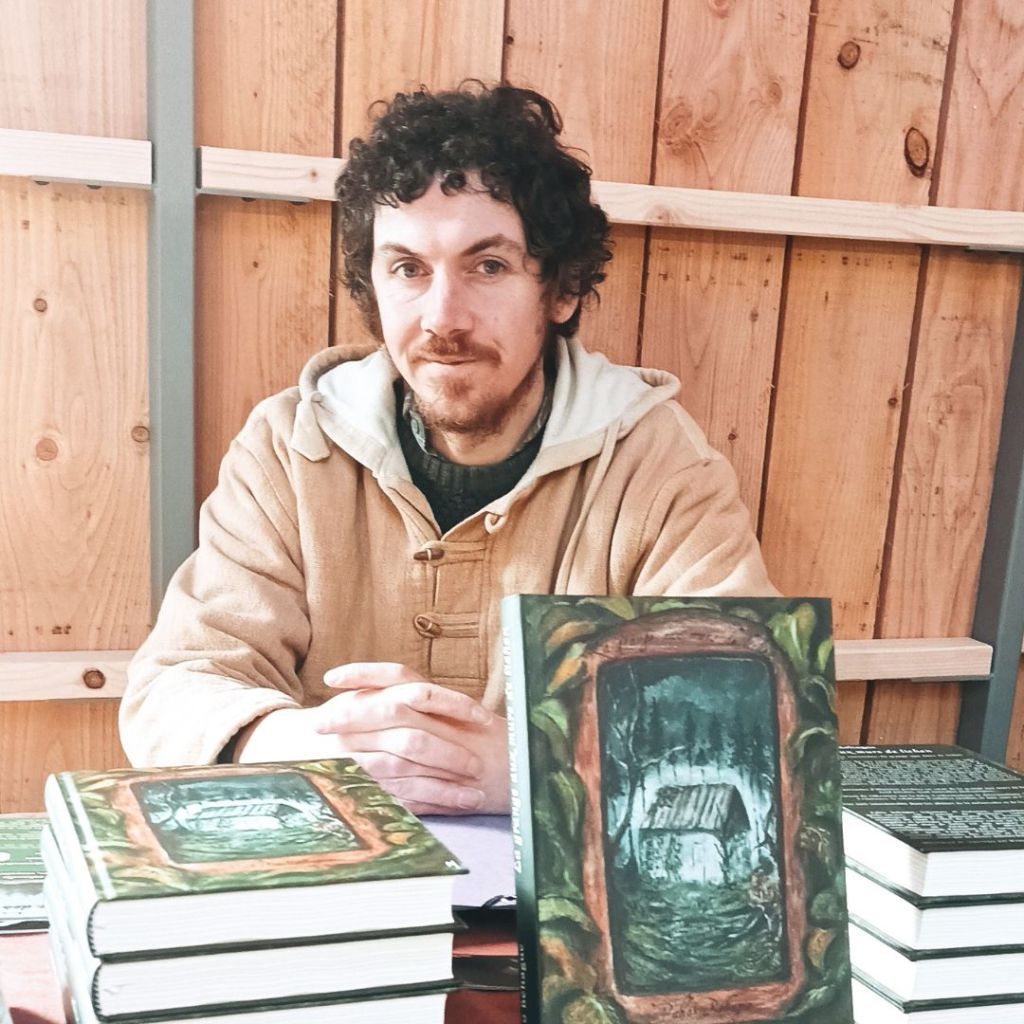
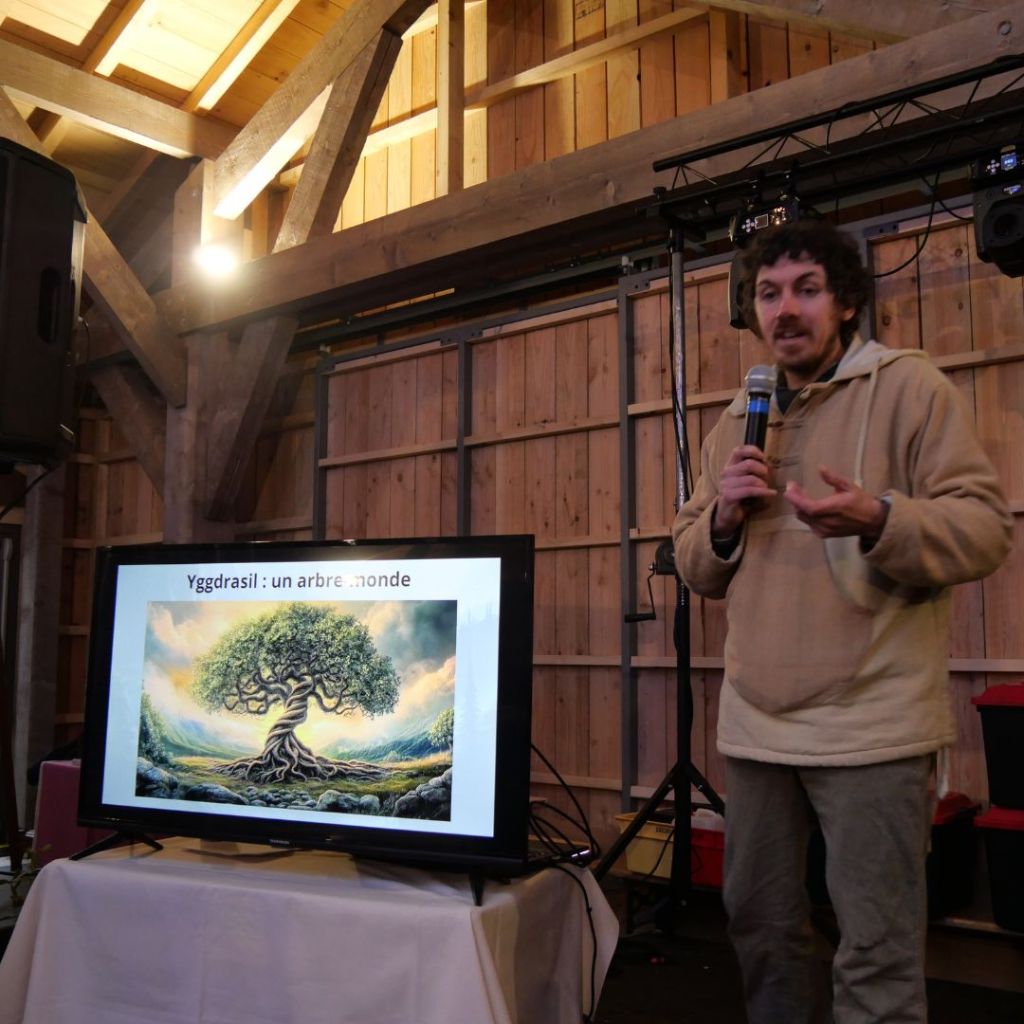
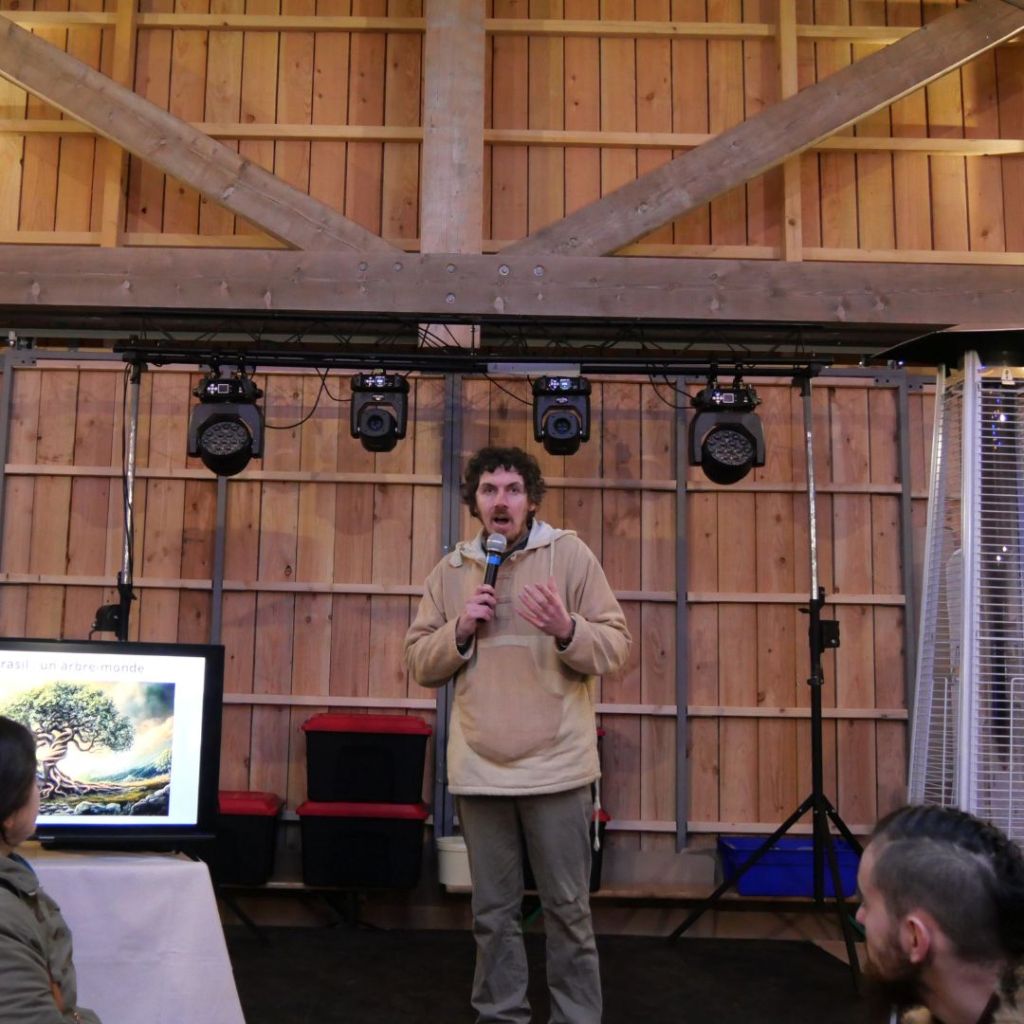
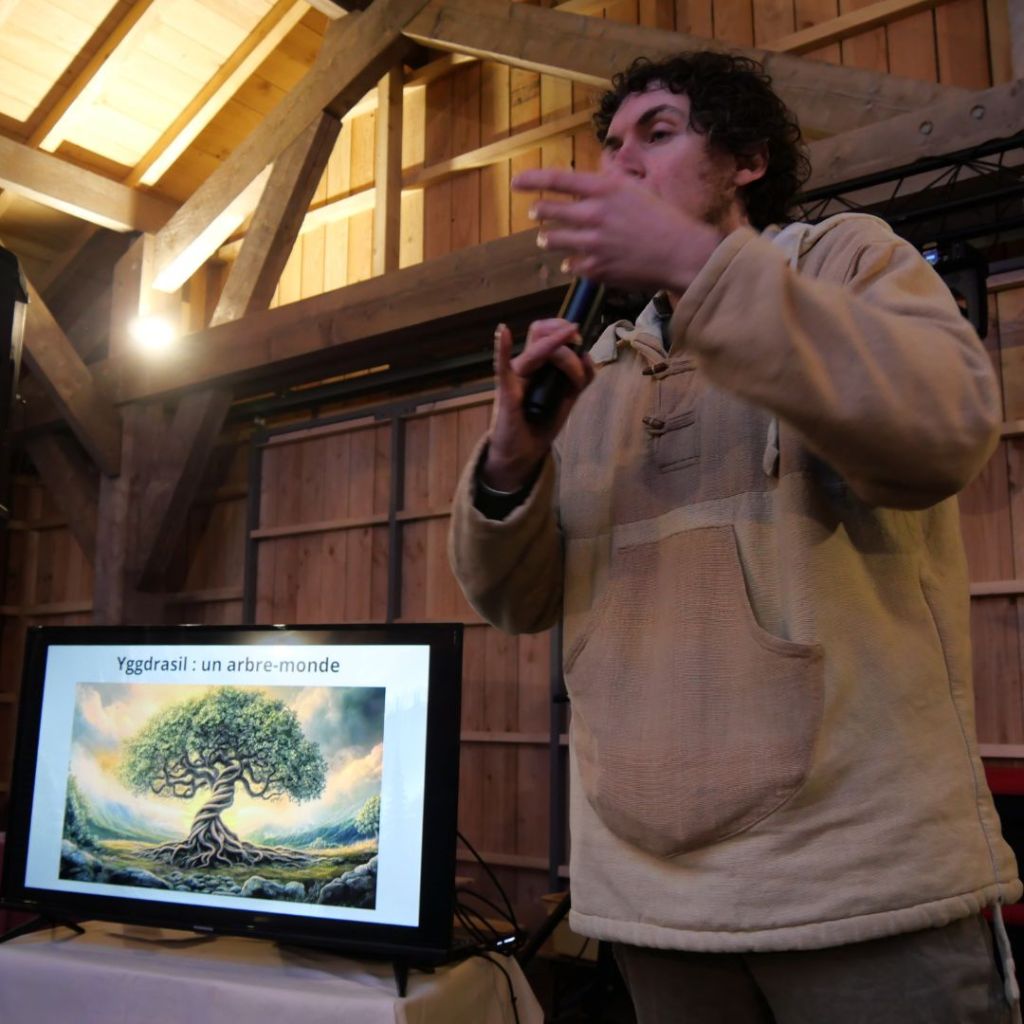

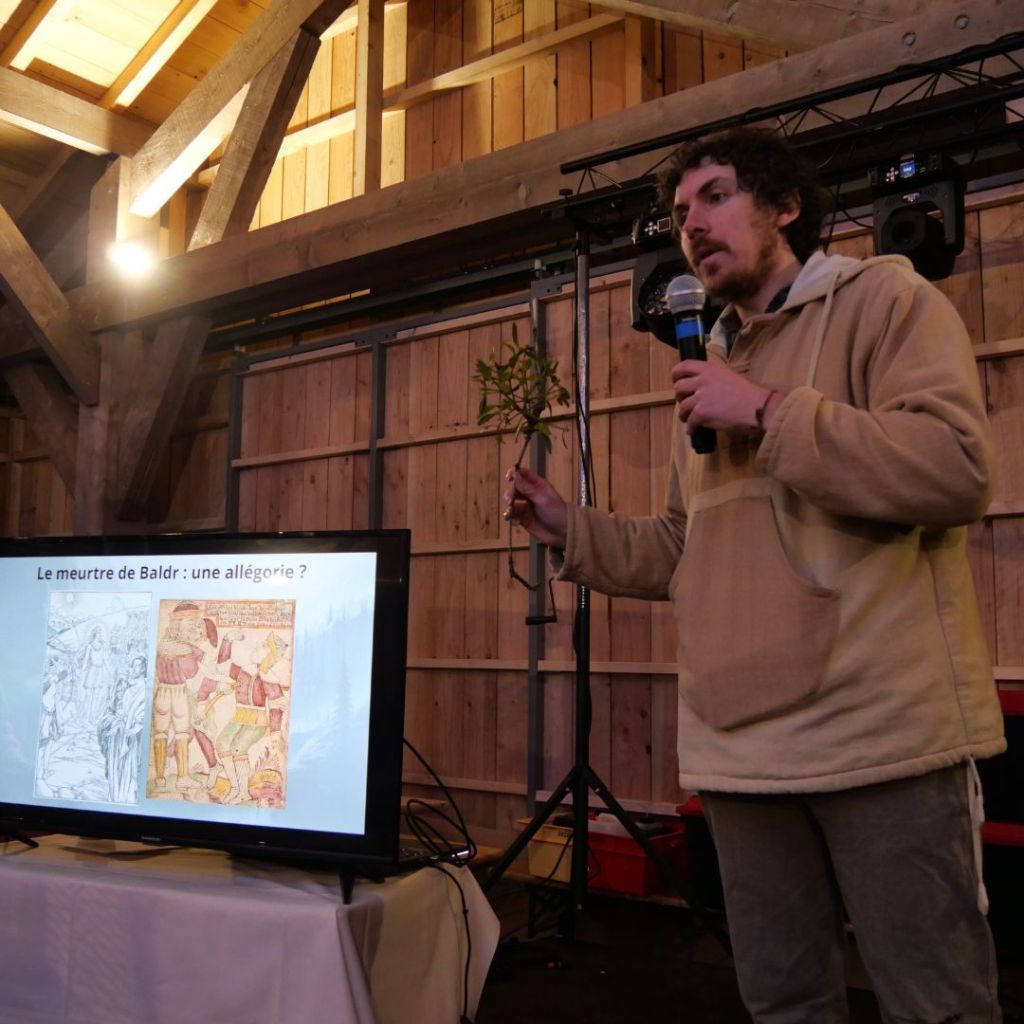
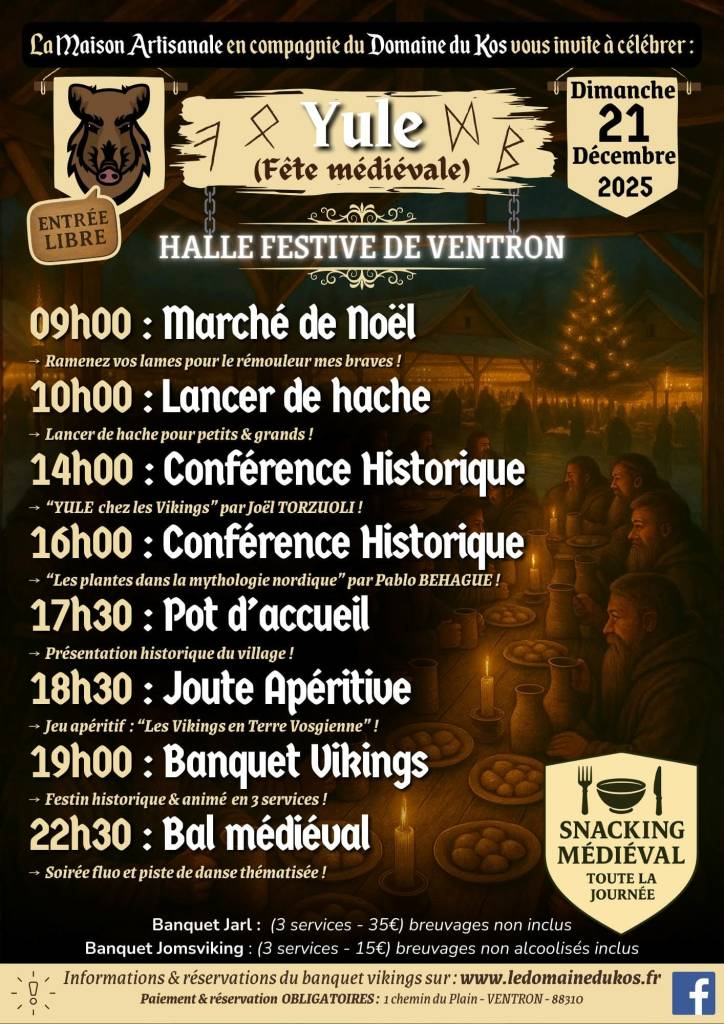
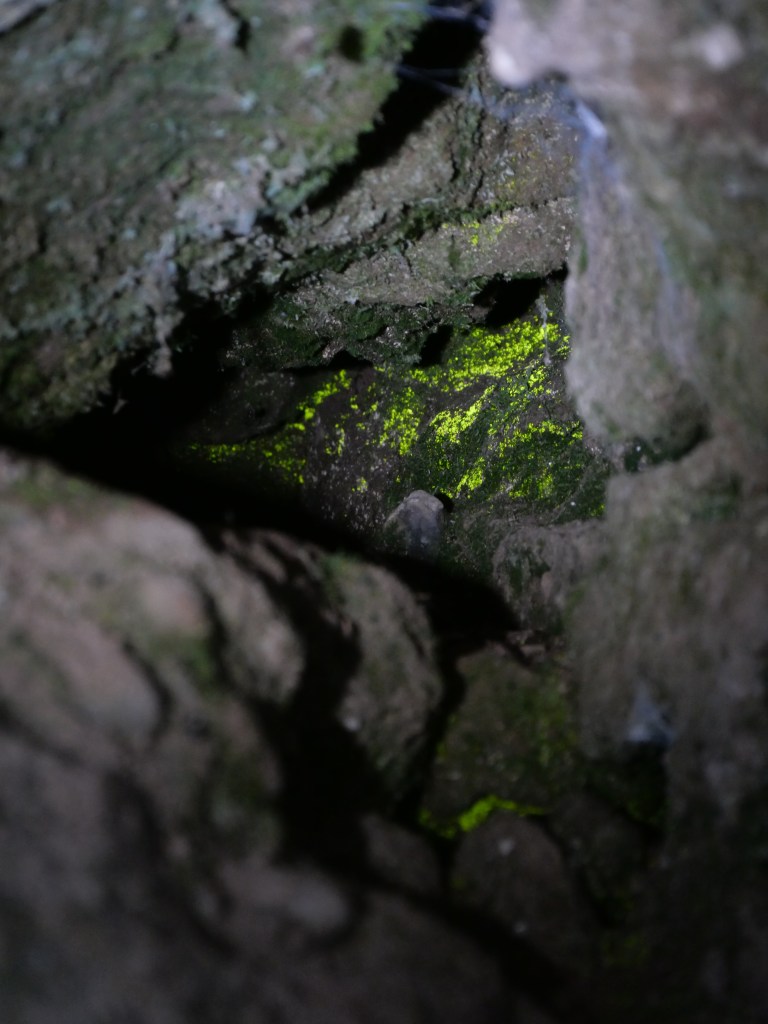
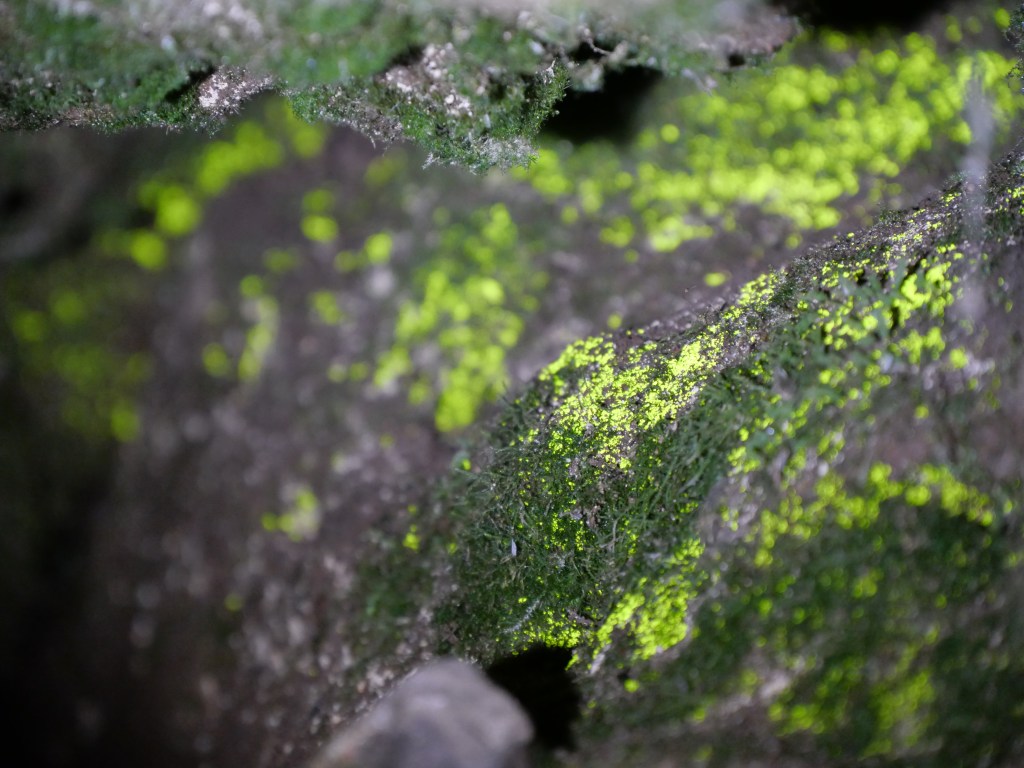
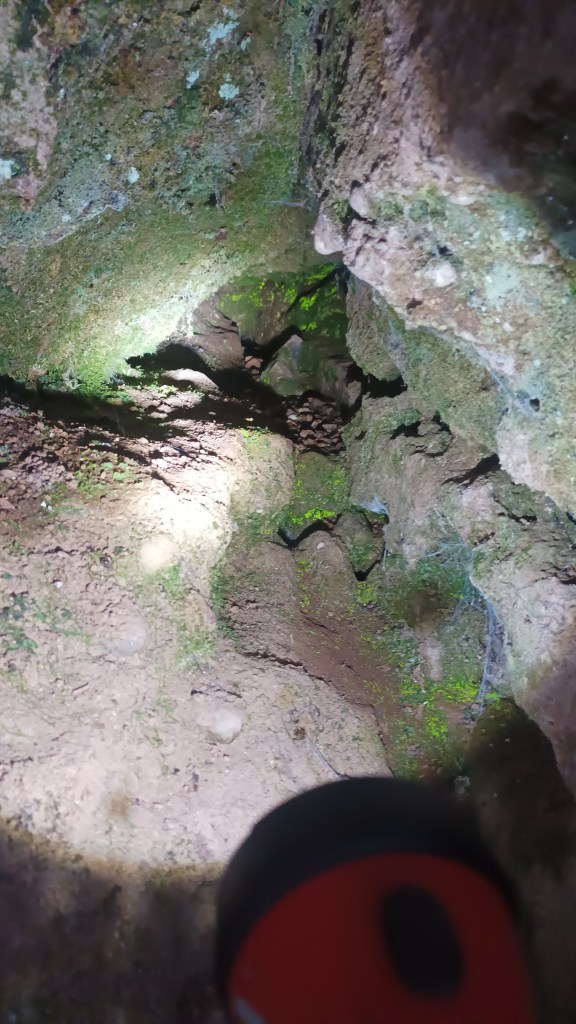

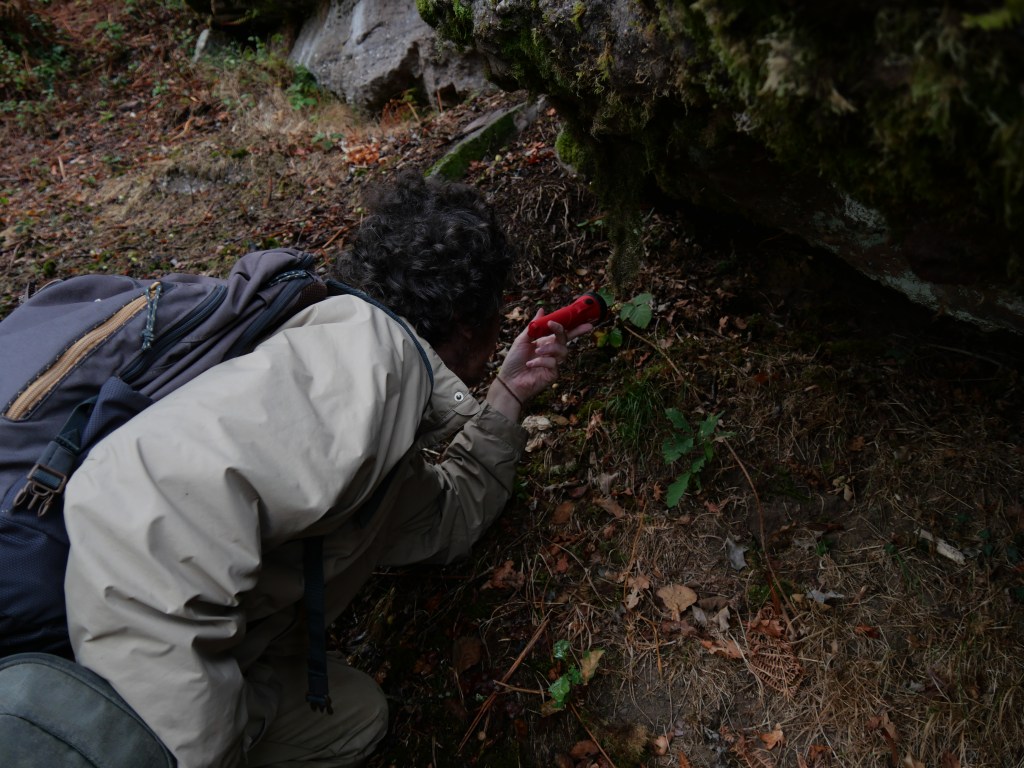
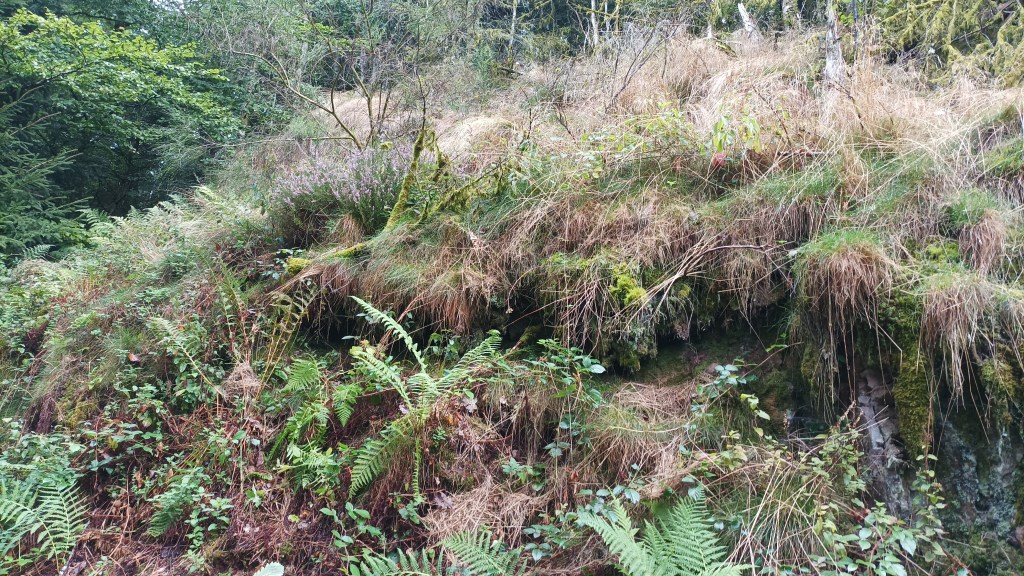
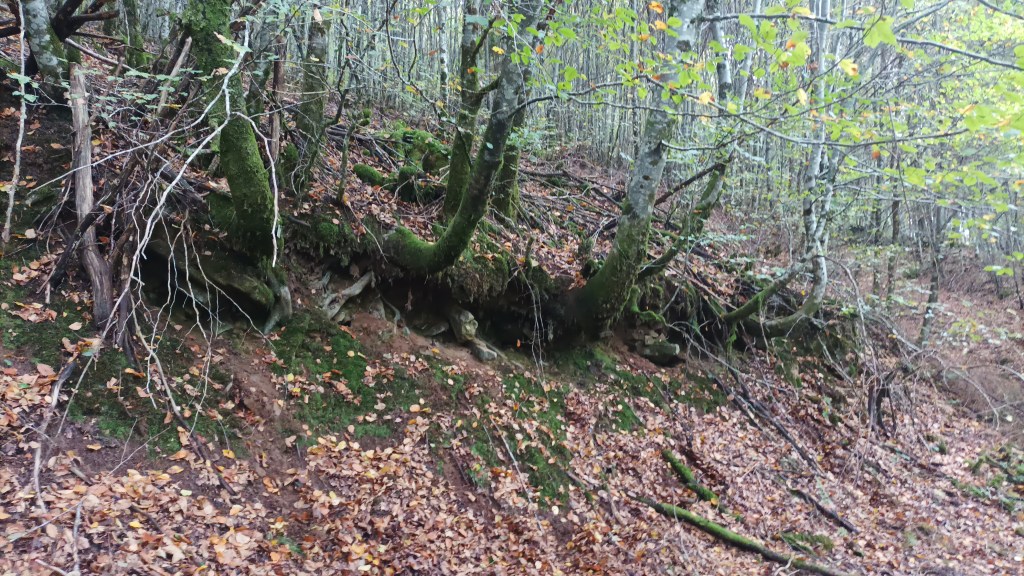
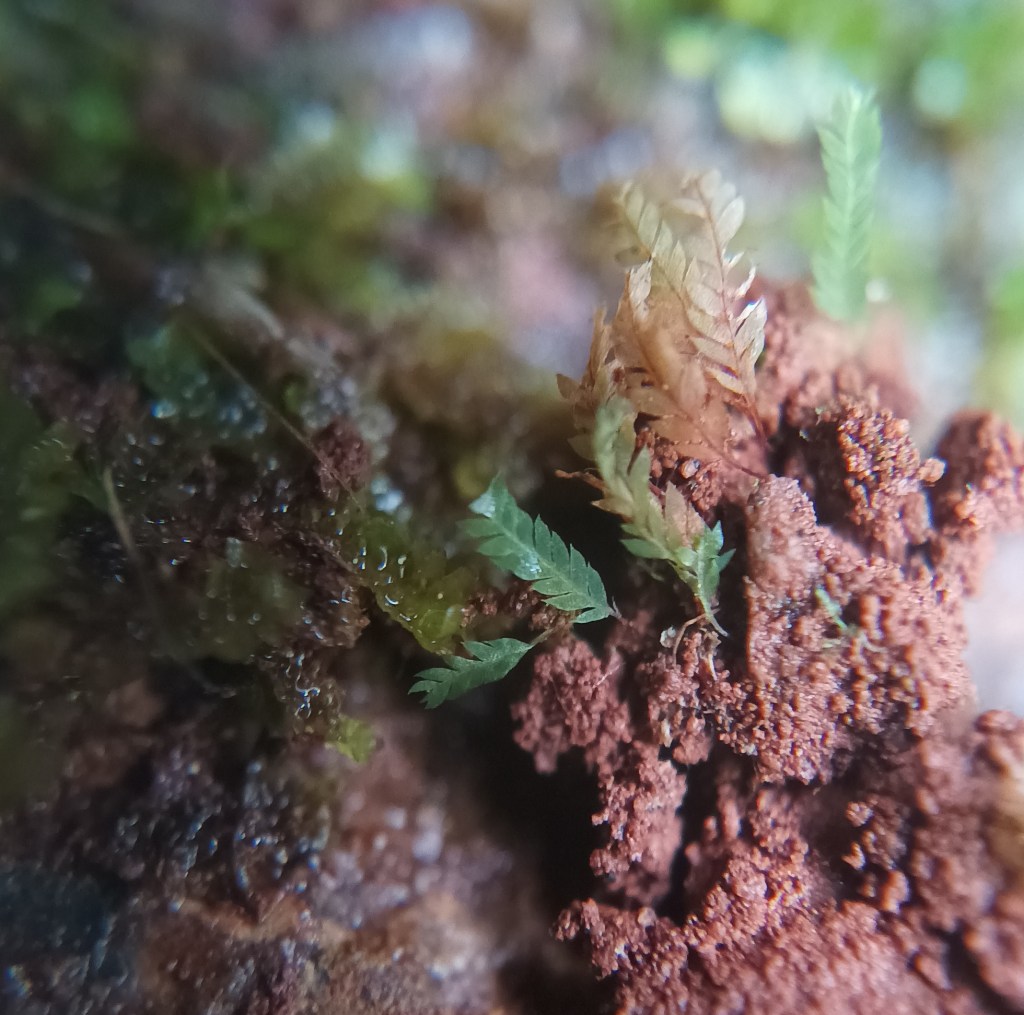
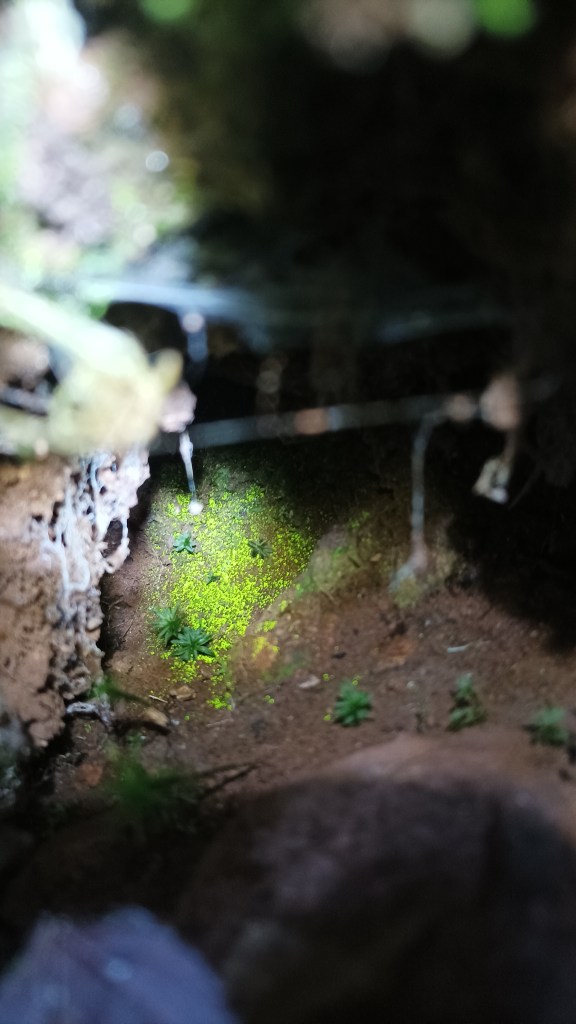
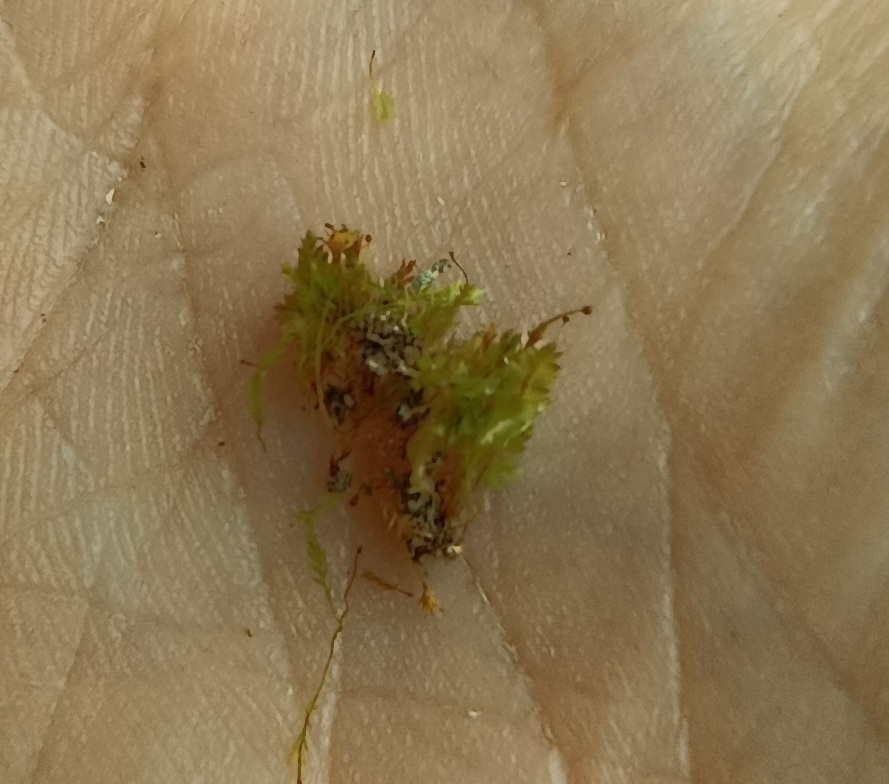
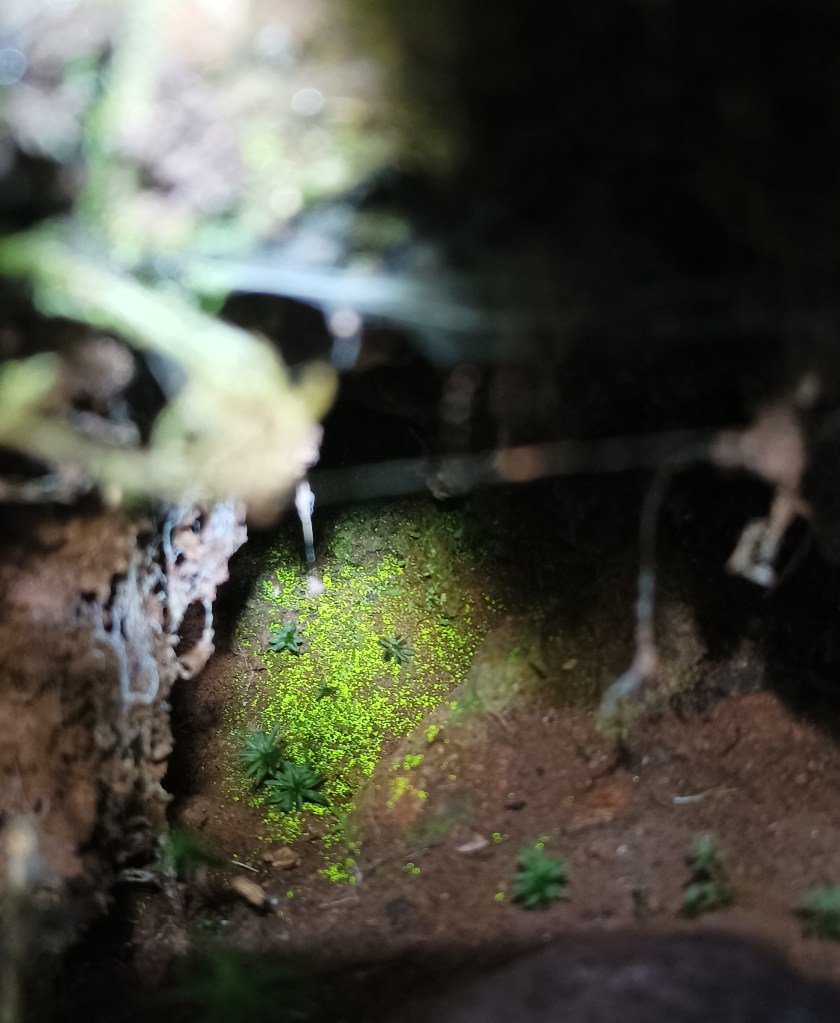
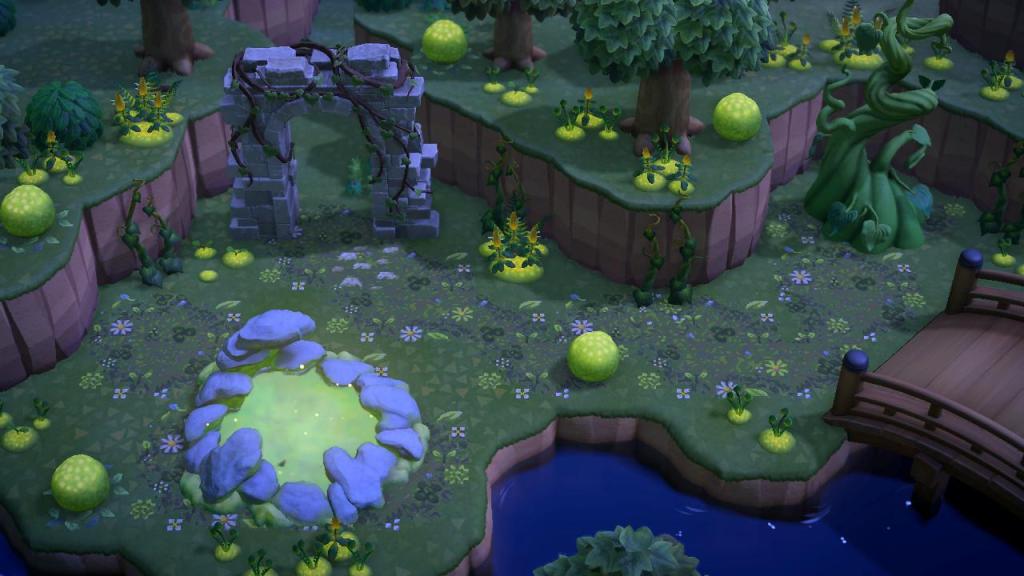
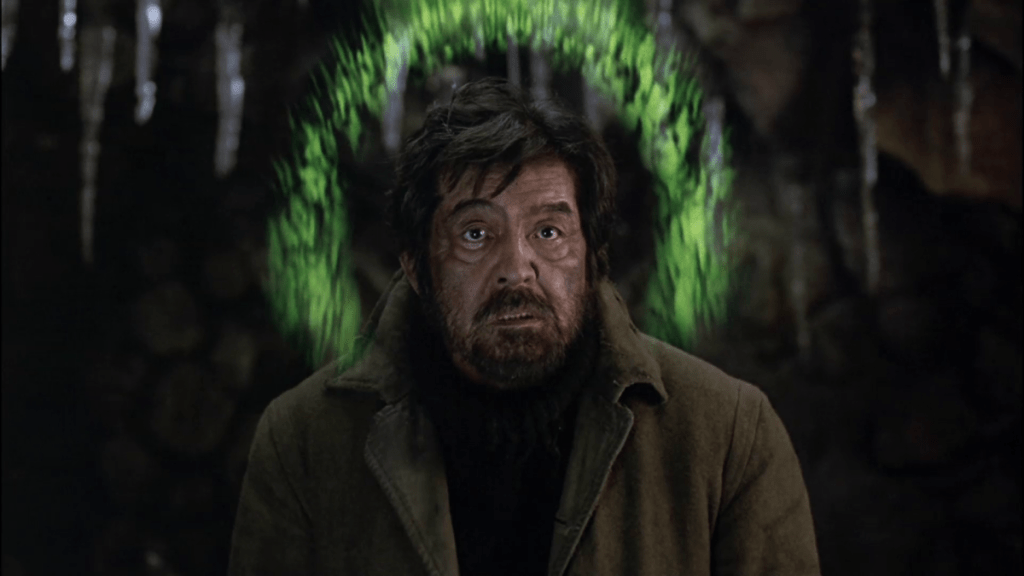
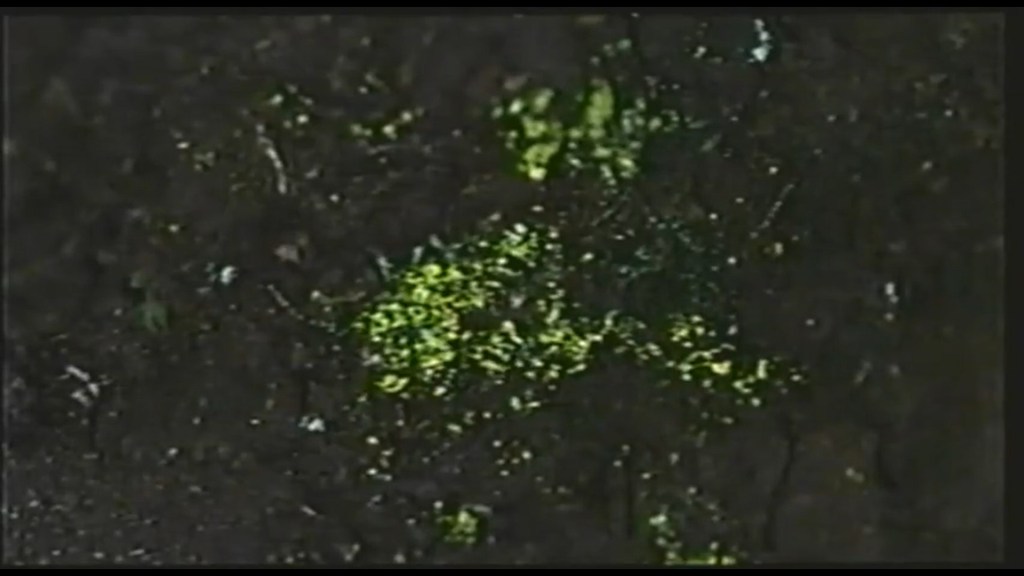
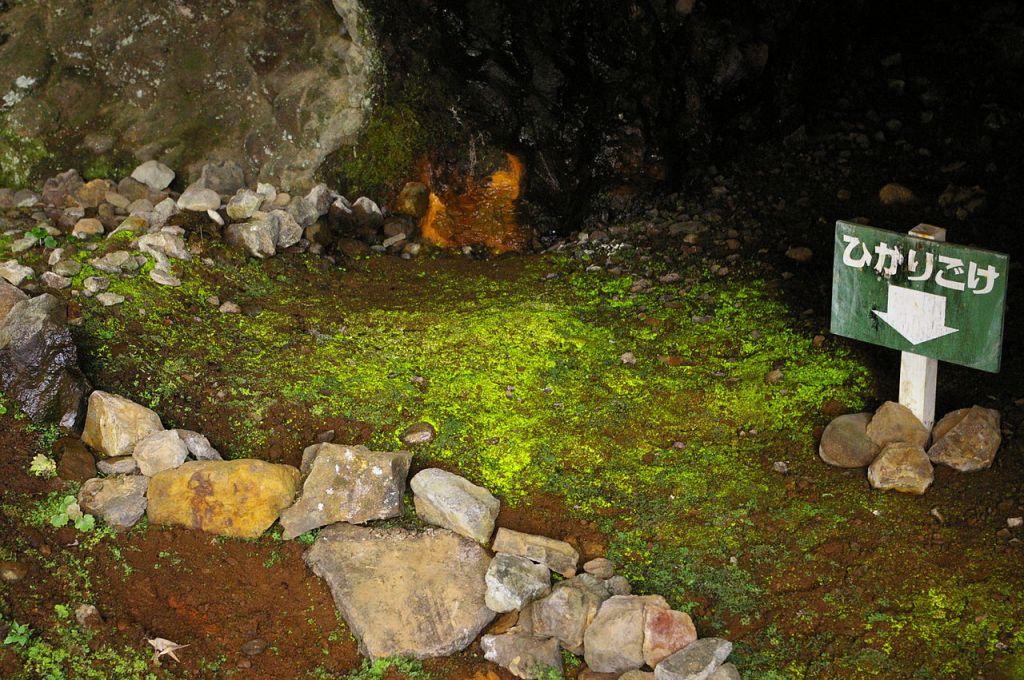
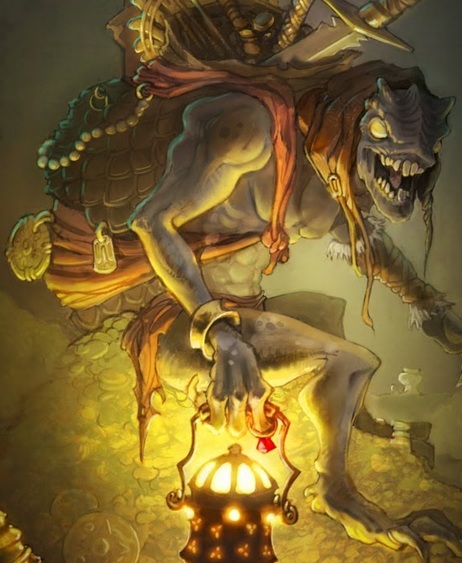

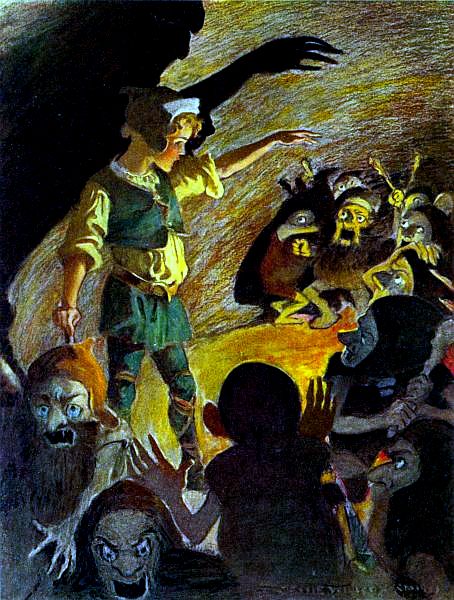
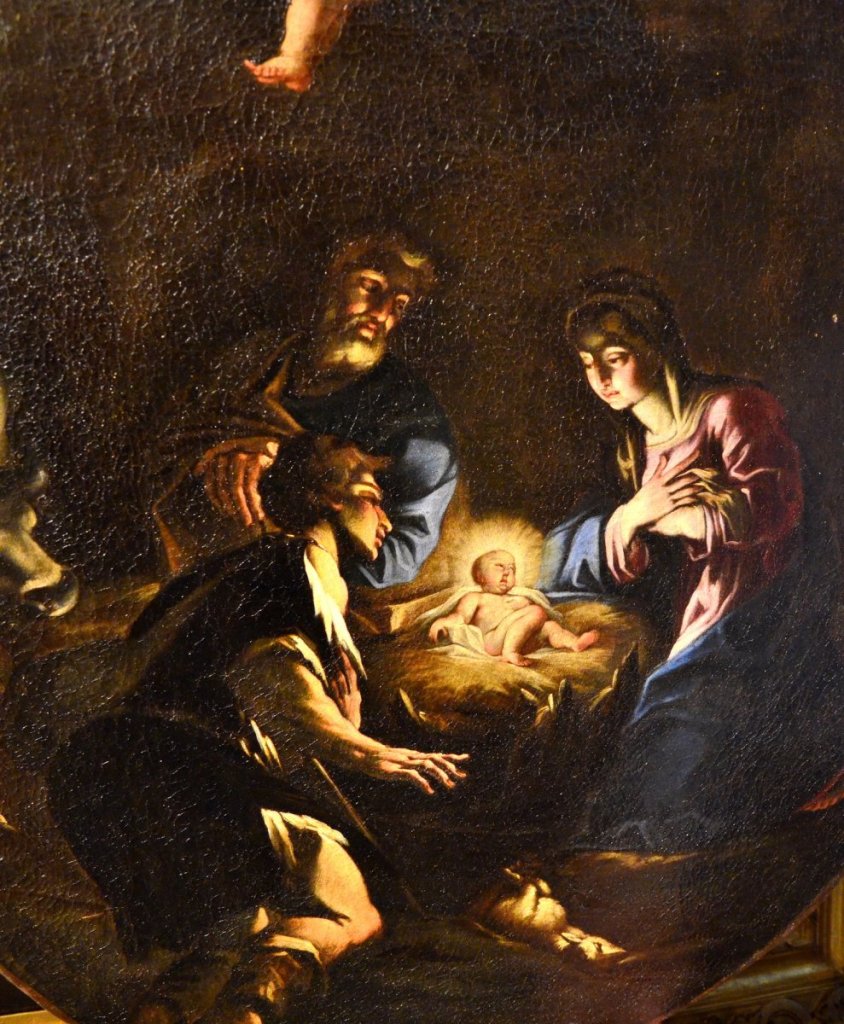
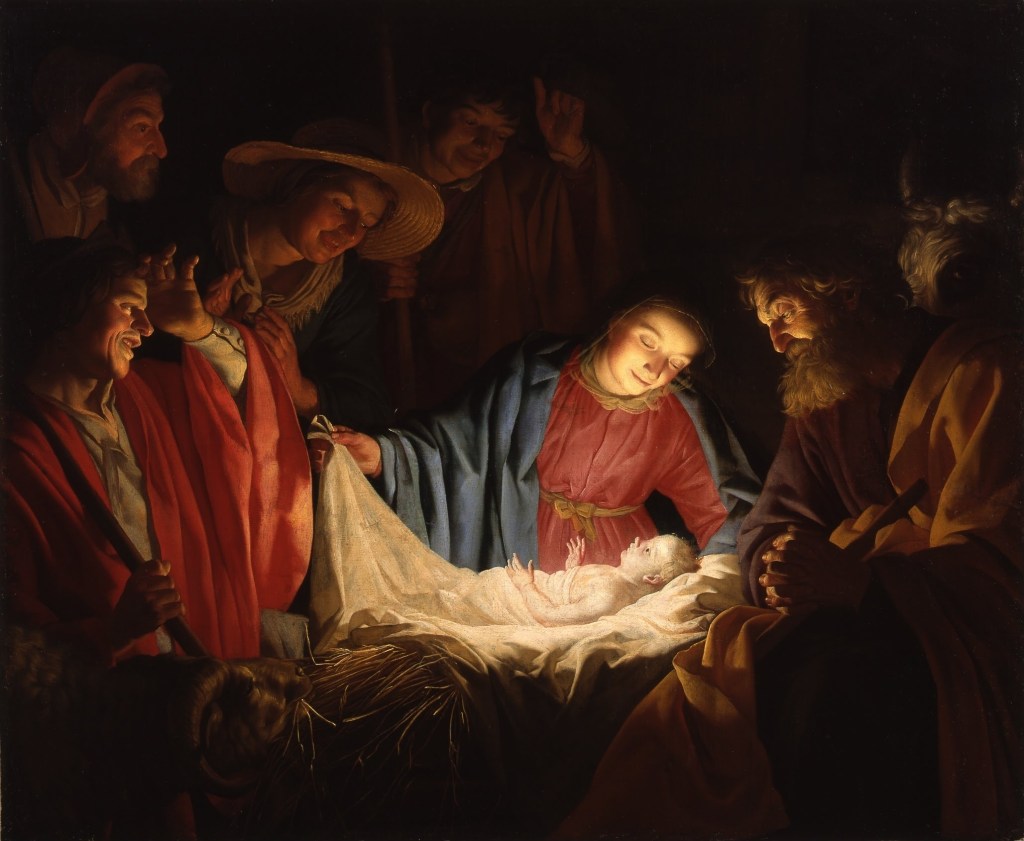
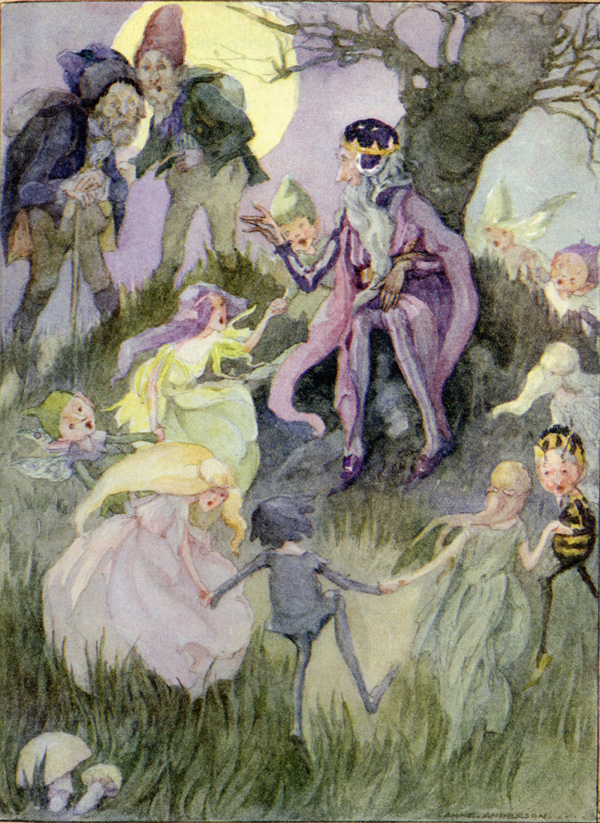
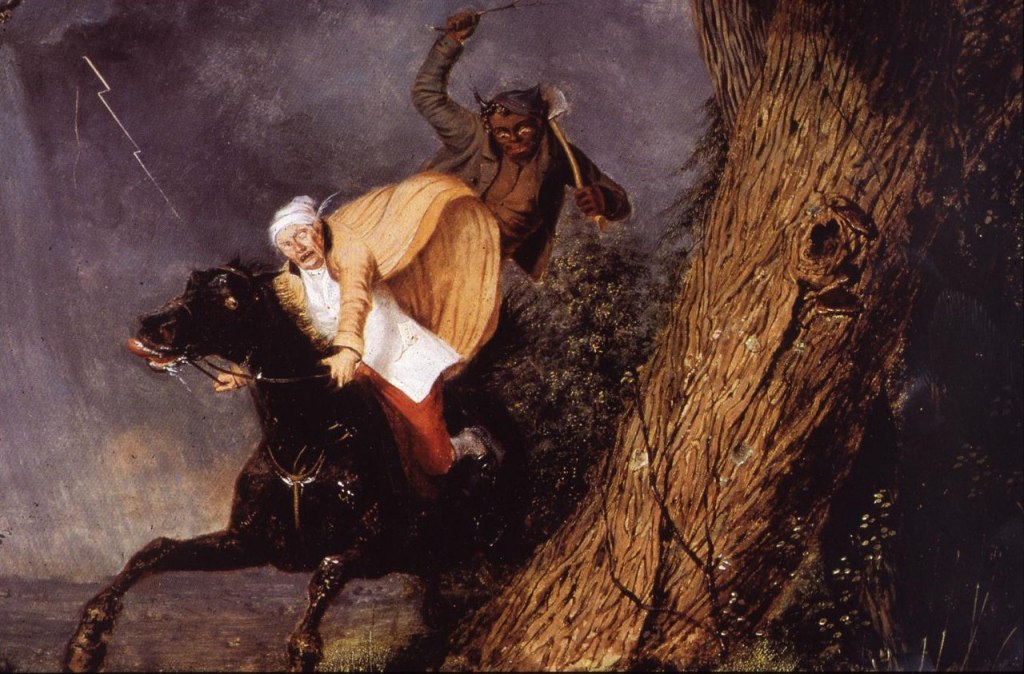
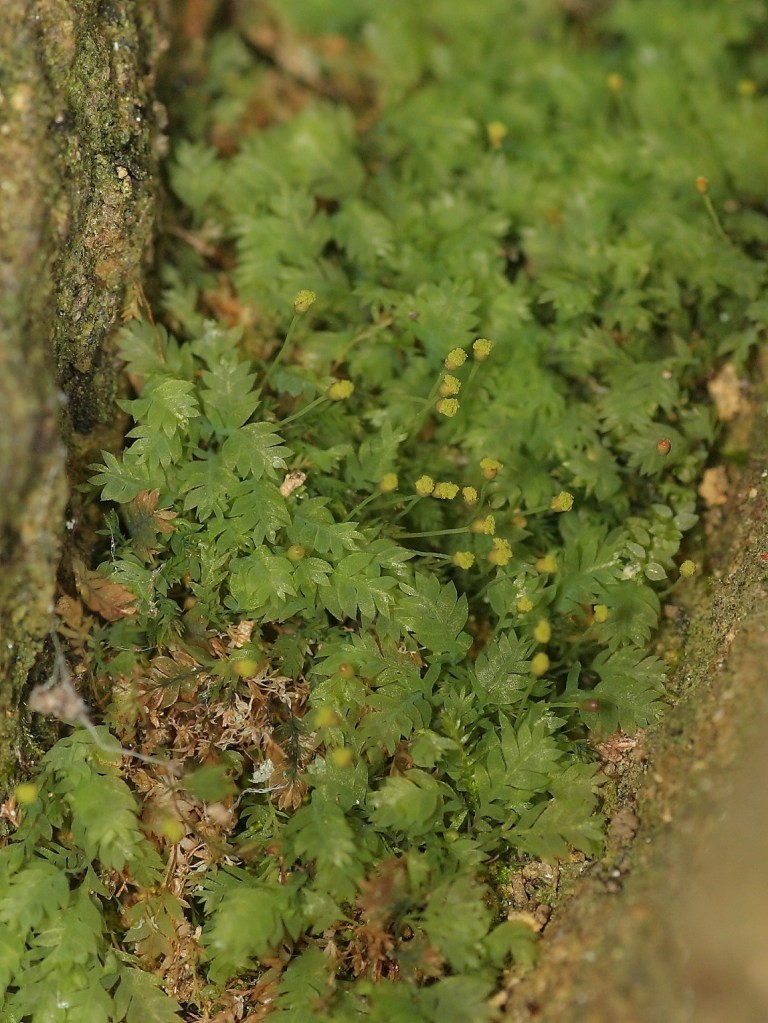
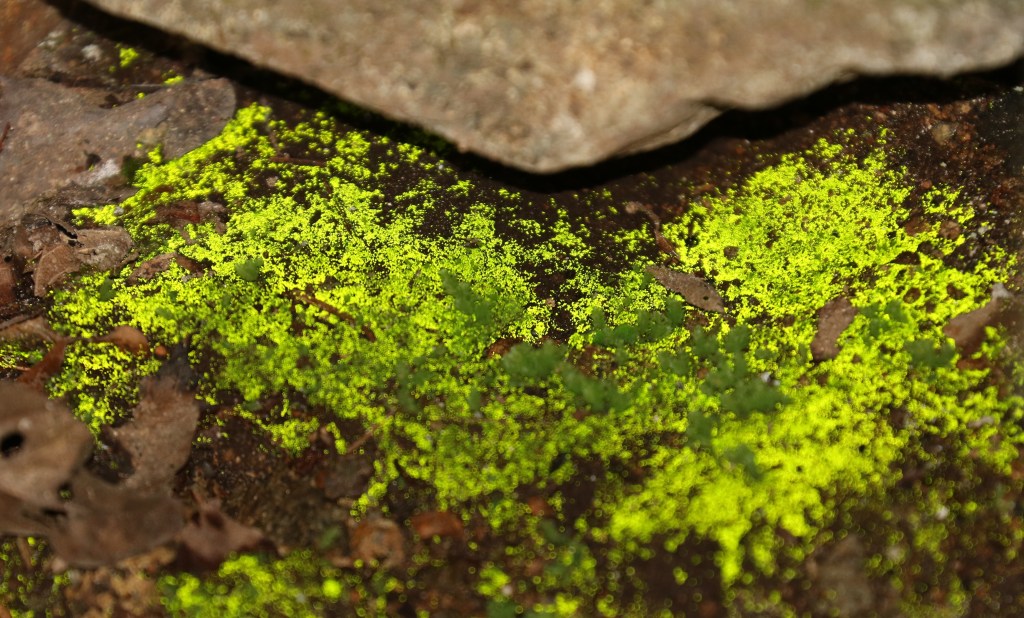
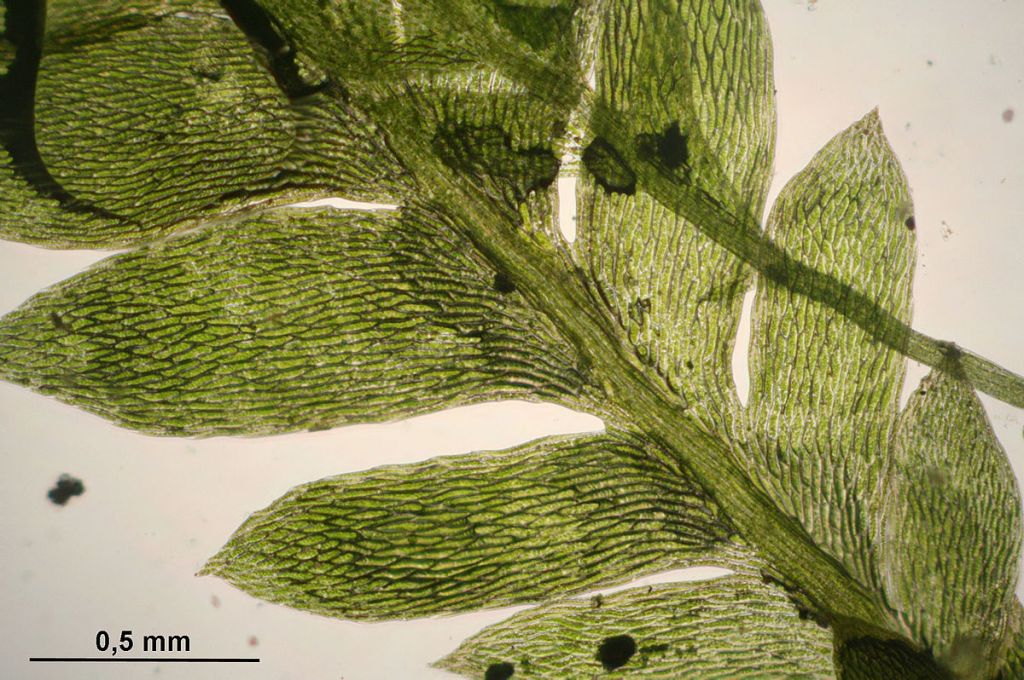
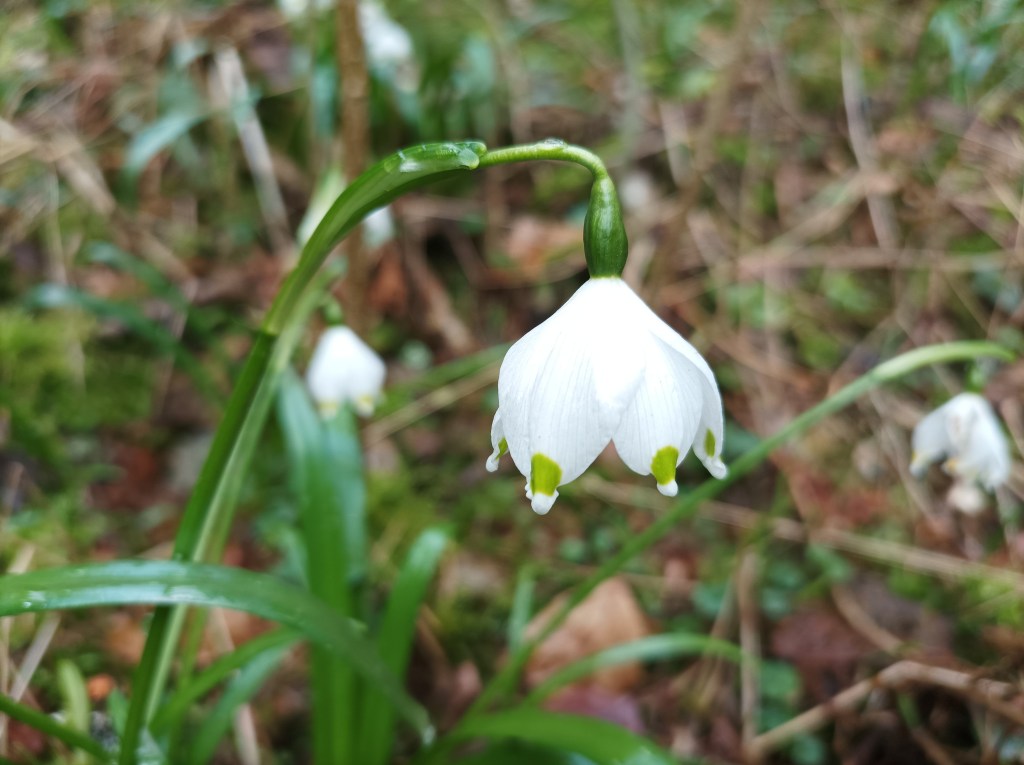
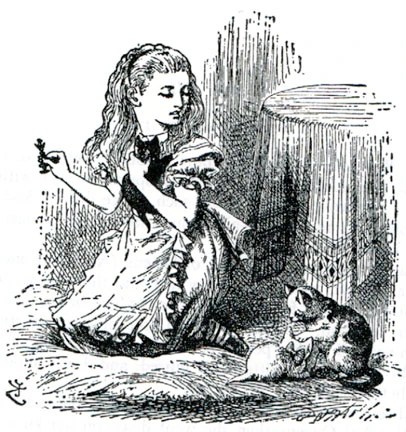
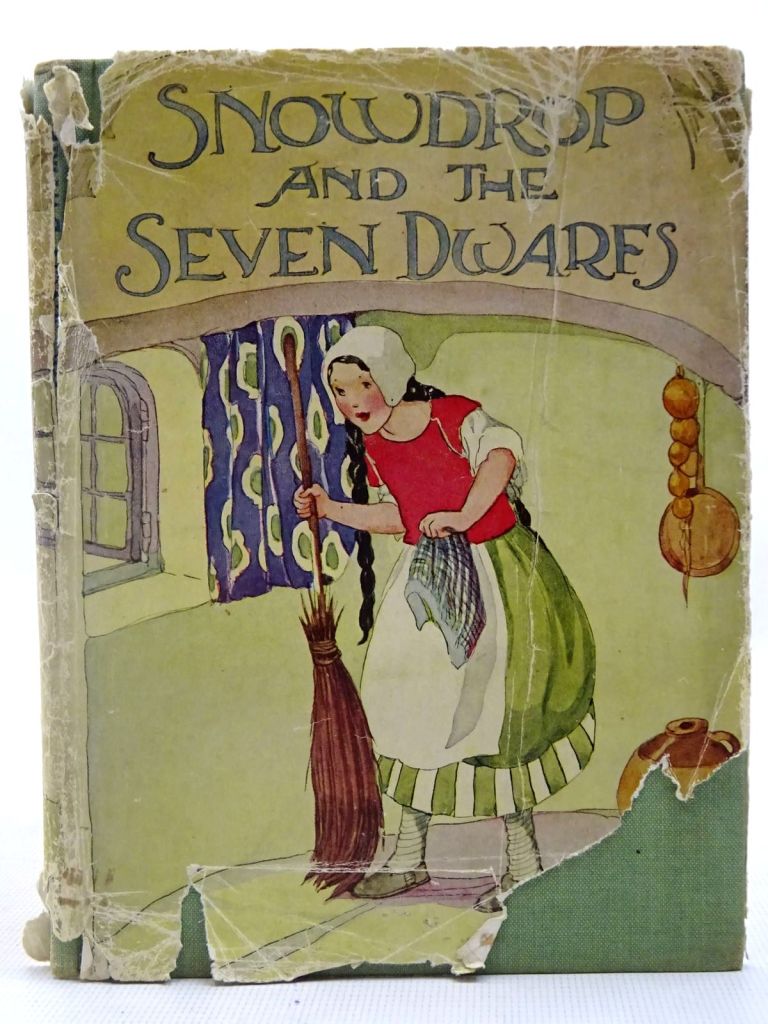
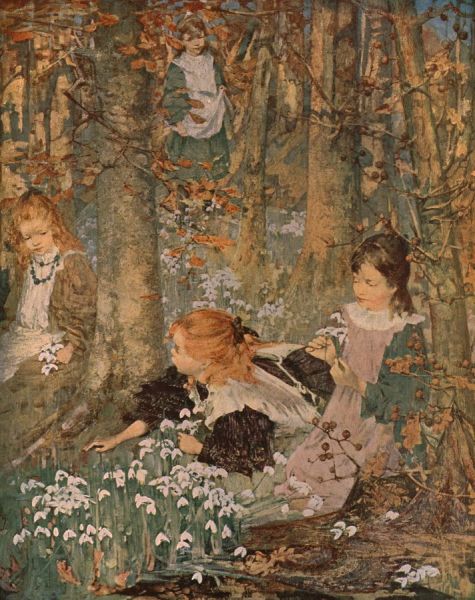
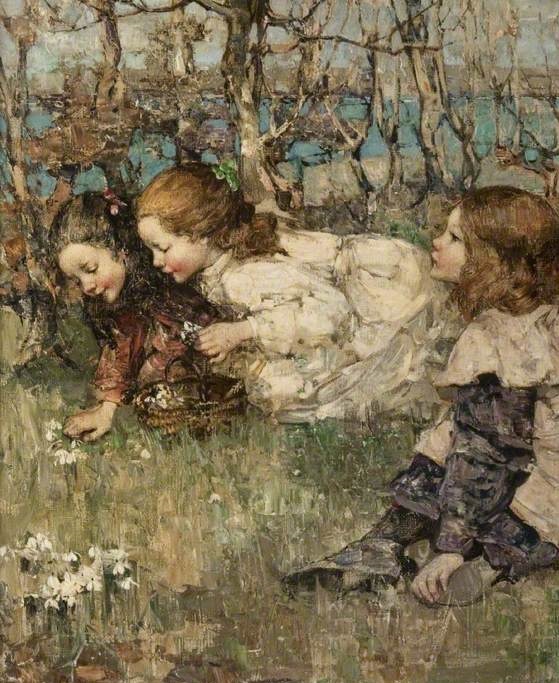
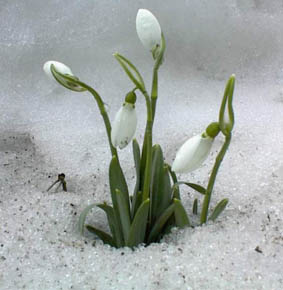
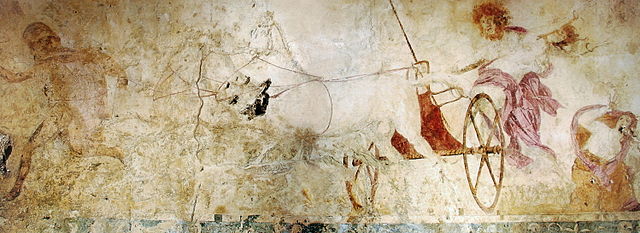
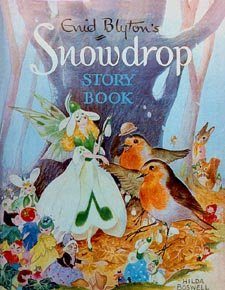
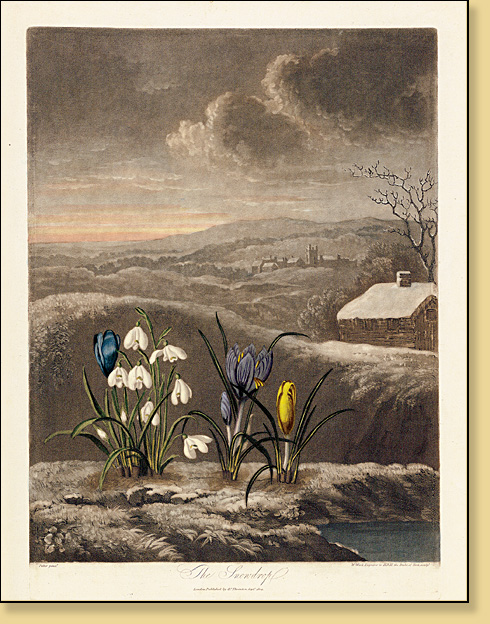
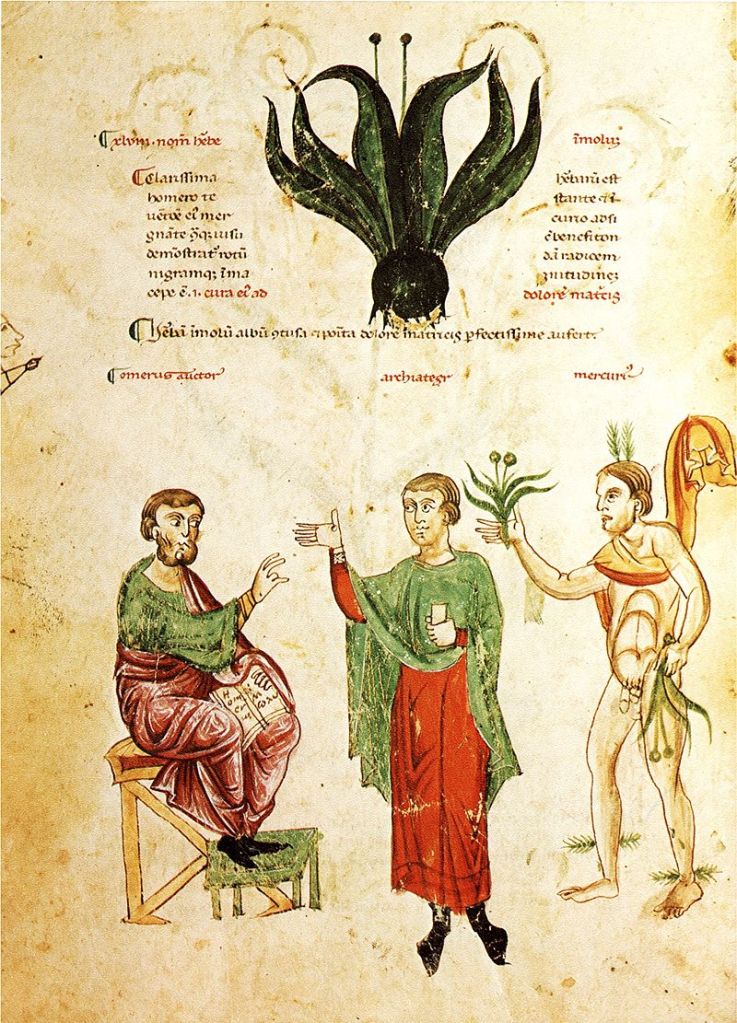
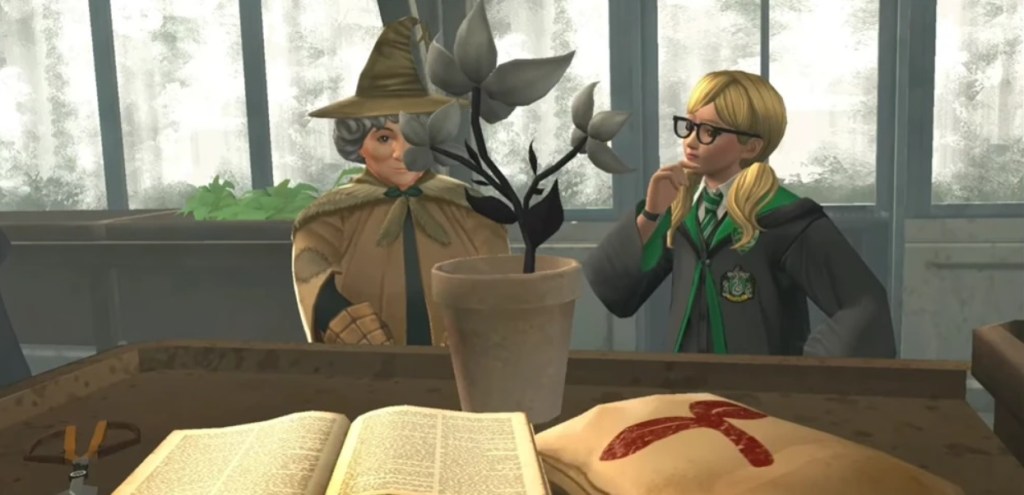
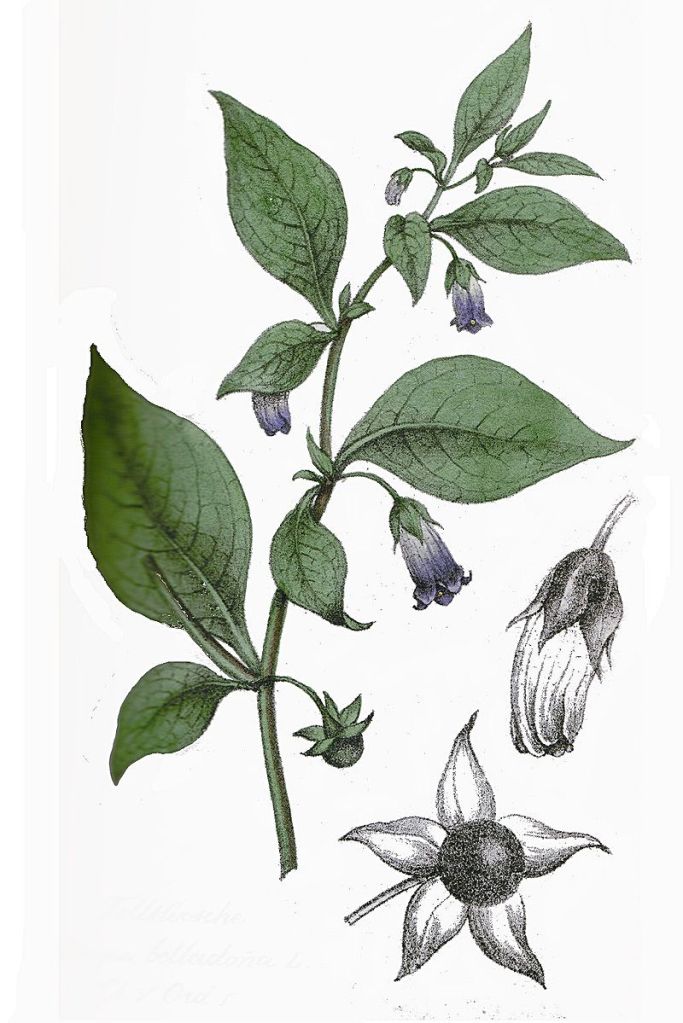
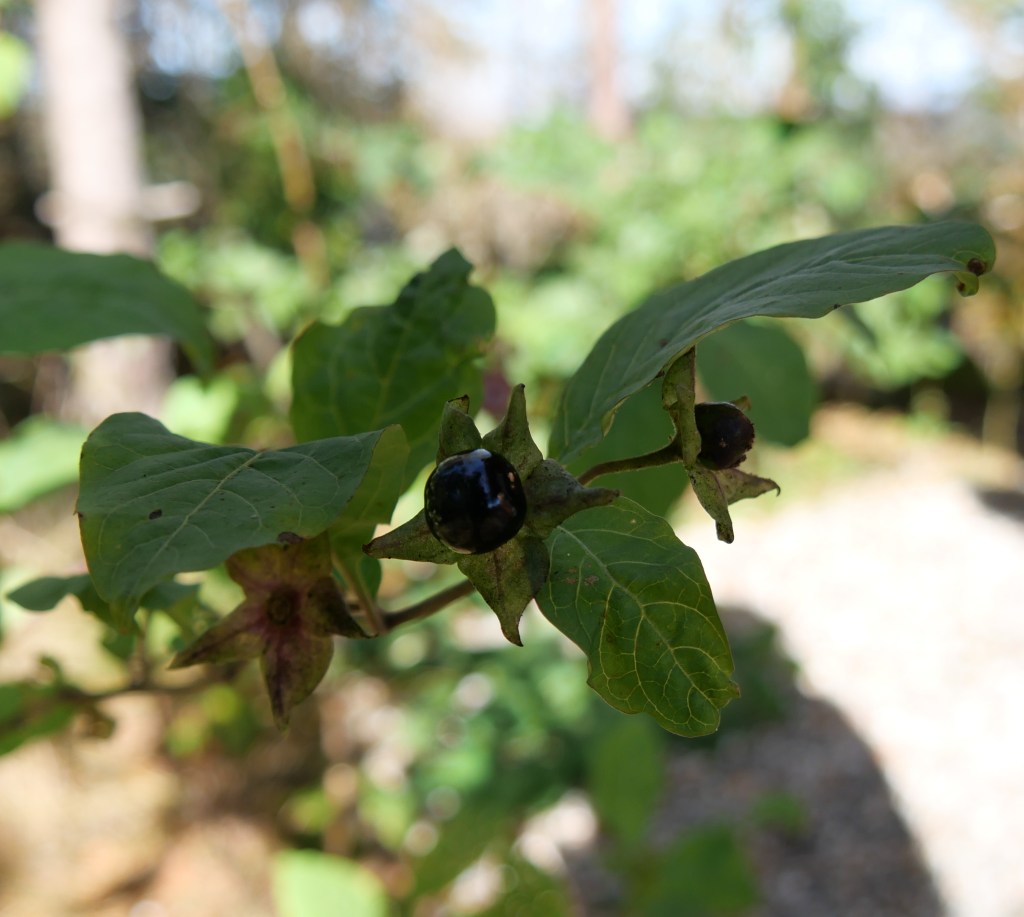

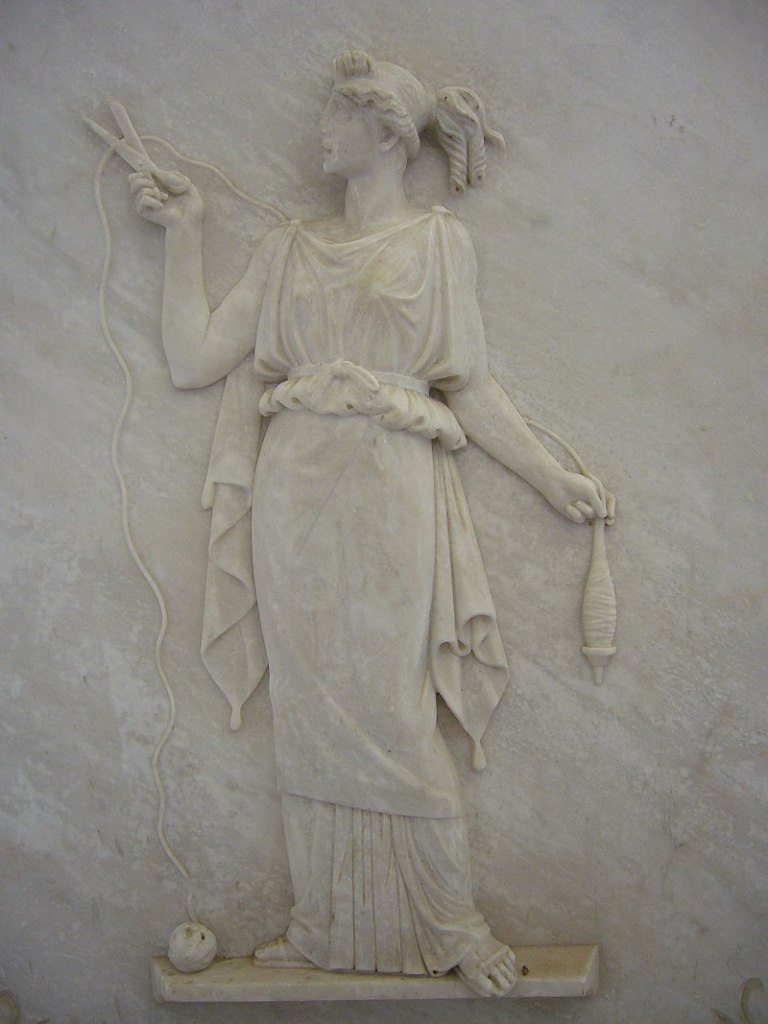
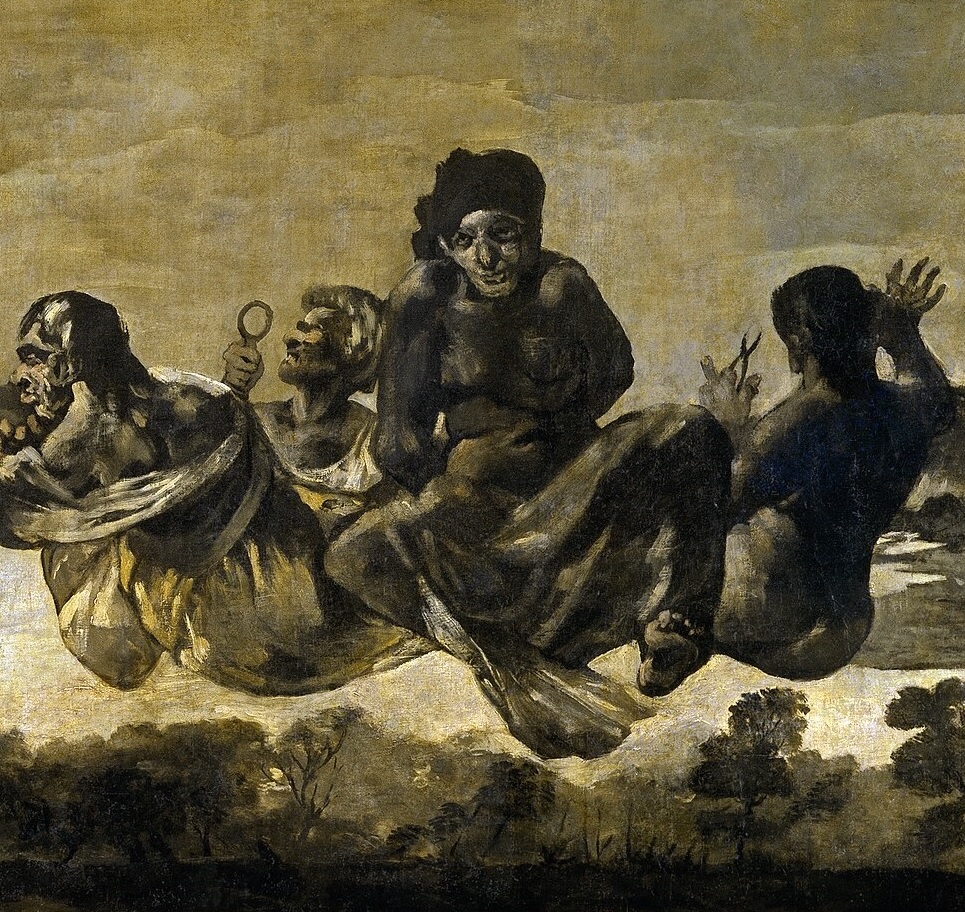


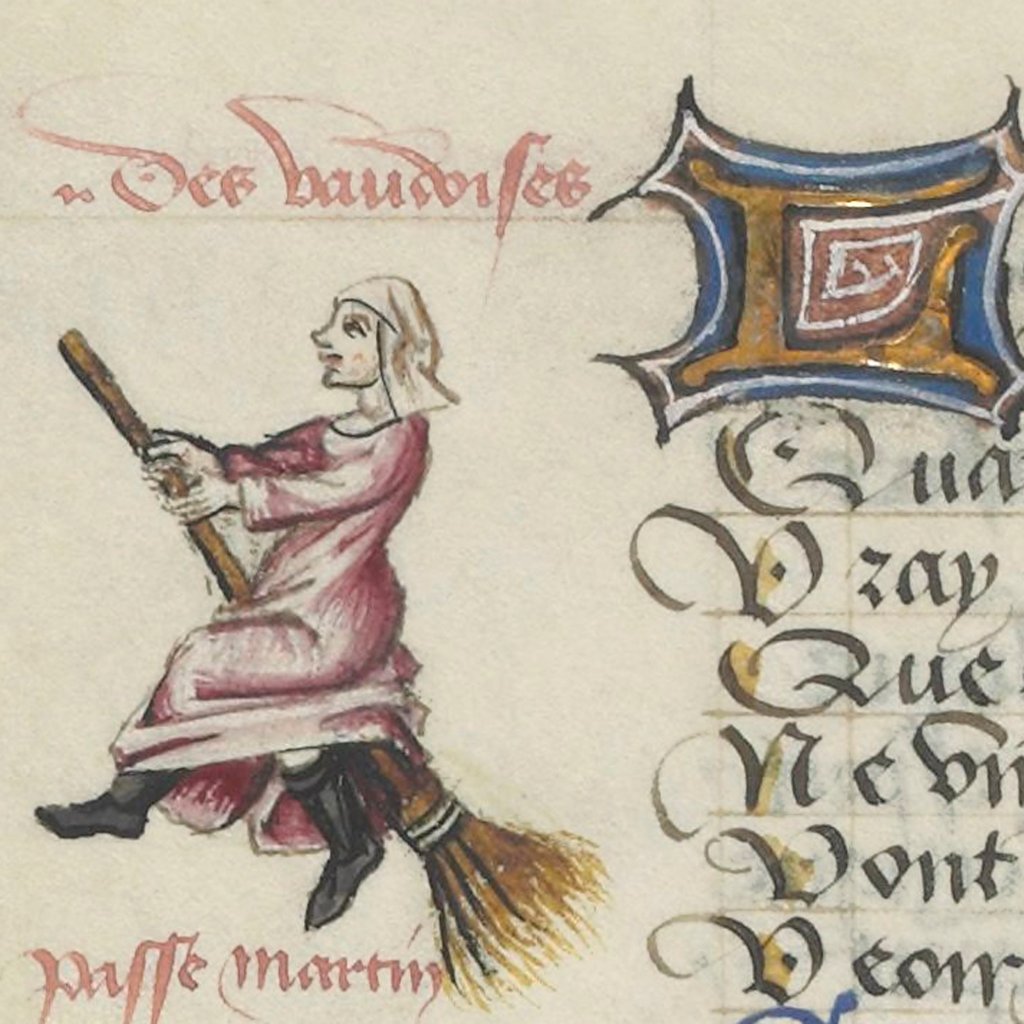
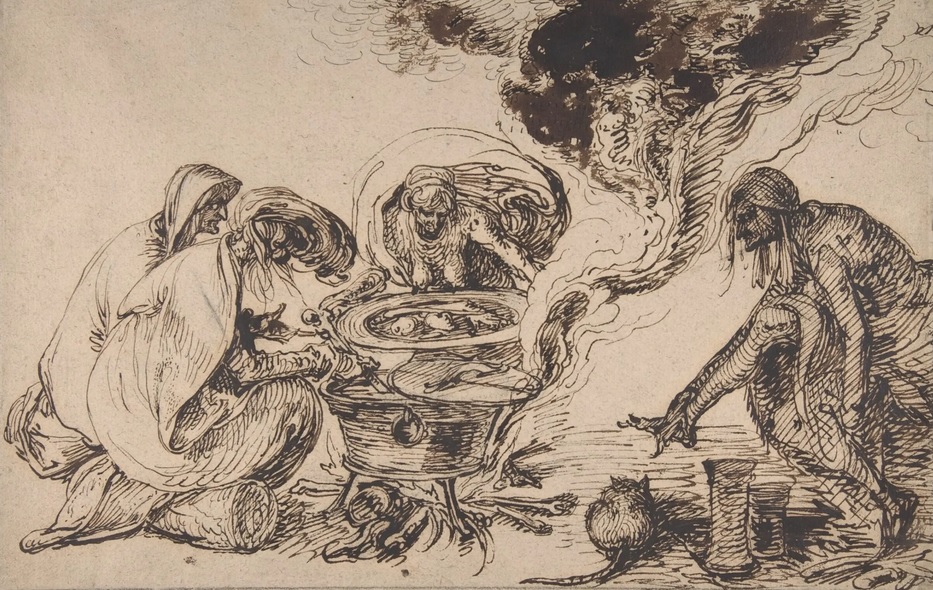
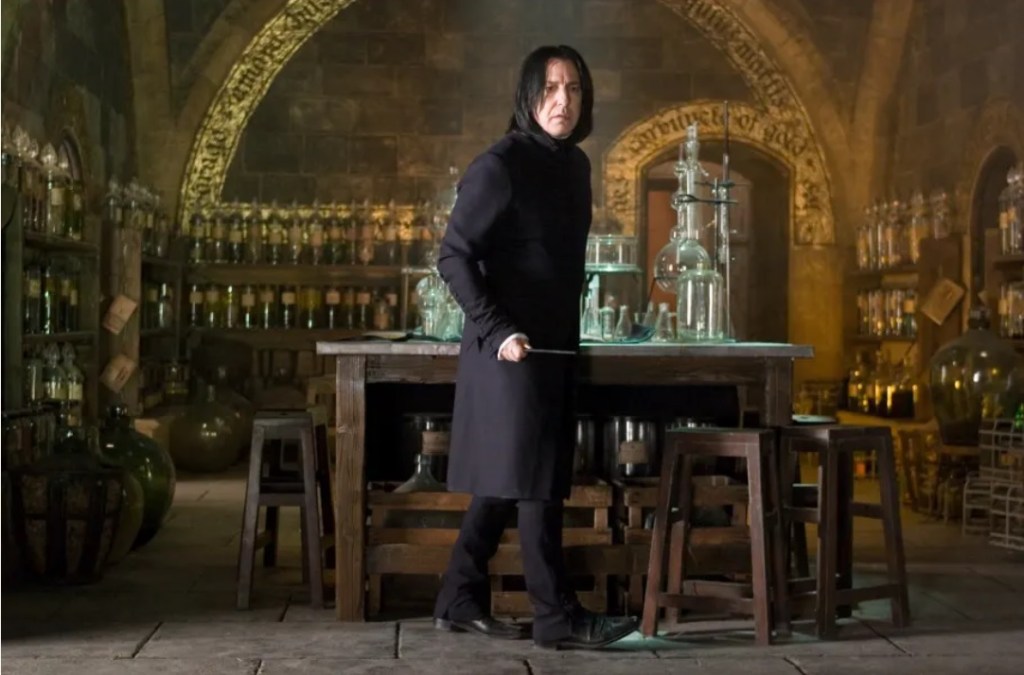

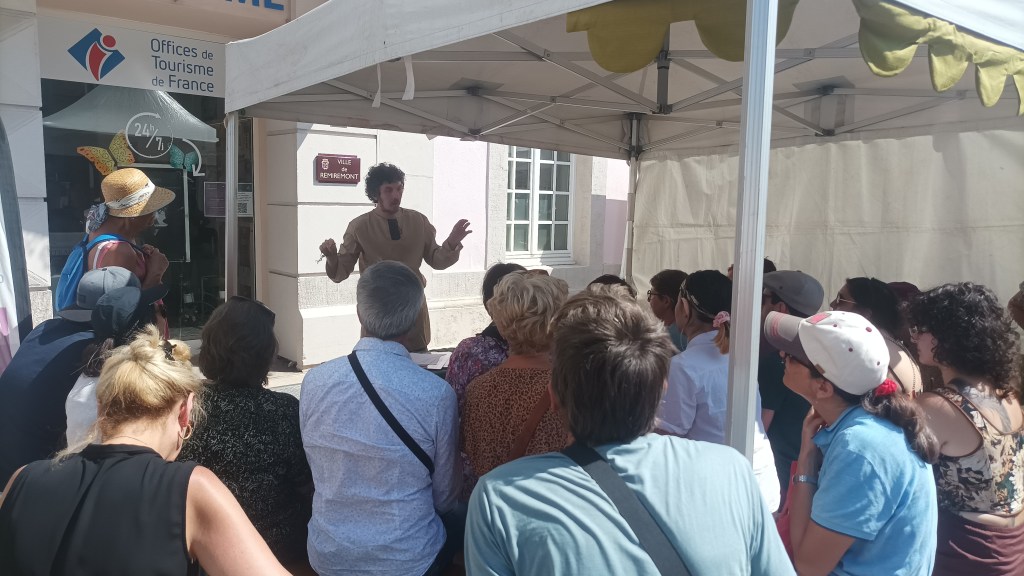
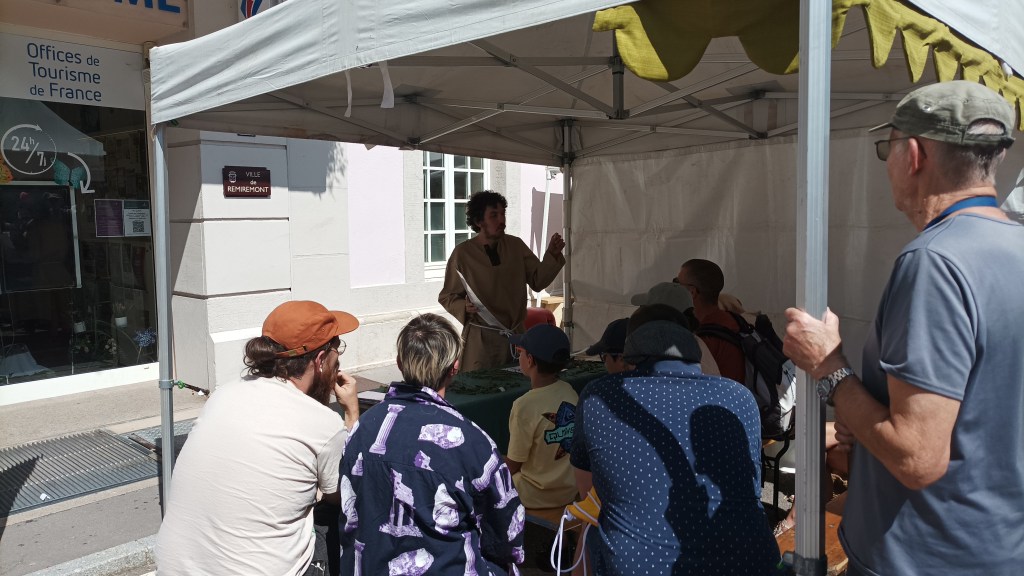
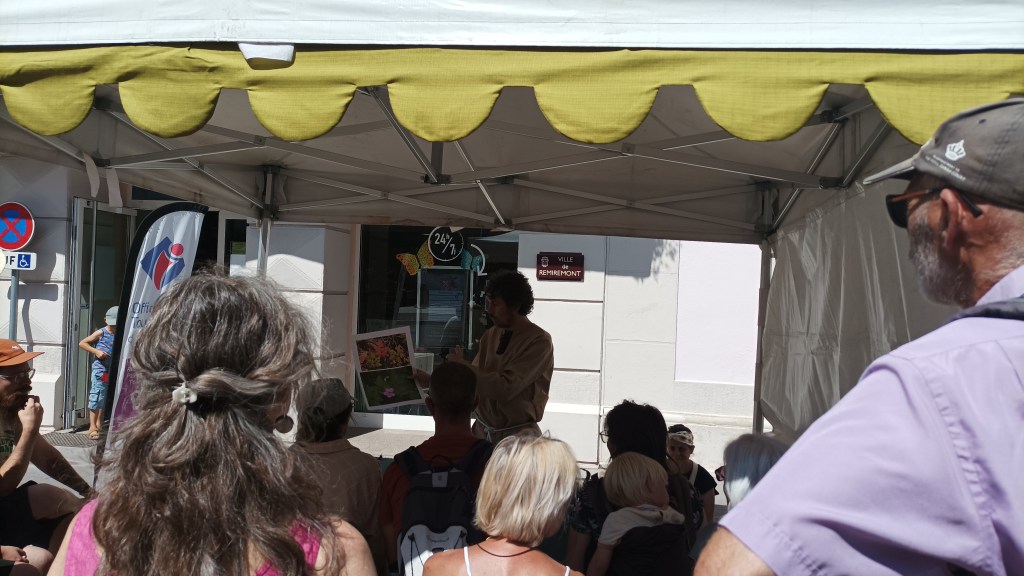
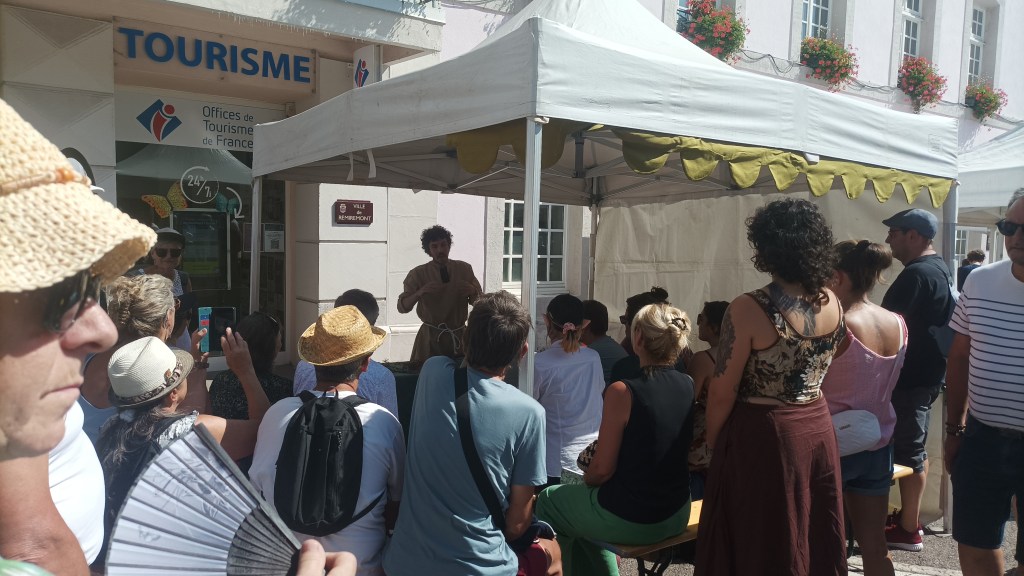
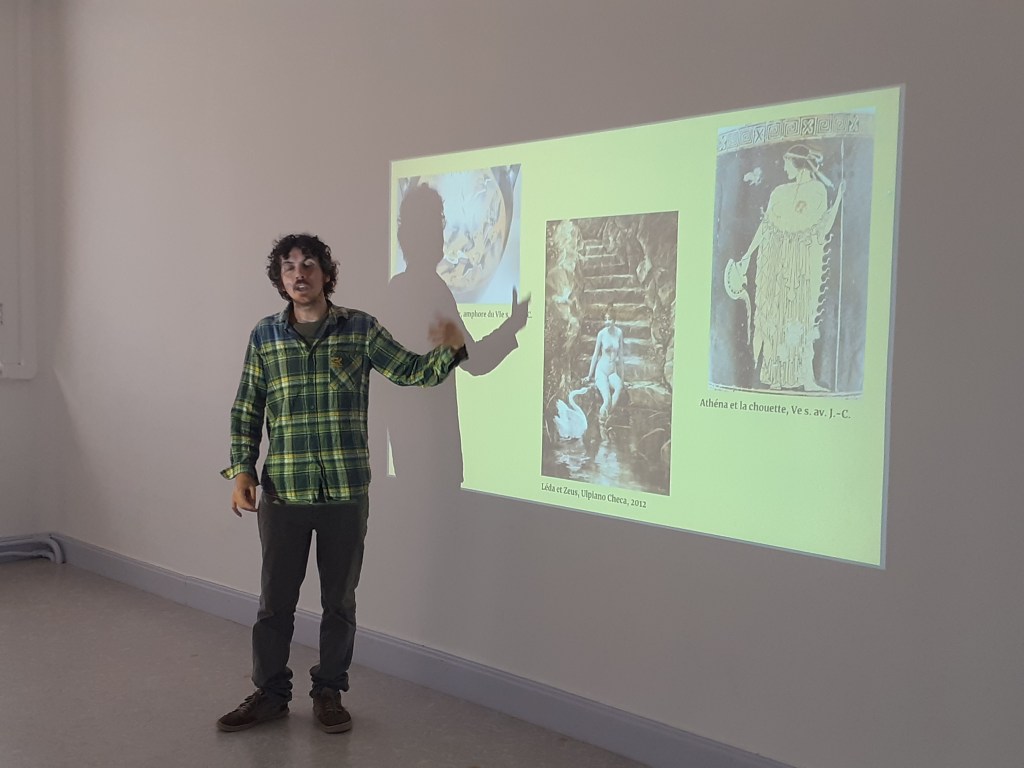



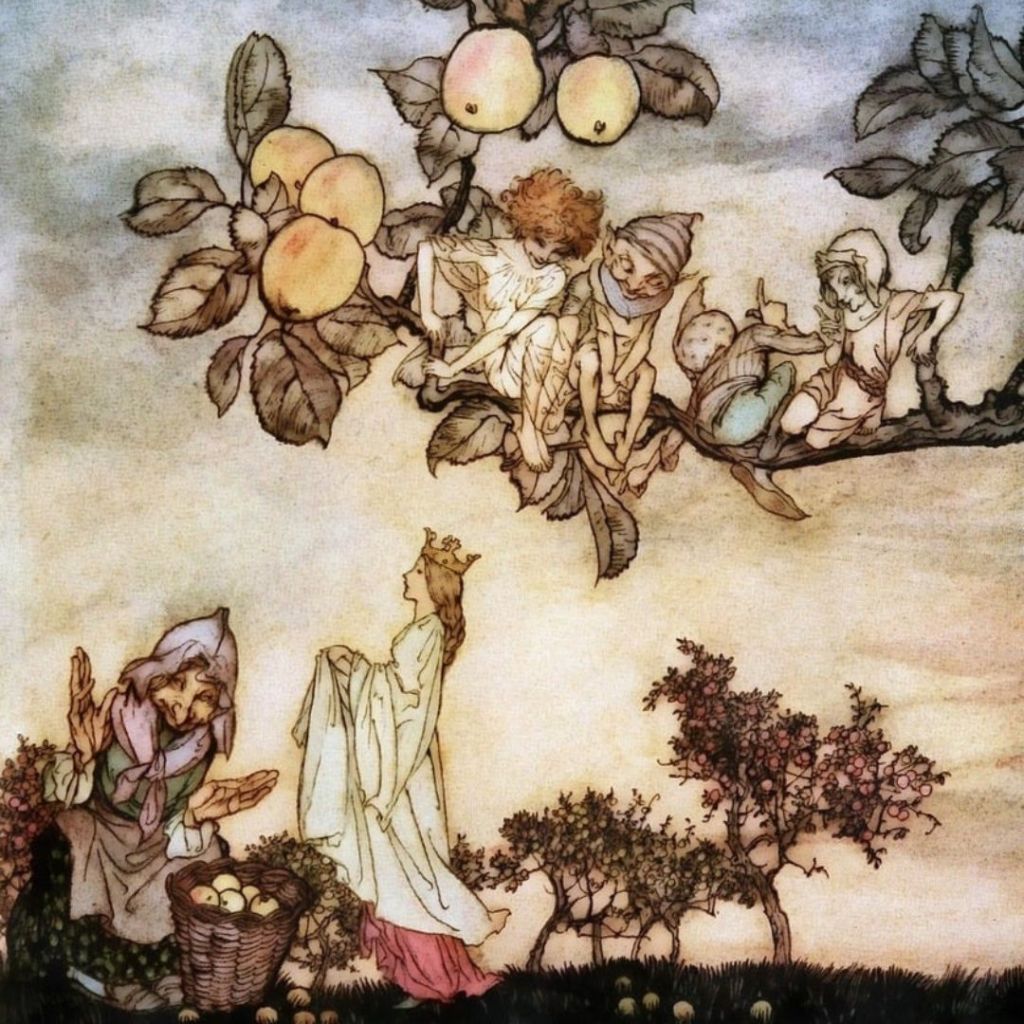

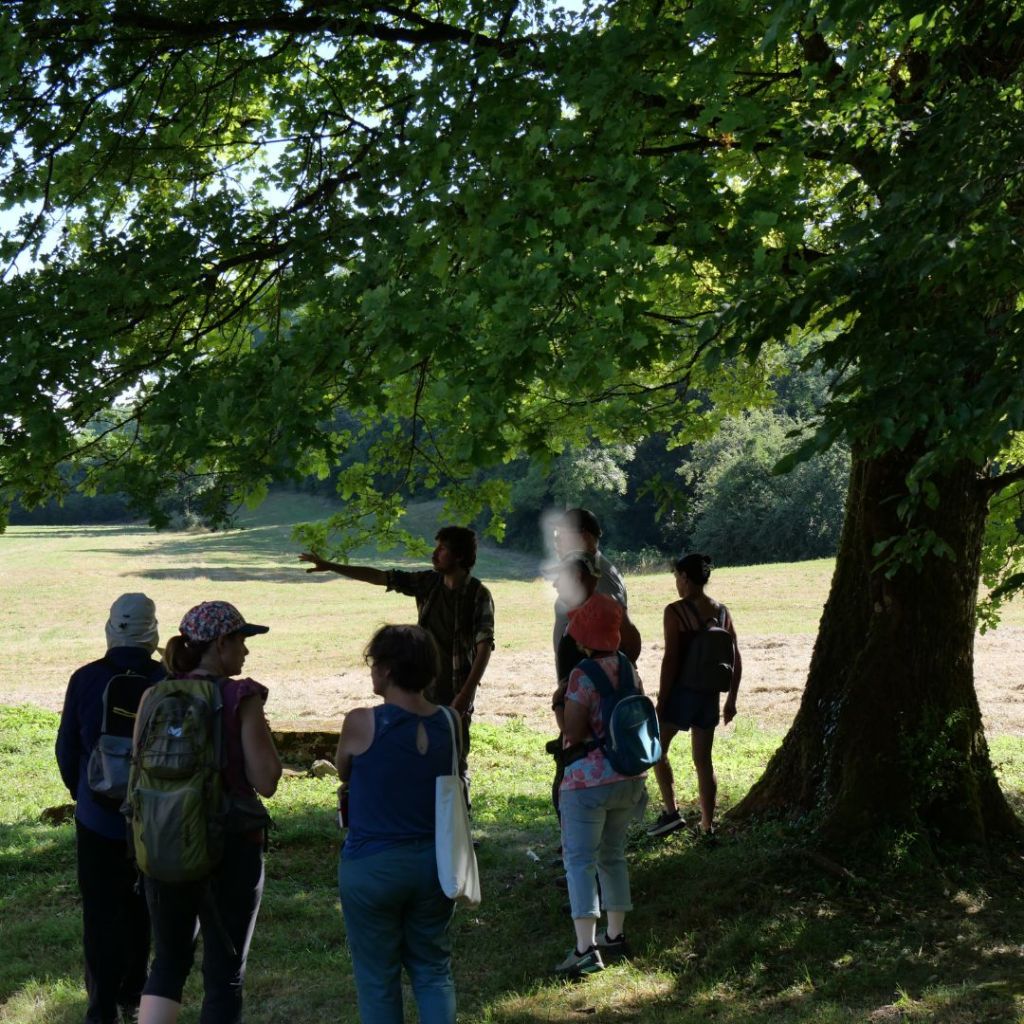


 Sous le feuillage des âges - Pablo Behague