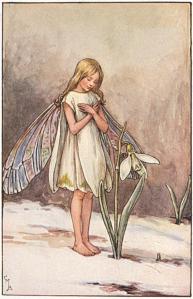
Snowdrops in the heart of winter: from the symbol of purity to Homer’s mysterious « moly »

While winter is not quite over and snow still covers the landscapes, small white bells are emerging from the dust along the paths, putting an end to the impatient botanist’s wait, who watched for the first blooms during his walks. Of course, what is depicted here is the season of the snowdrops, a term that has long been ambiguous since it could refer to both Leucojum and Galanthus. Nevertheless, these species share a certain affinity, which appears extremely clear on a symbolic level.

In the popular imagination, indeed, snowdrops embody the end of winter and the beginning of spring, or more precisely, the duality that exists between the two seasons. They are the flowers of transition and renewal, of the cold period diluting into the mild air of March, of the passage from death to life… But the symbolism of these plants is far from being so monolithic, since they have also been made emblems of virginity or even funerary omens. It has even been suggested that they could correspond to a mysterious plant from ancient mythology endowed with fabulous powers, and which Odysseus consumes before entering Circe’s house…

Flowers of winter and spring

The primordial symbolism of snowdrops, in the broadest sense, intimately associates them with winter and, a fortiori, with the snow that characterizes it. In this regard, examining their etymology is rich in lessons, and offers us many illustrations of this relationship. The common term « snowdrop » speaks for itself, but we know of other less widespread and equally evocative slang names for them. Thus, Galanthus nivalis is sometimes called « Winter Galantine, » « Winter Bell, » or even « Snow Galanthus. » In some cases, regional languages ​​take up this concept of a flower making its way through the white layer, as in Normandy where we speak of « Broque neige » or in Brittany where we evoke the « Treuz-erc’h. » As for European countries, many also use a term that is a translation of our « snowdrop » as in Yorkshire, England, where the plant is called « snowpiercer » (1). Among the other English names that we know of it, we can cite for example « winter gallant », « snowdrop » or even « little snow bell » which therefore relates to snow (2). As for Leucojum, their most commonly accepted name is that of « snowflake ».
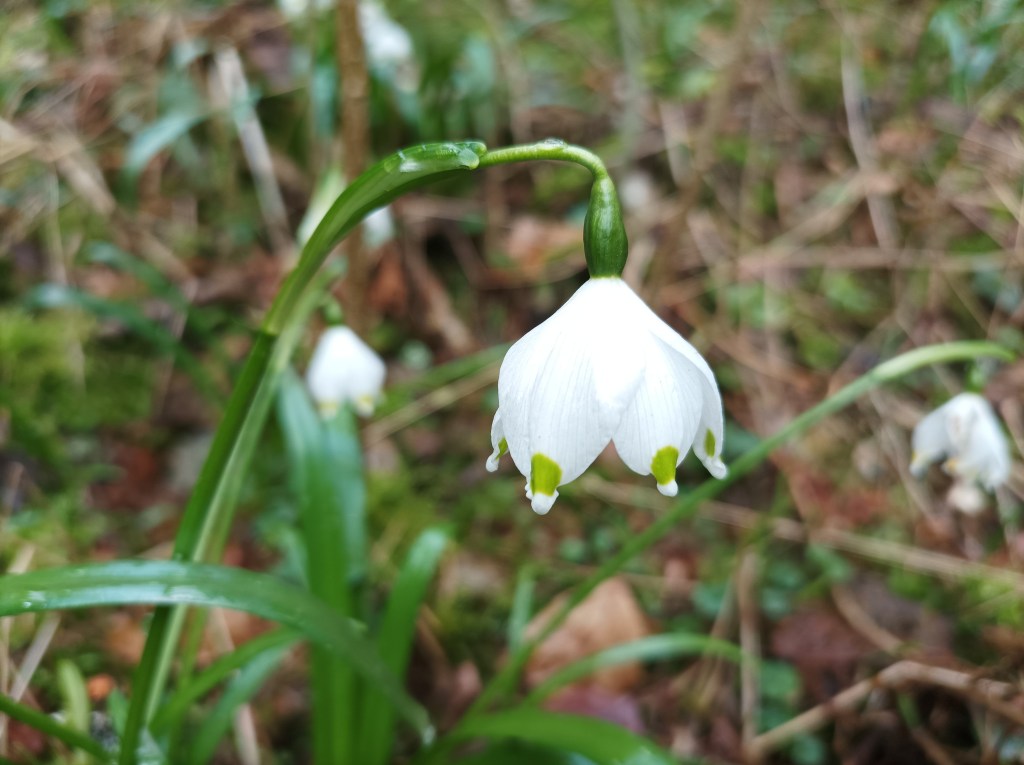
Leucojum vernum. Vosges Mountains. Pablo Behague, March 2024.

The scientific names for snowdrops are just as relevant to all these winter notions. Galanthus can be translated as « milk flower. » As for the adjective nivalis, it obviously means « of the snows. » Thus, snowdrops are literally « milk flowers of the snows, » an expression that refers not only to their immaculate whiteness, but also to their flowering season. Leucojum is constructed from the word leuko, meaning « white, » and the word ion, which corresponded to violets. In other words, snowdrops are « white violets. »

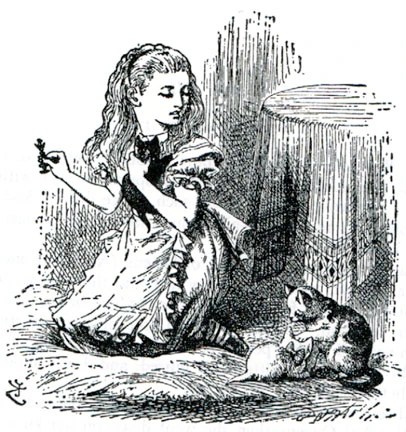
One of the oldest references to the term « snowdrop » dates back to a manuscript dated 1641, Guirlande de Julie, which once again emphasizes the plant’s winter dimension. The poem dedicated to her includes these lines: Under a silver veil the buried Earth / Produces me despite its freshness / The Snow preserves my life / And giving me its name gives me its whiteness (3). Subsequently, the term was used in relation to figures linked either to the notion of winter or to the notion of whiteness. Thus, the character of Snow White, from the famous tale by the Brothers Grimm, has sometimes been translated as « Snowdrop » (4). We will have the opportunity to return to this. This name is also that of Dinah’s kitten, Alice’s cat in the work of Lewis Carroll. Unsurprisingly, the passages that mention it evoke its white coat, the little girl even allowing herself to call it « White Majesty » (5). From then on, we see a clear affiliation, both ecological and symbolic, between snowdrops and winter.
However, while Galanthus and Leucojum are indeed linked to winter, they primarily embody the end of winter. Indeed, when snowdrops break through the snow, it signifies the arrival of spring. They are, in a way, the scouts of the warm season, poking the tips of their bells through the icy layer before signaling the arrival of other vernal flowers such as primroses and violets. Therefore, it is not surprising that the etymology of these plants is also linked to spring and the return of fine weather. Thus, one of the snowdrops found in our region is the Spring Snowflake, which its scientific name indicates with the use of the word vernum. One of his English names is « spring whiteness » (6).

In fact, when these white flowers are mentioned, it is very often to emphasize the spring-like nature of the atmosphere. Snowdrops and snowflakes are, for the reader, an indicator of spring, a temporal marker situated precisely at the end of winter. In The Butterfly, Hans Christian Andersen’s tale, the insect is looking for a flower to marry. The author then explains to us that « it was the first days of spring », which naturally implies that « crocuses and snowdrops were blooming nearby » (7). It is also interesting to note that these two flowers are often associated in an initial procession, as in Goethe who in the poem Next Year’s Spring writes: « The beautiful snowdrops / Unfold in the plain / The crocus opens »  (8). Théophile Gautier, in a poem entitled Premier sourire du printemps (First Smile of Spring), tells us about Mars preparing for the arrival of fine days: “While composing solfeggios / Whistling to the blackbirds in a low voice / He sows snowdrops in the meadows / And violets in the woods” (9). It is again with the violet that our flower is associated in The Prince of Thieves, attributed to Alexandre Dumas. We find a monk reading a note from a young girl to her lover: “When the less harsh winter allows the violets to open / When the flowers are in bloom and the snowdrops announce spring / When your heart calls for sweet glances and sweet words / When you smile with joy, do you think of me, my love?” (10). In Little Ida’s Flowers, Andersen – him again – this time associates our plant with the hyacinth, another spring species: « The blue hyacinths and the little snowdrops rang as if they carried real bells » (11). Let us conclude this spring review of the snowdrop by quoting two extracts from the Chronicles of Narnia, a famous fantasy saga. In the first volume, the children see winter suddenly disappear, by magic. And what better way to characterize such an extraordinary phenomenon than by mentioning snowdrops? The author is not mistaken, since he tells us that after crossing a stream, they come face to face with snowdrops growing (12)…
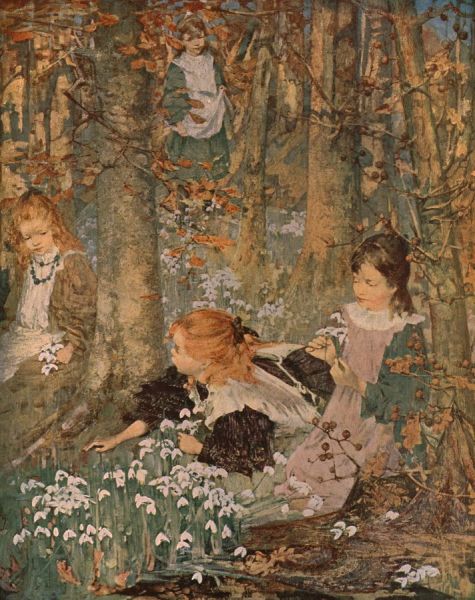
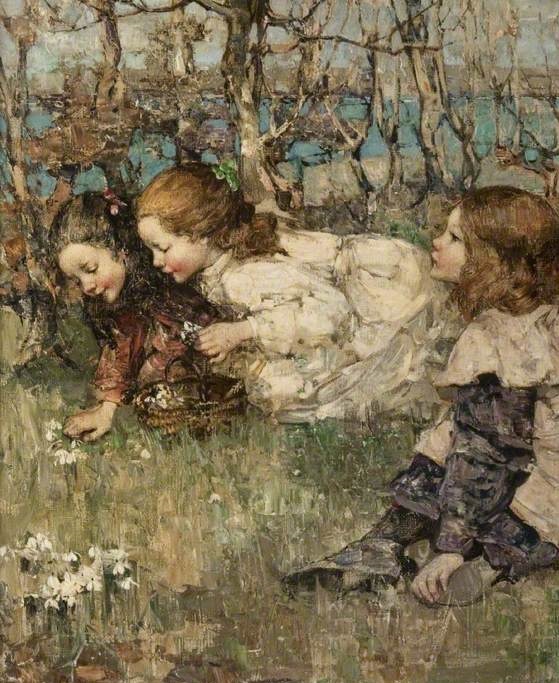
The connection between these plants and the return of the warmer weather is therefore clear, and it is not surprising that they are used in the Martisor festival in Romania, celebrated in March. This connection is also expressed through several fascinating legends featuring the character of the « Spring Fairy. » In one of them, we see her confront the « Winter Fairy, » ultimately winning in single combat. From a drop of blood from the defeated fairy, the snowdrop is born, symbolizing the victory of the warmer weather over that of death (13). In another story, the Spring Fairy comes to the aid of a small snowdrop frozen by the icy winter wind. She clears the snow covering it and restores its life with a drop of blood (14).

More generally, snowdrops are linked to the idea of ​​beginning and renewal, obviously springtime values. We thus find the snowdrop in a primitive legend featuring Eve, just banished from paradise and wandering on the desolate earth. The snow was falling, laying a shroud over the world condemned by the fall of Man. An angel therefore descended to console the first woman. He took a snowflake and blew on it, ordering it to bud and blossom, which of course immediately gave birth to a snowdrop. Eve then smiled, understanding the symbol of hope that the flower represents (15). It embodies renewal in the heart of darkness, the light at the end of the tunnel. It is also a symbol of consolation, which contemporary authors also note.
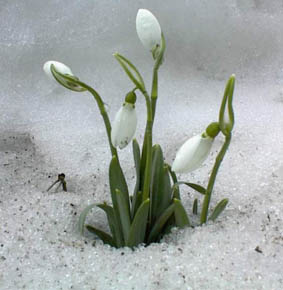
A symbol of remembrance, the snowdrop is also dedicated to Saint Agnes, herself associated with the phoenix. Both the mythological bird and the flower are capable of being reborn from the darkness, of springing forth from the ashes of death and winter. They embody the hope of life even in the heart of darkness.

A symbol of virginity and purity

Closely linked to whiteness and the concept of beginning, as we have just seen, it is quite natural that the snowdrop is also associated with the notion of virginity and purity. Once again, etymology is rich in lessons on this subject, and already allows us to get a clear idea of ​​this facet of the plant. In England, Galanthus nivalis is sometimes called Mary’s tapers (16). This of course refers to the well-known Virgin, mother of Jesus, which the use of another name, that of Virgin flower, seems to support (17). In fact, snowdrops are even explicitly dedicated to the Virgin Mary, and a Christian legend has it that their flowering takes place precisely on February 2, the day of Candlemas during which the mother of Jesus took him to the Temple to make an offering. This anecdote also justifies another popular name for the plant, Fair Maid of February (18). Richard Folkard also points out that « the snowdrop was once considered sacred to virgins, » which, according to him, « may explain why it is so commonly found in orchards attached to convents and ancient monastic buildings » (19). Thus, nuns would have sown snowdrops abundantly around their retreats, as symbols of their chastity. Thomas Tickell, an 18th-century English poet, supports this view, speaking of a « flower that smiles first in this sweet garden, sacred to virgins, and called the Snowdrop » (20).

This connection to the virginity is not unique to Christianity, which makes it all the more interesting. Indeed, the snowdrop is closely linked to young girls in many traditions and tales. During the spring celebrations held at the beginning of March, Matronalia among the Romans or Martisor among the Romanians, the flower is often offered to young ladies. Furthermore, the snowdrop is linked to several female figures of virginity, one of the most famous of which is none other than Persephone. Let us recall that in the most famous myth concerning her, the young girl is abducted by Hades while picking flowers in a meadow, and taken to the underworld. While the snowdrop is never mentioned in ancient sources, Ovid himself mentions « the violet or the lily » (21). However, we have seen to what extent our snowdrop was often linked to the violet. In any case, later traditions have clearly associated Persephone with the snowdrop. Is this really surprising, given that this flower is a symbol of spring and renewal? Demeter’s daughter, in fact, embodies precisely this idea of ​​an annual vegetative cycle. An agreement is concluded, under the aegis of Zeus, which allows her to spend half the year in the open air, but obliges her to remain the rest of the time with her husband, in the underworld. From then on, Persephone emerges from the earth like the flowers of spring, emerging at the beginning of March like snowdrops. This link between the goddess and the plant is also found in a contemporary song, composed by the rapper Dooz-Kawa and entitled Perce neige: “Yeah, this rain that cries in the autumn that loses its fauns / It’s Demeter who is dying of Persephone’s exile / In short, we are snowdrop flowers, the ultimate weapon of distress / Drops that flow like the tears of the goddess” (22).
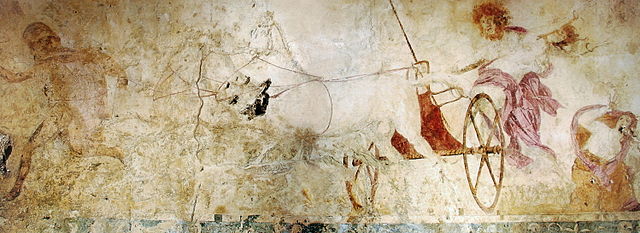
Hades abducting Persephone. Wall painting. Aigai. 4th century BC.

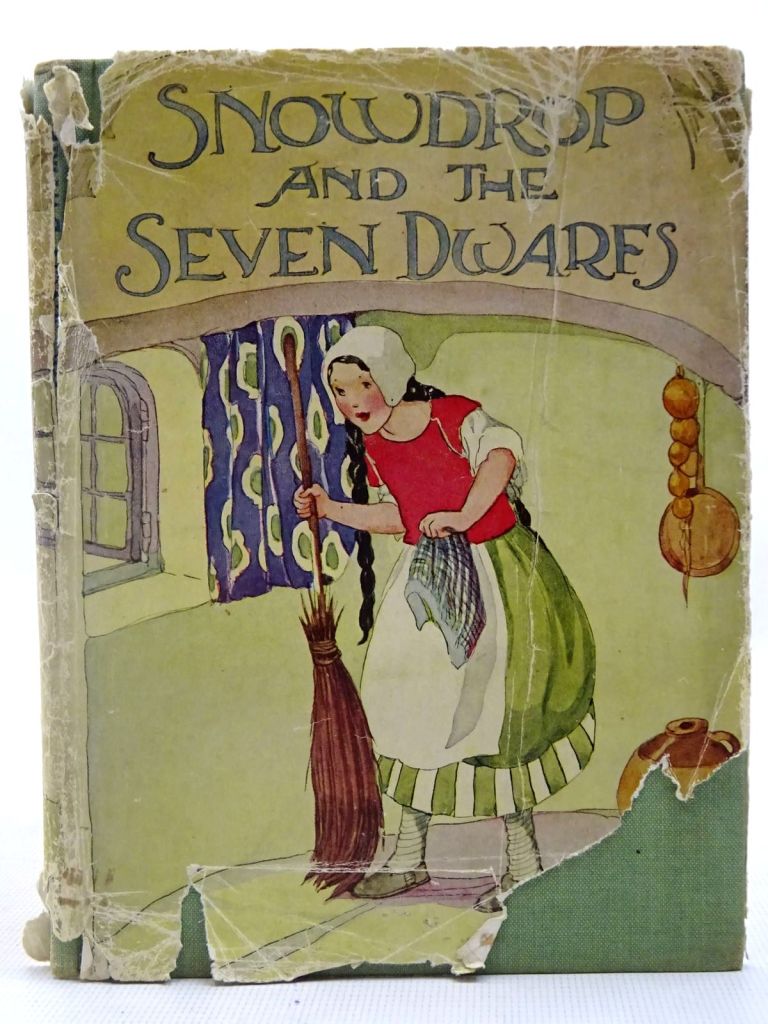
The myth of Persephone shares some similarities with the tale of Snow White, whose name, as we have seen, has sometimes been translated as « Snowdrop » (23). Like the Greek goddess, Snow White is a young girl subjected to the assaults of infernal forces, in this case a witch-stepmother. Like her, she symbolically undergoes a winter « eclipse, » falling into a long sleep that is only broken by the prince’s kiss, an allegory of spring that revives vegetation… and first and foremost the snowdrop. Thus, Persephone and Snow White can be seen as personifications of the beautiful season, but also of the plant that interests us, forging a path from the depths to bring blossom to the world.

The snowdrop heralds the time of rural frolics, the joyous period of youthful love in which young people indulge. A song from 1860 attests to this, with poetry typical of the century: “Watch over your little roses / The snowdrop will shine! (…) / You whose white muslin / Betrayed the pretty contours / In winter, under the Levantine / You close the door to love / Of happiness, sweet messengers / Let modesty slumber / Take up your light dresses / The snowdrop will shine” (24). We therefore see our plant clearly subservient to young ladies, and this symbolic association perhaps explains the medical properties attributed to it in old manuscripts. Indeed, Dioscorides, the famous physician of Antiquity, believes that the dried flowers of the snowdrop “are good for bathing the inflammation around the uterus and expelling the menstrual flow”. The plant thus presents a very clear feminine character and is linked to figures of purity, of which the Virgin Mary is the most emblematic example.
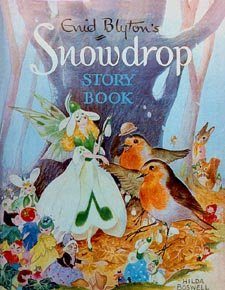
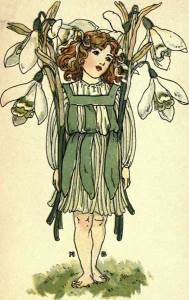
Cover of « Snowdrop story book ». Hilda Boswell, 1952.

From Funeral Oblivion to Homer’s Moly

Yet, contrary to our current understanding of the plant, snowdrops have also been interpreted as funerary symbols. Is this because of their white color and their connection to snow, evoking the shroud of mortuary chambers? The fact remains that several beliefs and traditions lead us to this register of mourning and death.

In certain regions of England, for example, it is believed that the first snowdrop of the year should not be brought inside homes. It is said to bring bad luck and could attract the grim reaper into the home. This belief stems from the flower’s resemblance to a corpse in its shroud, but the symbolism of winter undoubtedly plays a role as well (25). The same idea implies that one should never give someone snowdrops, because that would mean that one wants them dead. An English legend also tells of a woman who discovers her lover seriously injured and decides to place snowflakes on his wounds. These then turn into snowdrops at the same time as the man dies (26).
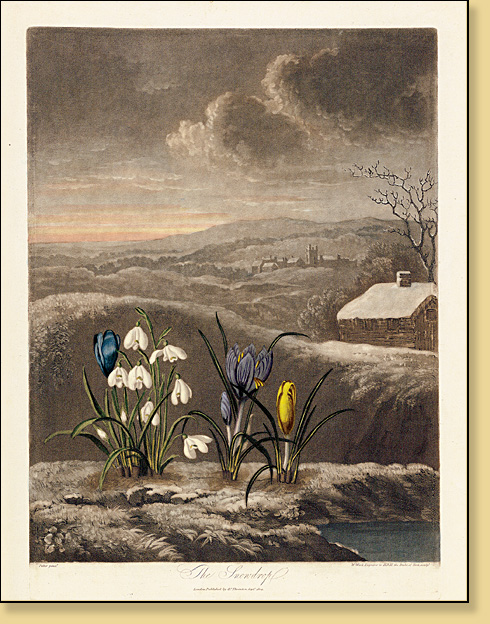
The Temple of Flora. Robert John Thornton, 1807.

But our plant’s relationship with death is also illuminated by its properties. Snowdrops are, in fact, toxic plants, and even fatal in relatively small doses. In the 19th century, François-Joseph Cazin explained that this toxicity was discovered accidentally when a woman sold snowdrop « onions » instead of chive ones (27). This reportedly caused violent vomiting in consumers, a classic symptom of poisoning from the plant’s bulb.

However, as is often the case, a poisonous herb can also, when carefully dosed, become a valuable medicine. This is the case with snowdrops. Galanthus nivalis contain galantamine, which is used to combat cognitive decline in Alzheimer’s disease or any other memory-related disorder (28). It is therefore no coincidence that the snowdrop was chosen as the emblem and name of a charity helping people affected by mental illness, founded by Lino Ventura and his wife Odette in 1966. Furthermore, galantamine is said to be an antidote capable of counteracting the effects of certain drugs, particularly atropine, contained in many nightshades used in witchcraft. This last point leads us to a fascinating historical mystery: that of a plant cited by Homer in the Odyssey, which he calls moly.

While Homer is the first to mention this plant, other ancient authors who came after him also did so, attempting to identify species familiar to them, such as Theophrastus (29), Dioscorides (30), Pliny the Elder (31), and Pseudo-Apuleius (32). However, several arguments support our snowdrop, in the broadest sense of the term. Indeed, the moly is mentioned when Odysseus and his companions, during their journey to Ithaca, visit Circe’s island. The episode is well known: the crew sent to reconnoiter the sorceress’s lair is transformed into a herd of pigs, with the exception of Eurylochus, who brings the news to Odysseus. Odysseus then sets out to free them and as he advances, he meets the god Hermes, who offers him his advice. It is at this moment that the moly is mentioned: « Here, take, before going to Circe’s house, this good herb, which will drive away the fatal day from your head. I will tell you all Circe’s evil tricks. She will prepare a mixture for you; she will throw a drug into your cup; but, even so, she will not be able to bewitch you. » for the good herb, which I am going to give you, will prevent its effect » (33). By following the advice of the messenger god, Ulysses actually manages to outwit the poison and save his companions.
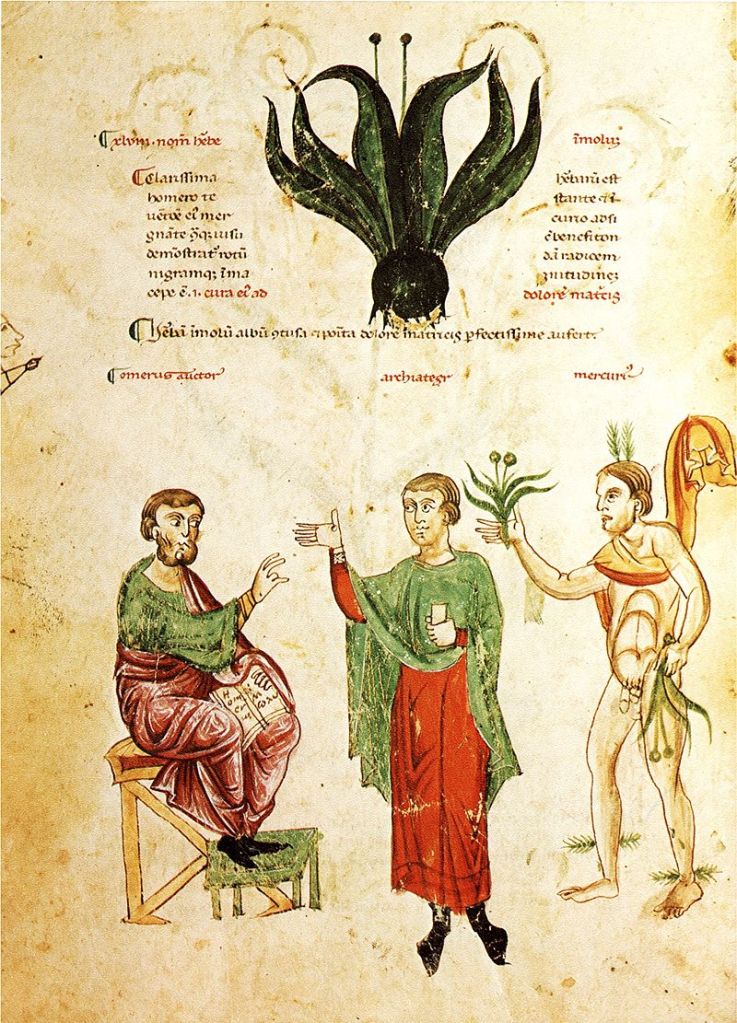
Codex Medicina Antiqua. Page showing « Herba immolum, » Homer’s presumed « moly. » 13th century.

The significance of this episode is much more complex than it appears, and upon reading it, it is easy to understand why researchers have suggested that moly could correspond to our snowdrop (34). First of all, Circe is a sorceress, a witch, and there is no doubt that the mixture she prepares includes toxic ingredients, capable of making sailors lose their minds. The famous transformation into a pig, in fact, presents all the characteristics of a psychotic delirium. Individuals begin to hallucinate and act like animals, abandoning their humanity under the influence of the drug. From then on, we are entitled to suggest that the potion concocted by Circe included some well-known nightshades, such as deadly nightshade, nightshade, mandrake, or even the fearsome datura. Now, have we not observed that the galantamine of the snowdrop is capable of combating the symptoms of atropine? The herb picked by Hermes and offered to Odysseus could then be our plant, capable of countering Circe’s magic.

But the arguments in favor of a snowdrop moly don’t stop there, since Odysseus’s companions, upon entering the cursed dwelling and transforming into pigs, experience an episode of obvious mental disorder. Allegorically, this metamorphosis corresponds to amnesia, a forgetting of one’s own person and humanity… All signs of madness that the snowdrop is able to counteract through its effect on memory and the brain. Odysseus keeps his head on his shoulders when his men lose it, but it is with the moly that he cures the madness and forgetfulness of his comrades. It is also interesting to note that the species is mentioned in video games related to the Harry Potter universe (35). However, according to the Pottermore website, moly is mentioned in the book A Thousand Magical Herbs and Mushrooms by the witch Phyllida Augirolle, where it is stated that it combats enchantments.

Moly in Herbology class at Hogwarts. « Harry Potter: Hogwarts Mystery, » 2018.

Let us note in conclusion that ancient descriptions of the plant, although absent from Homer, support the hypothesis of the snowdrop or snowflake. Ovid, in his Metamorphoses, speaks of a « white flower, which has a black root » that Odysseus uses as a talisman upon entering Circe’s home (36). It must be said that symbolically, by appearing first after the winter darkness, the snowdrop is a marker of memory; it reminds us of the existence of spring and fine weather, just as the moly reminds the members of the transformed crew who they really are.

****

Thus, snowflakes and snowdrops conceal many mysteries. They symbolize the whiteness of winter, and are therefore linked to notions of virginity and purity. From Mary to the spring fairies, from Persephone to Snow White, these early-blooming plants are also associated with the return of light to the heart of darkness; with renewed hope after long winter nights. In a way, the snowdrop « drives away the cold winter, » as the well-known folk song invokes. « Drive the Cold Winter Away » dates back to at least the 17th century (37), a time when winter was experienced in the flesh and was a difficult ordeal to grasp in the light of our modern comforts. Seeing the snowdrop’s bell must have warmed the heart of the peasant, whose reserves were perhaps running low.

But the snowdrop also symbolizes remembrance. It reminds us of the existence of sunny days and festive springs at a time when the tunnel of winter seems endless. Furthermore, it is perhaps the famous moly mentioned by ancient sources, including Homer, who counteracts the magic of forgetting perpetrated by Circe. As I finish this article, the snowdrops have emerged on the roadsides and in the gardens still covered in the morning frost. Scouts of the spring procession, they will soon be followed by violets, primroses and other hyacinths… then fall back into their annual sleep, without being forgotten.

Pablo Behague, « Sous le feuillage des âges ». Février 2025.

_________

(1) Richard Mabey, 1996, Flora Britannica.
(2) Charles M. Skinner, 1911, Myths and Legends of Flowers, Trees, Fruits and Plants : In All Ages and in All Climes.
(3) Auteurs incertains, 1641, Guirlande de Julie.
(4) Jacob Grimm, Wilhelm Grimm, et Arthur Rackham, 1909, The Fairy Tales of the Brothers Grimm.
(5) Lewis Carroll, 1865, Alice’s Adventures in Wonderland.
(6) Skinner, 1911, Myths and Legends of Flowers, Trees, Fruits and Plants : In All Ages and in All Climes., op. cit.
(7) Hans Christian Andersen, 1861, Le Papillon.
(8) Johann Wolfgang von Goethe, 1816, Next Year’s Spring.
(9) Théophile Gautier, 1884, Premier sourire du printemps.
(10) Alexandre Dumas, 1872, Le Prince des voleurs.
(11) Hans Christian Andersen, 1835, Les fleurs de la petite Ida.
(12) Clive Staples Lewis, 1950, The Chronicles of Narnia – The Lion, the Witch and the Wardrobe.
(13) 2020, Le perce-neige : mythe, légende et remède, murmuresdeplantes.fr.
(14) 2010, Légendes du perce-neige, beatricea.unblog.fr.
(15) Richard Folkard, 1884, Plant Lore, Legends and Lyrics.; Skinner, 1911, Myths and Legends of Flowers, Trees, Fruits and Plants : In All Ages and in All Climes., op. cit.
(16) Mabey, 1996, Flora Britannica, op. cit.
(17) Skinner, 1911, Myths and Legends of Flowers, Trees, Fruits and Plants : In All Ages and in All Climes., op. cit.
(18) Folkard, 1884, Plant Lore, Legends and Lyrics., op. cit.
(19) Folkard, 1884, op. cit.
(20) Thomas Tickell, 1722, Kensington Garden.
(21) Ovide, Ier s., Métamorphoses.
(22) Dooz Kawa, 2014, Perce Neige.
(23) Grimm, Grimm, et Rackham, 1909, The Fairy Tales of the Brothers Grimm, op. cit.
(24) Jean-François Dumas, 2014, Le perce-neige (Galanthus nivalis) et espèces proches.
(25) Folkard, 1884, Plant Lore, Legends and Lyrics., op. cit.
(26) Skinner, 1911, Myths and Legends of Flowers, Trees, Fruits and Plants : In All Ages and in All Climes., op. cit.
(27) François-Joseph Cazin et Henri Cazin, 1868, Traité pratique et raisonné des plantes médicinales indigènes.
(28) Jacqueline S. Birks, 2006, Cholinesterase inhibitors for Alzheimer’s disease.
(29) Théophraste, IVe-IIIe s. av. J.-C., Historia plantarum – Recherche sur les plantes.
(30) Pedanius Dioscoride, Ier s., De Materia Medica.
(31) Pline l’Ancien, vers 77, Histoire naturelle – Livre XXI.
(32) Pseudo-Apulée, IVe s., Herbarius.
(33) Homère, VIIIe s. av. J.-C., L’Odyssée.
(34) Andreas Plaitakis et Roger C. Duvoisin, 1983, Homer’s moly identified as Galanthus nivalis L.: physiologic antidote to stramonium poisoning.
(35) Jam City, 2018, Harry Potter : Secret à Poudlard – jeu.
(36) Ovide, Ier s., Métamorphoses, op. cit.
(37) Auteur inconnu, 1625, Drive the Cold Winter Away – chanson.

You can follow my news on Instagram: https://www.instagram.com/sous.le.feuillage.des.ages/
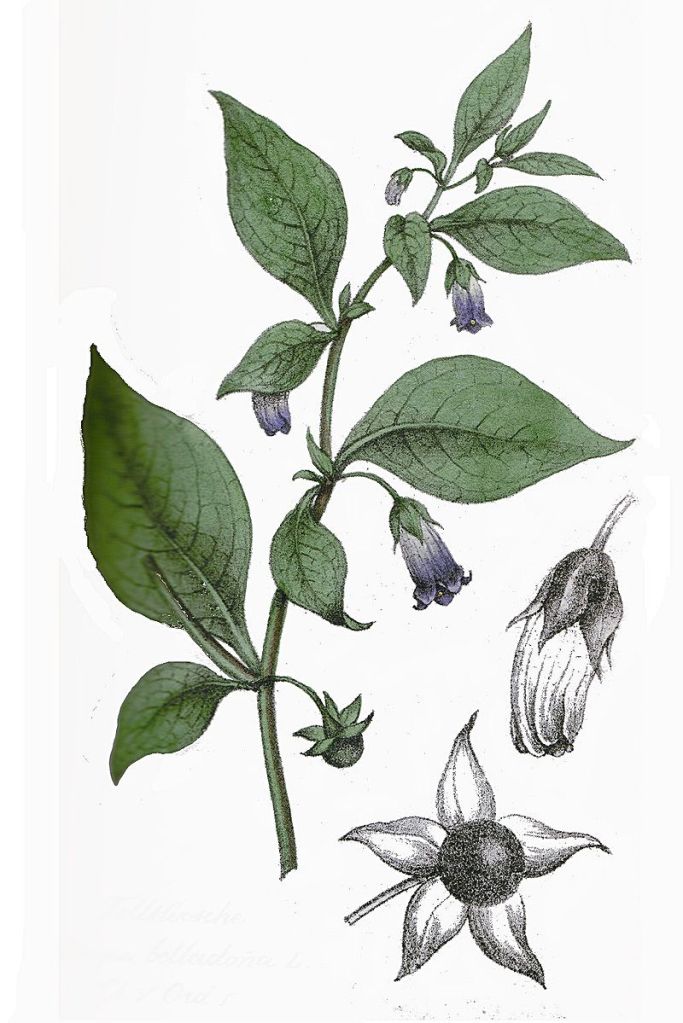
Belladonna: A plant of death and witches

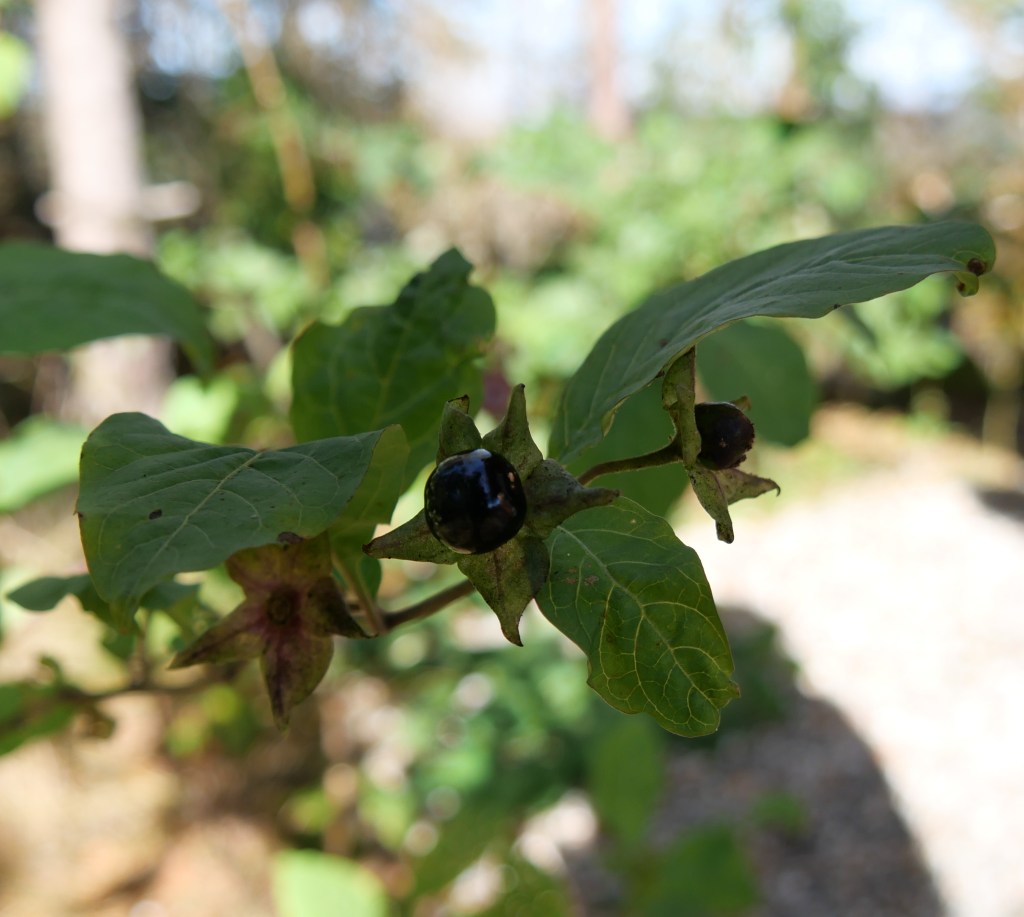
There are plants surrounded by a particularly powerful aura of mystery, the sight of which inevitably provokes a feeling of vertigo. Observing them, we seem to be invaded by notions that are beyond us, to be confronted with a web of legends and magic that will always remain enigmatic; like a grimoire whose writing on the pages has tarnished to the point of being barely legible. Deadly nightshade (Atropa belladonna) is one of these. This species has a long, complex history, which makes it both a sinister and infernal plant, linked to death and witches… and an avatar of the fatal beauty that can result from it. Although often cited as common, deadly nightshade is nonetheless a demanding species, which is rarely found in abundance. It is confined to the edges and gaps that dot forests with rather rich soil, preferably limestone. We can see its black berries shining in the overgrown clearings, where one could easily imagine a sabbath being held… Moreover, it gives its name to a phytosociological alliance of meso-eutrophic vegetation: Atropion belladonnae. This brief introduction being made, let’s get to the heart of the matter, and kneel for a moment before these bells of a dirty and faded mauve, which can only inspire images of boiling pots or wandering shadows. From then on, the reader will easily understand my choice to publish this article on Halloween – or Samhain – that is to say during the night which sees the world of the dead mix with that of the living.

Moonlit clearing, possible habitat of deadly nightshade. Théodore Rousseau. 19th century.

A Deadly Plant

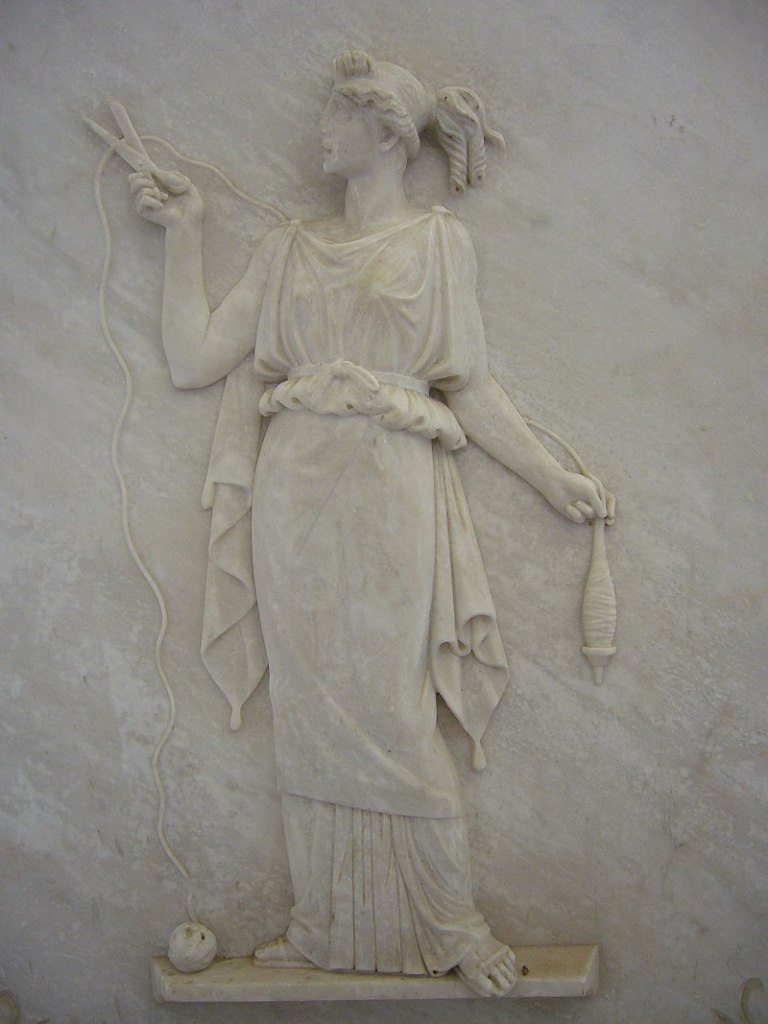
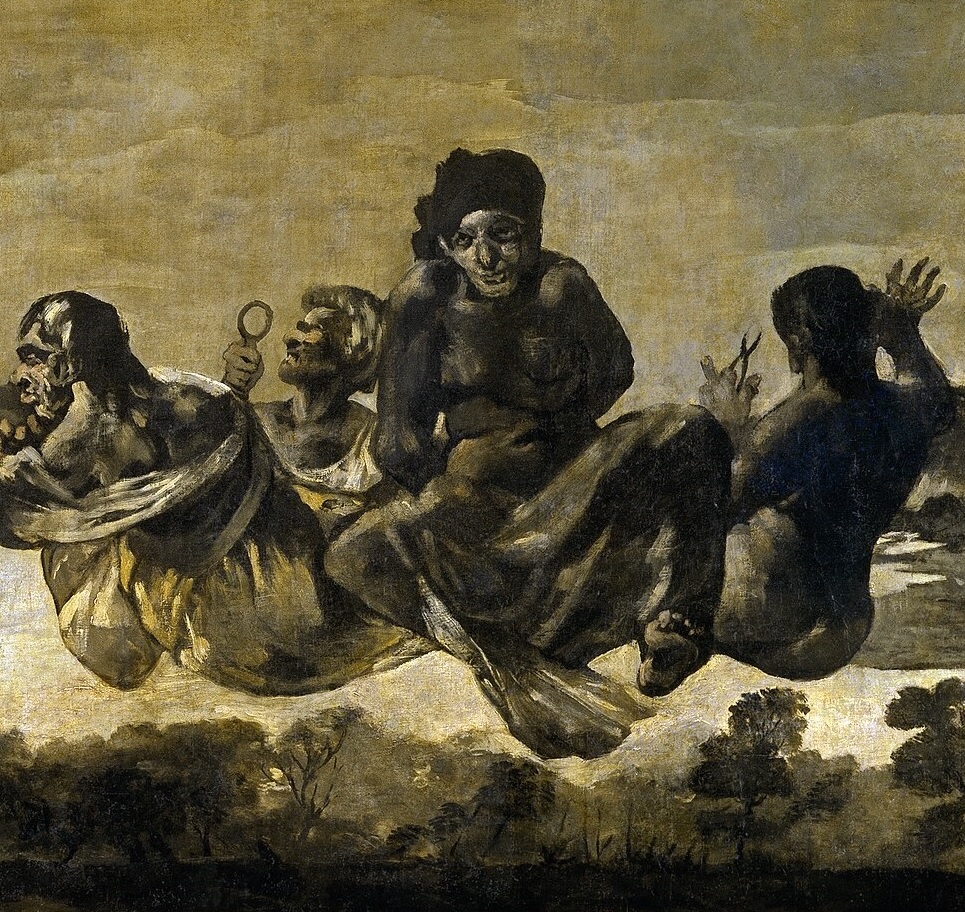
Deadly nightshade, although rare in Greece, was known in classical antiquity. It was probably the one Theophrastus referred to in his Historia Plantarum when he spoke of a « black-fruited mandrake » (1). However, its mentions are more numerous in medieval and early modern texts, where its connection with death becomes abundantly clear. However, it was not until the 17th century, and its description by Carl von Linné, that we encounter the Latin etymology we still use today: Atropa belladonna (2). We will return later to the term « Beautiful Lady » associated with it, but for now, let’s focus on the genus name given to it by the Swedish naturalist. Atropa, of course, refers to Atropos, one of the three Moirai; those deities of Fate on whom the lives of each and every person depended. Hesiod, in his Theogony, writes that they « dispense good and evil to nascent mortals, pursue the crimes of men and gods and only lay down their terrible anger after having exercised cruel vengeance on the guilty » (3). Furthermore, tradition declines the role of each of them, and that of Atropos will not surprise us taking into account her relationship to belladonna… While Clothro is the Moirai who weaves the thread of life and Lachesis who unwinds it, the one who interests us has the mission of cutting it; that is to say, of giving death. It will also be noted that the term Atropos means « the inflexible », an adjective which is indeed appropriate for the mythological figure in question… as for the plant with which she shares her name.

From then on, the very etymology of belladonna indicates its intimate relationship with death. It is the flower of the Moirai Atropos, whose scissors float above our heads and threaten our existence at every moment. But the fatal character of belladonna also takes on a more prosaic turn: that of a formidable poisoner. Indeed, this plant is a deadly poison, whose murderous use dates back at least to Antiquity. Thus, it has been suggested that Livia – the wife of the Emperor Augustus – and Agrippina the Younger – wife of the Emperor Claudius – would have used belladonna to poison their contemporaries (4). The latter would have been helped in this activity by a certain Locusta, Nero’s favorite and an expert in poison, who would have notably participated in the assassination of the Emperor Claudius and his son Britannicus (5).

Locust tries poison on a slave. Joseph-Noël Sylvestre. 1850.

Belladonna may also have been used in military conflicts. Furthermore, it was sometimes spread on arrowheads, at least since the time of the Celts (6). It is also known that it was used by the Scots to poison the troops of Harold Harefoot, an 11th-century English invader. While the Scots were in a difficult position, they managed to negotiate a brief truce, the agreement stipulating that they would, during this time, supply the English army with various provisions. However, a lieutenant named Banquo had the idea of ​​also sending liqueurs to the soldiers… taking care to first infuse them with belladonna. Those who did not die directly from the substance, weakened and drugged, ended up massacred by the Scottish army, or fled in the utter chaos (7).

Let’s take a brief leap back in time to examine one last famous poisoning case in which belladonna is strongly suspected: that of Solomon Northup, which occurred in 1841. He was the son of a freeborn Black American slave who became a violinist and farmer and was kidnapped by traders. Enticing him with a job as a musician, they took him to Washington, D.C., then drugged him and sold him into slavery to a Louisiana plantation owner. However, medical historians, taking into account the symptoms described by Solomon Northup in his memoirs and various other data, believe that the substance used to poison him was once again our beloved belladonna, perhaps mixed with opium (8). The man managed to regain his freedom in 1853 and tried in vain to have his kidnappers convicted.

Through these few famous examples of poisoning with the « painted lady », we therefore see that the plant is clearly associated with death. The last of them, however, shows us the importance of the dosage, which can turn it from a non-lethal drug into a deadly poison. It should be noted that in certain cases, belladonna can be ingested inadvertently and imprudently. Gaultier de Claubry, a French toxicologist, thus relates that in 1813, one hundred and fifty Napoleonic soldiers were poisoned by consuming berries picked in a wood near Dresden, in Prussia, naively thinking that it was a type of cherry (9). Finally, Giambattista Della Porta, a writer and magic enthusiast of the modern era, describes a very original use of belladonna consisting of incorporating it into the food of a meal in order to reproduce, for the guests, the torture of Tantalus; who sees the appetizing food in front of him knowing that he cannot eat it (10)… In fact, it is better to abstain from a dish that has been seasoned with the “Devil’s cherry”.

In any case, at the symbolic level, belladonna shows an obvious funerary and destructive dimension, which can be found in art and literature. For example, in the Chants de Maldoror by the Count of Lautréamont, a hallucinatory tale published around 1868, belladonna is cited. Let us recall that this book recounts the wanderings of an enigmatic and particularly sinister character, nihilistic and cruel, named Maldoror. Now, the second canto of the work begins with these eloquent words: « Where has this first canto of Maldoror gone, since his mouth, full of the leaves of belladonna, let it escape, through the realms of anger, in a moment of reflection? Where has this canto gone… We do not know exactly » (11). Thus, we learn through this passage that Maldoror is said to have uttered the canto with belladonna in his mouth. In this case, it is allegorical, and takes on meaning when we look at the content of the said song. To get an idea, it is not useless to quote the introductory remarks, which warn the reader that he is about to enter a « desolate swamp » made of « dark pages full of poison. » The relationship with belladonna is already becoming clear. But that is not all, since a little further on, there is still talk of the « deadly emanations » of the book which could soak the soul of the reader like water does sugar. From then on, we understand that Maldoror is a deadly, cursed character, whose association with the plant that concerns us is absolutely not surprising. Furthermore, this first song depicts him torturing a teenager, then causing the deaths of a child and his mother. He also pronounces these peremptory words: « You who look at me, depart from me, for my breath exhales a poisonous breath. » Is this due to the deadly nightshade leaves that, figuratively, nestle within it?

The destructive and fatal nature of deadly nightshade is further illustrated in a Stephen King short story entitled The Mangler. It tells of an industrial machine—an ironing-folding machine—that grabs one employee and then severely burns a second with a jet of steam. Inspector Hunton, investigating these two cases, realizes that the machine has been acting strangely for several weeks now and is the cause of other strange phenomena. One thing leads to another, and after the foreman has his arm eaten off, the inspector and his friend Jackson consider the possibility of demonic possession… especially since the trigger seems to be the bleeding of a certain Sherry Ouelette on the machine; the blood of a virgin being a classic component of occult rituals. But the two protagonists are unaware that the evil is much deeper than that because of another ingredient ingested by the ironer-folder… As the reader will have guessed, it is of course our belladonna. It was contained in a medicine that the first victim was taking, and which she had accidentally dropped shortly before her death (12). Thus, in this story, belladonna is once again linked to the idea of ​​death and destruction, through the intermediary of a possessed and implacable machine. Nevertheless, its ingestion comes from a medicine… and brings us to a very interesting point: that of its therapeutic use.

« The Mangler. » Adapted from the short story by Stephen King. Tobe Hooper. 1995.

Indeed, belladonna is ambivalent in the sense that it is a purveyor of death, certainly, but also an ingredient in medicine. Everything is obviously a question of dosage and method of use, but that is not the central subject of this article. Atropine, a molecule that owes its name to the plant in question, can thus be used to combat bradycardia, or even to ward off certain poisonings. It was used for a long time to limit tremors in Parkinson’s patients, but its most well-known use remains ophthalmological: it allows the dilation of the pupils, necessary for certain examinations. It is possible that this discovery was favored by the theory of signatures, widespread in the Middle Ages, which states that an organ is treated with an element that resembles it… Now, the black and shiny berry of belladonna is not without evoking a human pupil. Most of the plant’s medicinal properties appear to have been discovered—or at least recorded—in the modern or contemporary era. However, one might wonder, as Jules Michelet does, whether they weren’t already known and used before… but then by marginalized and rejected groups of people because of their supposed connection with the forces of Evil: witches, who were often originally healers (13).

A plant of the devil and the sabbaths

Belladonna, in fact, is the plant of witches and the devil par excellence. Its venom is obviously not innocent in this state of affairs, but its botanical characteristics may also have contributed to it. For belladonna is a plant with an aberrant appearance, and mysteriously lugubrious in many ways. I have always been fascinated by its large, black, shiny berries, similar to hyperdilated pupils scrutinizing us, and in which we can sometimes see the reflection of the lights of the sky (readers of my novels will remember the moon in Les disparus de Darlon). I find a melancholic beauty in its dangling bells, with their indefinable, smeared color, a dirty mauve tending sometimes towards greenish or purple. What more can be said of its general appearance, almost bushy, and its long, leaning branches of irregular size making it look like a curious, shapeless creature? In any case, the plant was quickly perceived as an ally of evil forces, and even more so of the devil, a fact clearly reflected in its etymology. Thus, its English name is nightshade, « shadow of the night, » or better still, deadly nightshade, in reference to its toxicity. In France, it is known by evocative names, such as morelle furieuse (14) or cerise du diable (15). In the Middle Ages, authors indeed associated it with the Evil One, such as the famous herbalist Hildegard of Bingen, who wrote of it that it had « cold within it, » but worse still, that « on the earth and in the countries where it grows, the inspiration of the devil is felt and unites with his power » (16). And the nun warns readers: « It is harmful to a person to eat or drink it, for it agitates the spirit, just as if the person were dead. »

With the connection to Satan established, it is not surprising that belladonna is linked to witchcraft. In fact, there are many figures that can be compared to witches and who, generally in an attempt to poison, use the « devil’s cherry ». Thus, since Antiquity, we can identify several enchantresses who would have probably used belladonna. Circe, the famous magician whom Ulysses meets on his return to Ithaca, was reputed to know the properties of plants and to use them in her potions. It has been suggested that the transformation of the hero’s crew into pigs was in fact a hallucination linked to the drug provided by the witch (17)… The poor sailors would have thought they were animals, to the point of devouring the acorns that were thrown to them, and this because of the plants they would have ingested, which could include belladonna. Hecate, the goddess of terror, of lunar affiliation, is also credited with using belladonna for divination purposes (18). Furthermore, Christian Elling, in his book Shakespeare, an insight into his world and its poetry, makes an interesting connection when he writes that « the name belladonna comes from the fact that the said drops give the woman who wishes to please the large, fixed and hypnotic eyes of Medusa » (19). Could the gorgon be a personification of belladonna, with its large black pupils capable of petrifying the mortal who crosses them? Or of its consumers, the witches with eyes bulging from atropine, appearing to contemplate invisible ghosts and the Hell from which they spring?

Circe Offering the Cup of Poison to Odysseus. John William Waterhouse. 1891.

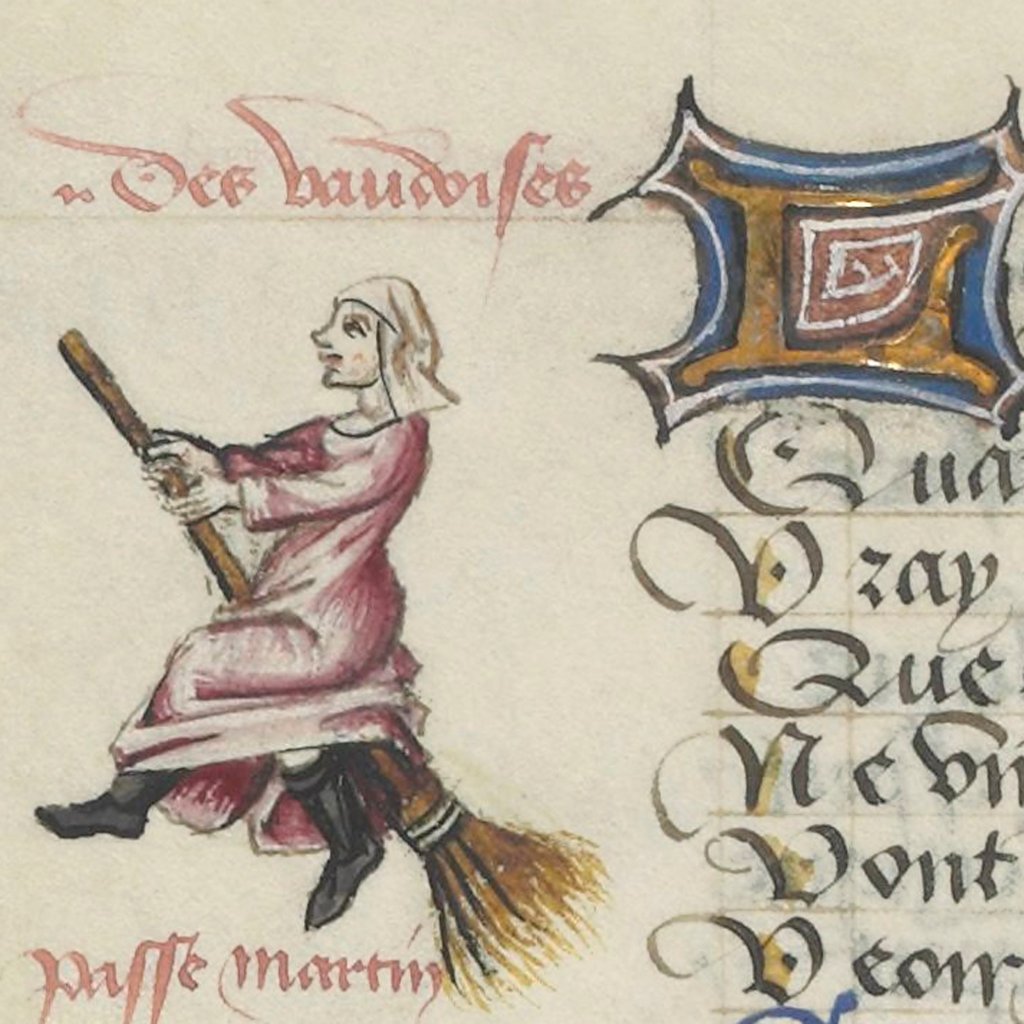
Nevertheless, the use of « furious nightshade » by witches is especially proven in the Middle Ages, as well as in the modern era where examples are legion. It is possible, however, that their use was exaggerated by the sources, in particular by demonologists who attributed stereotypical and caricatured practices to witches in order to accentuate their accusation. The fact remains that the imaginary is rarely created from nothing, and therefore bears witness to real facts, of which some traces remain. Thus, according to trial reports, belladonna would be one of the ingredients most used by supposed witches, either in the context of spells, or in the context of potions and ointments (20). It is the last case that has caused the most ink to flow, because it is still believed today that belladonna, mixed with other hallucinogenic plants, could be at the origin of the phenomenon of witches crossing the sky on broomsticks. Indeed, it has been suggested that this sensation of flying described by the accused would be linked to the effects of the drug ingested… or rather introduced into their organism since the ointment could be diffused vaginally, by means of a handle (21). From then on, the broom would be the instrument of drug taking, and the flight among the stars, the consequence of the hallucinogenic or narcotic substances included in the plants of the ointment (deadly nightshade, henbane and poppy… among others). In addition, this mode of absorption avoids passage through the intestines, and therefore gastric disorders. This fact has of course stimulated the imagination of the authors, by its incongruity, but also undoubtedly because of its erotic dimension.

In any case, the consumption of belladonna by witches is sometimes described in detail. It is said to amplify all sensations (22), potentially explaining this impression of flying. It was attributed the ability to « make one run while dancing » (23). In addition, it was said to have aphrodisiac properties, which we will have the opportunity to explore further in the last part. In the 16th century, in Nantes, seven women who ingested belladonna are said to have entered a trance for three hours without stopping (24). They were ultimately sentenced to death, which was the usual fate of witches and participants in sabbaths. Carl Kiesewetter, a historian passionate about magic and the occult, is said to have reproduced a witch’s ointment containing belladonna from a 17th century recipe that he tried on himself. He then describes twenty-four hours of delusions and hallucinations, which may explain this impression of flying. The unfortunate man would die of an overdose of henbane (25). He was far from the only occultist interested in these old recipes, and some did not hesitate to add even more morbid ones to the classic ingredients. Thus, Joseph Bizouard, in the third volume of his Rapports de l’Homme avec le Démon, mentions the famous « flying ointment, » but echoes the idea of ​​some of his colleagues that it could be enhanced with « the flesh of little children » or « bat blood » (26). Let us note in conclusion that this theory of witch flight linked to drugs is old, and even contemporary with the major trials of the modern era. Indeed, a debate raged between the supporters of the « pharmacological thesis, » centered around Jean Uter, and those who refuted it, the most famous of whom was Nicolas Remy from Lorraine, one of the most feared firelighters (27).

This hallucinatory property of the « devil’s cherry » has been around for a long time, to the point that some people still seek it out in contemporary times. The danger of its ingestion, however, does not make it a favored drug, but literature shows us that the « recreational » use of the plant has not completely disappeared (28). In addition, the current craze around witches may have led some people to want to imitate them, in poorly prepared parodies of sabbaths. However, witnesses of the absorption of belladonna speak of very unpleasant, even nightmarish symptoms, which, added to the mortal risk, should encourage everyone to avoid it rigorously. The fact remains that belladonna is without a doubt a plant of intoxication, and therefore a plant that can be described as « Dionysian. » It must be said that the descriptions of the orgies of the procession of Bacchus are not unrelated to those of the fantasized sabbats of the modern era: we find debauchery and drunkenness, nudity and excess, but also horned creatures with goat feet and mixtures leading to ecstasy. We also encounter women with dilated, bewitching pupils: witches in one case, maenads in the other, who both are said to have consumed the tumultuous belladonna (29). Moreover, one of the popular names for the plant is “mandrake baccifera” (30). The Dionysian character of belladonna nevertheless takes on a paradoxical turn when we know that atropine was also used at the beginning of the 20th century to combat alcoholism, as part of an experimental therapy provided by Doctor Charles Barnes Brown (it was called the “Belladonna Cure”) (31). Once again, however, the question of dosage is of paramount importance.

The symbolic relationship between belladonna and contemporary witchcraft can also be observed in works of fiction, and particularly in the famous Harry Potter saga, where the plant is one of the basic ingredients in potions classes. Indeed, in the fourth volume, Harry Potter and the Goblet of Fire, the wizard receives a potion-making kit containing belladonna, which he was just starting to run out of: « In addition to Miranda Goshawk’s standard Book of Spells, level 4, he had a handful of new quills, a dozen rolls of parchment, and refills for his potion-making kit—he was missing lionfish spine and belladonna essence » (32). It would have been very surprising if belladonna had not been mentioned in a universe dedicated to witchcraft, so much is it associated with it in the collective imagination. The word « Belladonna » can also make us think of another protagonist of the saga, who could quite easily be interpreted as a personification of the plant itself: Bellatrix. Like the « Devil’s Cherry », she is dark and poisonous, crazy and deadly. She is also a « Fairy Lady », with large black eyes; a femme fatale of sorts. However, it seems that her name does not come from the plant, but rather from the Latin meaning « belligerent » or « warrior » (which also suits her like a glove). « Bellatrix » is also the name of a star.

Snape in his study filled with vials and potion ingredients (including deadly nightshade, presumably). Harry Potter and the Order of the Phoenix. David Yates. 2007.

In any case, it should be noted that deadly nightshade is almost always associated with female characters: Circe, Hecate, the witches of the Middle Ages (sorcerers were in the minority)… This is, of course, not insignificant, as we will see in this step.

Belladona and the « Belle Dame »

Deadly nightshade is not only a plant of evil; it is a plant of evil beauty. It is a flower that, throughout history, has been linked to femininity and the idea of ​​deadly seduction. Once again, the names it has been given will serve to convince us of this… Belladonna comes from the Italian words « bella » and « donna » and therefore literally means « beautiful lady. » The first occurrence of this name is traditionally attributed to the 16th-century botanist and physician Mattioli, who apparently used it in a commentary on the De Materia Medica by the Greek Dioscorides (33). The expression was subsequently widely used, to the point that it is found in popular language, particularly in France, where the species can be referred to as « beautiful lady » (34) or even « beautiful cherry » (35); which is not insignificant given the erotic and seductive symbolism attached to this fruit. Another name reflects this idea: « perverse nightshade, » which tends to make deadly nightshade an incarnation of fatal and devastating beauty; of the diabolical seductress leading man to evil. Of course, there is a hint of misogyny in this feminine conception of deadly nightshade, but this should not surprise us given what we know of the history of witchcraft.

In any case, the relationship between the plant and seduction does not stop there, since it has been used as a cosmetic since ancient times. Indeed, the English botanist John Parkinson explained, as early as 1640, that belladonna was distilled, or that its juice was used to make women’s skin paler (36); which was then a guarantee of beauty. Some twenty years later, his colleague John Ray took up the idea, noting that it was used by ladies to « make their faces pale, stained red by the cold wind » (37).

The most famous use of belladonna, however, is ophthalmological: it can dilate the pupils, and thus give women a more attractive look. The phenomenon is often mentioned in connection with Italian courtesans of the Renaissance, but it seems to be much older than that. Cleopatra VII, the iconic Egyptian queen, is also said to have used atropine to accentuate the intensity of her gaze (38). In fact, the use of belladonna to dilate the pupils is not only for aesthetic purposes. In the early 19th century, for example, preparations based on belladonna were used by the German physicians Franz Reisinger and Karl Himly to allow for eye examinations or operations (39). Once again, however, the dosage is of paramount importance. Thus, although it seems obvious, it is absolutely not advisable to use belladonna to appear more attractive, and studies have long shown that too frequent use leads to nothing less than blindness (40).

The use of belladonna for seduction purposes also finds an echo in Mattioli, but in an even more unhealthy way, since the Italian physician advises using it to drug a woman without her knowledge. Indeed, this is what he writes in his analysis of the work of Dioscorides: « To make a woman a little frivolous, thinking she is the most beautiful in the world, you must make her drink one drachm of belladonna. If you want to make her crazier, you will have to give her two drachms. But if you want to make her remain mad all her life, it is best for her to drink three drachms and no more; for if you gave four, you would kill her » (41). This excerpt seems to me to speak for itself. It is nevertheless worth noting the relationship once again established between the plant and femininity, as well as between the plant and presumed beauty.

However, the connection between deadly nightshade and beauty is also symbolic, and even has a magical significance within certain cultures. For example, in the Carpathians, there is an ancient tradition in which young women make offerings to the deadly nightshade in exchange for its attractiveness. The young woman in question had to venture into nature on a Carnival Sunday until she found a deadly nightshade plant (presumably previously located). She was dressed in ceremonial attire and accompanied by her mother, carrying bread, salt, and brandy. Upon reaching the plant, she would remove one of its roots and replace it with these three elements. For the charm of the « beautiful lady » to work, she then had to return home with the root on her head, without revealing to anyone where she came from and what she had done (42).

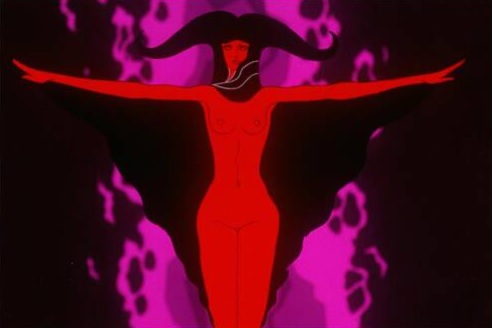
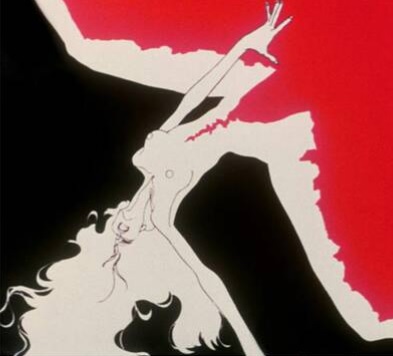
To conclude, we can note that « Belladonna » can sometimes be a first name, which is obviously given exclusively to women. It can happen that these women have a marked erotic facet, which then echoes the sulphurous character of the plant that we have just mentioned. For example, the Japanese animated film entitled (in French) Belladonna la sorcière, by Eiichi Yamamoto, freely takes up elements of the book « La Sorcière » by Jules Michelet (43). However, this work has a strong and undeniable erotic dimension, the character of Belladonna being frequently shown naked and in scenes where sensuality occupies a predominant place. She embodies the figure of the seductive witch, as often caricatured, and therefore has a first name that is entirely consistent with what we know of the « devil’s cherry ». It should also be noted that Bellatrix is ​​another example of choice. In certain cases, however, the first name Belladonna is attributed by pure chance, or for linguistic considerations. Thus, although very rarely mentioned and not playing a major role in the literary works of J.R.R. Tolkien, Bilbo Baggins’ mother is named Belladonna Tou (44). This illustrates the hobbits’ habit of giving girls plant names, but also participates in a sort of looping play on words since Belladonna’s two sisters are called Donnamira and Mirabella.

_________________

Through this brief overview of the cultural elements surrounding belladonna, we see that it is clearly of feminine obedience, which is expressed by the figure of the witch and that of fatal beauty, a dangerous and diabolical seductress. The symbolism surrounding the plant testifies to an archaic and negative vision of femininity, poisonous, linked to the original sin of Eve and the caricature of the evil enchantress. The fact remains that this legendary nightshade is more generally associated with magic and gloomy atmospheres. It is one of the most fascinating inhabitants of our forests, at least one of those that I prefer. Science will have to dissect its properties and its substances, its toxicity and its chemical processes, its morphology and its ecological requirements, there will always remain something unfathomable in it; an abyss of writhing shadows, troubled and obscure worlds that the human mind can only guess at in the reflection of its large black berries in the moonlight, or in the indefinable and melancholic color of its flowering calyxes.

Pablo Behague. « Sous le feuillage des âges. Octobre 2024

——-

(1) Théophraste, IVe-IIIe s. av. J.-C., Historia plantarum – Recherche sur les plantes.
(2) Carl von Linné, 1770, Systema Naturae, XIIIe.
(3) Hésiode, VIIIe s. av. J.-C., Théogonie.
(4) John A. Timbrell, 2005, The poison paradox : chemicals as friends and foes; Margaret F. Roberts et Michael Wink, 1998, Alkaloids: Biochemistry, Ecology, and Medicinal Applications.
(5) Suétone, IIe s., Vie des douze césars.
(6) Karsten Fatur, 2020, “Hexing Herbs” in Ethnobotanical Perspective: A Historical Review of the Uses of Anticholinergic Solanaceae Plants in Europe; A. Mayor, 2015, Chemical and biological warfare in antiquity.
(7) R. Groombridge, 1839, The Naturalist: Illustrative of the Animal, Vegetable, and Mineral Kingdoms.
(8) Judith Bloom Fradin et Dennis Brindell Fradin, 2012, Stolen into Slavery: The True Story of Solomon Northup, Free Black Man.
(9) Collectif, 1820, Dictionnaire des sciences médicales, vol. 43; 1857, Dictionnaire universel des connaissances humaines, vol. 3.
(10) Giambattista Della Porta, 1593, De refractione optices.
(11) Comte de Lautréamont, 1868, Les Chants de Maldoror.
(12) Stephen King, 1972, The Mangler (La Presseuse).
(13) Jules Michelet, 1862, La Sorcière.
(14) Jean-Claude Rameau, Dominique Mansion, et Gérard Dumé, 1989, Flore forestière française : guide écologique illustré. T.1 : Plaines et collines.
(15) « La Belle Empoisonneuse », La Hulotte, no 33‑34 (2015).
(16) Hildegarde de Bingen, XIIe s., Physica – Liber simplicis medicine.
(17) Priscila Frey, 2021, Plantes de Sorcière : Histoire d’hier et d’aujourd’hui.
(18) Frey, 2021, op. cit.
(19) Christian Elling, 1959, Shakespeare. Indsyn i hans verden og den poesi.
(20) Loïc Girre, 1997, Traditions et propriétés des plantes médicinales : Histoire de la pharmacopée; Albert Hofmann et Richard Evans Schultes, 2005, Les plantes des dieux : Les plantes hallucinogènes. Botanique et ethnologie; Jean-Marie Pelt, 1983, Drogues et plantes magiques.
(21) Carlo Ginzburg, 1989, Ecstasies: Deciphering the Witches’ Sabbath; Fatur, 2020, “Hexing Herbs” in Ethnobotanical Perspective: A Historical Review of the Uses of Anticholinergic Solanaceae Plants in Europe, op. cit.; Pierre Delaveau, 1982, Histoire et renouveau des plantes médicinales.
(22) Michèle Bilimoff, 2005, Enquête sur les plantes magiques.
(23) Emile Gilbert, 2016, Les plantes magiques et la sorcellerie : Suivi d’une étude synoptique et succincte sur les philtres et les boissons enchantées ayant pour base les plantes pharmaceutiques.
(24) Séverine Breuvart, 2019, Belladone et les sorcières ou histoire d’une beauté fatale.
(25) Bert-Marco Schuldes, 2014, Psychotropicon zum Bilsenkraut und dem Tod Kiesewetters.
(26) Joseph Bizouard, 1863, Des rapports de l’Homme avec le Démon – T3.
(27) Frey, 2021, Plantes de Sorcière : Histoire d’hier et d’aujourd’hui, op. cit.
(28) Karsten Fatur, 2020, Common anticholinergic solanaceaous plants of temperate Europe – A review of intoxications from the literature (1966–2018); Karsten Fatur, 2021, Peculiar plants and fantastic fungi: An ethnobotanical study of the use of hallucinogenic plants and mushrooms in Slovenia.
(29) Breuvart, 2019, Belladone et les sorcières ou histoire d’une beauté fatale, op. cit.
(30) Rameau, Mansion, et Dumé, 1989, Flore forestière française : guide écologique illustré. T.1 : Plaines et collines., op. cit.
(31) Howard Markel, 2010, An Alcoholic’s Savior: God, Belladonna or Both ?
(32) J.K. Rowling, 2000, Harry Potter and the Goblet of Fire.
(33) Petri Andreae Matthioli, 1565, Commentarii in sex libros Pedacii Dioscoridis Anazarbei De medica materia.
(34) Rameau, Mansion, et Dumé, 1989, Flore forestière française : guide écologique illustré. T.1 : Plaines et collines., op. cit.
(35) La Hulotte, (2015).
(36) John Parkinson, 1640, Theatrum Botanicum: The Theater of Plants : Or, An Herball of Large Extent.
(37) John Ray, 1660, Catalogus plantarum circa Cantabrigiam nascentium.
(38) S.A. Aldossary, 2022, Review on Pharmacology of Atropine, Clinical Use and Toxicity.
(39) M.L. Sears, 2012, Pharmacology of the Eye.
(40) George Bacon Wood, 1867, A Treatise on Therapeutics, and Pharmacology or Materia Medica.
(41) Matthioli, 1565, Commentarii in sex libros Pedacii Dioscoridis Anazarbei De medica materia, op. cit.
(42) Gustav Schenk, 1956, Das Buch der Gifte; Oskar von Hovorka et Adolf Kronfeld, 1908, Vergleichende Volksmedizin Zweiter Band. Eine Darstellung volksmedizinische Sitten und Gebräuche, Anschauungen und Heilfaktoren des Aberglaubens und der Zaubermedizin.
(43) Eiichi Yamamoto, 1973, Belladonna la sorcière (film d’animation).
(44) J.R.R. Tolkien, 1937, The Hobbit.

You can follow my news on Instagram: https://www.instagram.com/sous.le.feuillage.des.ages/